“Y Cable, 5′ Overall, 4′ 12AWG C20 / 2×1′ 14AWG C13 – Black” has been added to your cart. View cart
Author: Louis Chompff
Louis Chompff, Founder & Managing Director, AnD Cable Products
Louis established AnD Cable Products in 1989. Prior to this he enjoyed a 20+ year career with a leading global telecommunications company. He worked in a variety of data management positions that ranged from service, product development and sales to management.
Louis is an enthusiastic inventor and has designed, patented and brought to market a variety of industry-leading rack and cable management products, which form the basis of AnD Cable Products range.
Visit https://andcable.com
The cryptocurrency boom has been a double-edged sword. While generating excitement in the tech and finance worlds for its versatile uses, major debates around energy consumption have sparked everywhere.
Crypto mining operations are notoriously power-hungry, with global estimates suggesting their energy use rivals that of entire nations. For data centers accommodating crypto rigs – stacks of graphics processing units (GPU) that consume up to 120 watts per GPU or 1000 watts per rig – addressing power efficiency is not just good environmental practice – it’s a business necessity!
This is where strategic cable management plays a surprising but crucial role. It might seem like a minor factor, but howcables are organized within crypto mining rigs, server racks, and throughout the data center can significantly impact power usage and overall efficiency.
Key Takeaways
By the end of this article, you’ll know:
The power and heat challenges of crypto mining rigs.
The Crucial Role of Strategic Cable Management in saving energy and regulating temperature.
The benefits of custom fabricated metal frames GPU rigs.
Challenges of Crypto Mining in Data Centers
Massive Power Draw
Crypto mining rigs are designed to run at full capacity 24/7, consuming vast amounts of electricity. Unlike typical data centers that store and transfer data to where it is needed, where the operating parts are storage devices, crypto mining uses GPUs. These processing units are extremely power-demanding and are used all day at maximum capacity to acquire cryptocurrencies like BitCoin.
Heat Generation
This continuous operation creates substantial heat output, straining traditional cooling systems and increasing energy costs. GPUs generate more heat than storage devices. GPUs can peak at 203°F (95°C). Storage devices like SSDs operate only at around 86°F to 122°F (30°C to 50°C), which dwarfs in comparison to the average operating temperature of GPUs at around 158°F (70°C).
Density Demands
To maximize computing power, crypto rigs are often packed tightly into custom racks, increasing the thermal and power management challenges. Moreover, crypto mining facilities are relatively new, unlike traditional data centers that are now more standardized and with proper facility regulations. Hence, crypto mining data centers can design and create racks with poor efficiency.
How Cable Management Helps in Crypto Mining Data Centers
Optimizing Airflow
Tangled cables create obstructions that hinder efficient airflow around servers. Well-organized cables, using proper management tools and techniques,improve airflow and reduce the strain on cooling systems. This directly saves energy.
Streamlined Power Delivery
Chaotic power cable routing leads to voltage drops, wasted power, and potential equipment instability. Clean cable pathways ensure consistent power to rigs, maximizing their utilization and preventing costly inefficiencies.
Easier Maintenance and Upgrades
Unmanageable cables make troubleshooting and replacing components within racks a nightmare. Strategic cable organization simplifies maintenance, reducing downtime and conserving power that would be wasted on idle equipment during extended repairs.
Practical Cable Management Solutions
High-Capacity Cable Managers: Choose cable managers that can handle numerous thick power cables common in crypto mining setups. Look for options that provide easy routing and flexibility.
Custom Metal Fabrication: Building Better GPU Rigs
While cable management optimizes existing setups, Custom Metal Fabrication takes crypto mining rigs to the next level. Here’s how it can benefit data centers and dedicated mining facilities:
Maximized Airflow: Precision-designed metal frames and enclosures for your specific GPU configurations ensure optimal airflow around each card. This translates to better cooling and the ability to push your hardware further.
Enhanced Scalability: Open frame designs built to your exact specifications allow easy expansion and reconfiguration, future-proofing your mining operations.
Sturdier Construction: Custom metal fabrication delivers robust rigs that withstand continuous mining operations’ constant vibration and thermal stress. This increased durability means less downtime for repairs and more excellent long-term value.
Unique Space Constraints: Custom-built solutions adapt to challenging layouts or unusual spatial requirements, ensuring you maximize computing power within your available footprint.
AnD Cable Products doesn’t just provide cable management solutions; we have extensive capabilities in custom metal fabrication. Our team can work with you to design and produce:
Specialized GPU mounting frames
Multi-rig enclosures and racks
Integrated cooling system supports
Custom branding and design elements
Let us help you design and build crypto mining rigs that perform exceptionally, look professional, and stand the test of time. Contact us today to explore custom Custom Metal Fabrication.
Beyond the Thousands of GPU Rigs
While focusing on GPU rigs is crucial, also consider broader cable management practices throughout the crypto mining facility.
Overhead Trays and Pathways: Use pathways that distribute power cables efficiently, reducing the need for excessively long runs and minimizing clutter.
Underfloor Management: Strategically routed power cables under raised floors create cleaner pathways and improve airflow.
The Future of Industrial-Scale Crypto Mining
In the high-energy world of crypto mining, every optimization counts. Effective cable management isn’t just about neatness; it translates to lower operating costs, reduced environmental impact, and greater operational reliability for your data center.At AnD Cable Products, we’re here to help crypto mining data centers get all the quality cables and cable managers they need. If you’re operating a crypto mining facility, please see our range of products relevant to your industry here.
FAQs
Why is cryptocurrency mining so energy-intensive?
Cryptocurrency mining operations are extremely power-hungry because they involve a large number of computer rigs, often equipped with powerful GPUs, that run at full capacity 24/7. A single large-scale facility can consume as much as 180 megawatts of electricity.
What are some of the main challenges related to the energy consumption of crypto mining?
The high energy consumption leads to two major challenges: high operating costs for the mining facilities and significant heat generation. This heat requires robust cooling systems, which in turn consume more energy.
How can strategic cable management help with these challenges?
Effective cable management optimizes airflow around the mining rigs, which reduces the strain on cooling systems. This leads to energy savings and helps maintain stable equipment temperatures. Well-routed power cables also ensure consistent power delivery, preventing voltage drops and equipment instability.
What is the role of custom metal fabrication in improving crypto mining operations?
Custom metal fabrication can be used to create precision-designed frames for GPU rigs. These custom frames can maximize airflow, improve scalability, provide sturdier construction, and be adapted to fit unique space constraints within a data center.
What services does AnD Cable Products offer to the crypto mining industry?
AnD Cable Products provides services in both strategic cable management and custom metal fabrication. These services are designed to help crypto mining data centers lower their operating costs, reduce their environmental impact, and improve overall operational reliability.
About the Author
Louis Chompff – Founder & Managing Director, AnD Cable Products Louis established AnD Cable Products – Intelligently Designed Cable Management in 1989. Prior to this he enjoyed a 20+ year career with a leading global telecommunications company in a variety of senior data management positions. Louis is an enthusiastic inventor who designed, patented and brought to market his innovative Zero U cable management racks and Unitag cable labels, both of which have become industry-leading network cable management products. AnD Cable Products only offer products that are intelligently designed, increase efficiency, are durable and reliable, re-usable, easy to use or reduce equipment costs. He is the principal author of the Cable Management Blog, where you can find network cable management ideas, server rack cabling techniques and rack space saving tips, data center trends, latest innovations and more. Visit https://andcable.com or shop online at https://andcable.com/shop/
Data centers are the backbone of modern digital infrastructure. Yet, minor oversights like substandard power cables can jeopardize safety, reliability, and energy efficiency. Understanding these power cable red flags is crucial for ensuring optimal data center performance.
This article aims to help not only data center engineers and technicians. It’s also for IT managers who handle general networking and cabling for organizations with smaller IT infrastructures. Edge data centersand modular data centers in universities, retail, and hospitals will also find this article vital, especially for safety.
Key Takeaways
By the end of this article, you’ll know:
What to look out for when it comes to industry standard compliance certificates.
How to identify inadequate shielding and insulation in cables.
How to identify dangerous power cable manufacturing practices.
Power Cable Red Flags
Non-Compliant with Industry Standards – No Certification
It is important to ensure that your data center power cables meet the standards set by recognized industry bodies such as the Institute of Electrical and Electronics Engineers (IEEE), Underwriters Laboratories (UL), National Electrical Manufacturers Association (NEMA), or the International Electrotechnical Commission (IEC).
Non-compliant cables may not have undergone rigorous testing for safety, performance, and reliability. Be aware of cables that lack proper certification marks or appear to have forged certifications.
Certification marks from reputable organizations like UL, CE (Conformité Européenne), and CSA (Canadian Standards Association) ensure the product meets specific safety and performance standards. Cables without these marks, or with counterfeit marks, are a significant risk that is not worth taking.
If your cable supplier isn’t able to show any form of certification, you may want to review your options.
Inadequate Shielding and Insulation
Power cables with poor or missing shielding and insulation are another red flag. Proper shielding and insulation protect against electromagnetic interference (EMI), physical damage, and electrical leaks.
EMI can cause data corruption and loss, while inadequate insulation raises the risk of shorts and shocks.
Inconsistent Cable Thickness: Variations in the cable’s diameter along its length can indicate low-quality manufacturing and inconsistent insulation.
Easily Exposed Conductors: The cable likely has poor insulation quality if the insulation feels flimsy or the inner wires are easily exposed with minimal pressure.
Suspiciously Low Price: Extremely low compared to similar cables from reputable brands might indicate substandard materials and poor quality. Low pricing is excellent for business, but watch out for overtly low ones that seem unreasonable.
Incorrect Cable Gauge
Using an incorrect cable gauge (thickness) for your data center’s power load is a major red flag. The American Wire Gauge (AWG) system dictates a wire’s current-carrying capacity, and undersized cables will dangerously overheat, posing a fire risk and potentially damaging equipment. Data centers operate with high power demands, making this even more critical.
Incorrectly rated cables can also fail under stress. Always consult the National Electrical Code (NEC) and equipment specifications to select the correct cable gauge and type. Be careful of suppliers that will sell you lower-gauged power cables than what they advertise. Not only will an incorrect cable gauge mess up your data center power cable management, but it will also lead to safety issues and equipment damage.
Absence of Fire Resistance
Although there are plenty of data center power cable types available, all of them should at least have some fire-resistant rating. Power cables with zero fire resistance are a major red flag, especially for data centers. Fire-resistant cables minimize the risk of spreading fire and releasing hazardous fumes in case of a fire. The National Electrical Code (NEC) specifies the types of cables suitable for different environments, and it emphasizes the need for fire-resistant materials in settings prone to fire risks.
Plenum-rated cables are highly recommended for areas running through plenum spaces, such as above ceilings or below floors. These cables come with special jackets that reduce the potential of fire spreading and minimize the emission of toxic smoke in the event of a fire. This feature is crucial in data center environments where the safety of personnel and infrastructure is at risk from the rapid spread of fire and toxic emissions.
Interested in learning about the current innovation in cable quality and technology? Read this article on self-healing cables.
Dangerous Power Cable Manufacturing Practices in the Industry
Here’s a list of common issues in the cable manufacturing industry that you should avoid. If your cables have any of the characteristics mentioned below, they’re likely sub-standard and should be returned.
Problems with the Copper Conductor
Poor-Quality Copper: Impurities in the copper reduce conductivity, leading to decreased current capacity, higher energy losses (as heat), and potential for overheating.
Low Copper Strand Count: Fewer strands within the conductor reduce the cable’s flexibility and increase the resistance, leading to heating and potential breakage.
Smaller AWG: Using a smaller gauge wire than required means the cable cannot safely handle the intended electrical load, creating a fire hazard.
Alternative Metals Dipped in Copper: This deceptive practice lowers the overall conductivity of the cable, leading to the same issues as using lower-quality copper.
Alternative Metal Alloys: Alloys of less conductive metals will create higher resistance in the cable, causing energy loss, heating, and reduced performance.
Issues with Terminals and Connections
Hollow Pins: These lack strength and reduce the contact area, leading to higher-resistance connections that can overheat and fail.
Sub-Standard Material: Cheaply made terminals can corrode, deform, or break, disrupting power flow and potentially causing dangerous short circuits.
Improper Crimping: Loose or incorrect crimping creates a high-resistance connection, leading to heat buildup and potential failure of the connection.
Misaligned Pins in Housing: Misaligned pins can cause short circuits, arcing, and damage to equipment.
Sub-Standard Inserts and Shells: Cheap materials lack strength and durability, increasing the risk of physical damage or loose connections to the cable.
Cable Construction Problems
Low-Quality Insulation Material: Inferior insulation and jacket material are more prone to damage, exposing conductors, creating electrical hazards, and shortening cable lifespan.
No Cable Filler: Without fillers, cables become unbalanced and prone to kinking. This can damage internal wires and make them susceptible to coming loose from the connector.
Using Recycled Plastics: Recycled plastics for insulation can be brittle and break down faster, increasing the risk of electrical shorts and safety problems.
Faulty Molding Time/Maintenance: Poor manufacturing practices affect the integrity of connectors and the overall build quality, leading to failures and potential hazards.
Other Power Cable Red Flags
Fake Certifications: Power cables lacking legitimate certifications (UL, ETL, etc.) may not meet safety standards and pose a significant risk.
Falsified Testing: This indicates a disregard for safety and proper quality control.
Code Violations: Cables that don’t meet electrical codes are unsafe and may be illegal to use.
Low-quality Packaging: Substandard packaging can suggest overall poor quality and a higher risk of damage during shipping.
Quality Power Cables for Zero Headaches and Genuine Long-term Savings
Investing in low-quality power cables is a gamble that might save a few dollars upfront but could lead to costly consequences down the line. From fire hazards and equipment damage to downtime and compliance issues, the risks are too high. When building or maintaining a data center, prioritizing top-quality power cables is a wise investment with long-term payoffs.
At AnD Cable Products, we understand the critical role power cables and server power cables play in ensuring safe and efficient data center operations. Our power cables are meticulously designed and manufactured to meet the highest standards, using premium materials and adhering to strict certifications.
By choosing AnD Cable Products, you gain peace of mind knowing your power infrastructure is built on a foundation of quality, reliability, and safety – minimizing future headaches and maximizing data center performance. Request a Quote for bulk orders.
FAQs
Why is the quality of power cables so important in a data center?
High-quality power cables are essential for ensuring the safety, reliability, and efficient operation of data centers. Using low-quality cables can lead to electrical hazards, data corruption, and fire risks.
What are the main “red flags” to look for in power cables?
Key red flags include a lack of compliance with industry standards (e.g., IEEE, UL, NEMA, IEC), inadequate shielding and insulation, incorrect cable gauge (AWG), and a complete absence of fire resistance. Poor manufacturing, such as low-quality copper, improper crimping, and falsified certifications, are also major warning signs.
How does inadequate shielding and insulation affect performance?
Inadequate shielding and insulation can cause electromagnetic interference (EMI), which can corrupt data and lead to unreliable performance in data center equipment. It also poses a significant electrical hazard.
What is the risk of using a power cable with an incorrect gauge (AWG)?
Using a cable with a gauge that is too small for the required electrical load can cause the cable to overheat, leading to a potential fire hazard. The correct gauge is crucial for safe power transmission.
Are fire-resistant cables necessary?
Yes, plenum-rated cables in certain environments are recommended by the NEC. This is a critical safety measure to prevent the spread of fire.
Should I be wary of cheap power cables?
Yes. While low-priced cables may seem appealing, they often cut corners on safety and quality. Investing in quality power cables is a wise long-term decision for ensuring safety and reliability.
About the Author
Louis Chompff – Founder & Managing Director, AnD Cable Products Louis established AnD Cable Products – Intelligently Designed Cable Management in 1989. Prior to this he enjoyed a 20+ year career with a leading global telecommunications company in a variety of senior data management positions. Louis is an enthusiastic inventor who designed, patented and brought to market his innovative Zero U cable management racks and Unitag cable labels, both of which have become industry-leading network cable management products. AnD Cable Products only offer products that are intelligently designed, increase efficiency, are durable and reliable, re-usable, easy to use or reduce equipment costs. He is the principal author of the Cable Management Blog, where you can find network cable management ideas, server rack cabling techniques and rack space saving tips, data center trends, latest innovations and more. Visit https://andcable.com or shop online at https://andcable.com/shop/
When asked about the most critical aspect of running a data center, you might think of components and network infrastructure. Although they are essential, there’s something more valuable that many new data center operators are focused on – power.
Electric power is the crude lifeblood of data centers – it’s what makes everything work. To ensure that everything runs smoothly and that expensive equipment and systems stay reliable and in top condition, your power quality is imperative.
How do we make sure our servers and network devices get quality electricity? Common options include quality transformers and switchgear to UPS (Uninterruptible Power Supply) and PDUs (Power Distribution Units).
In this article, we will focus on Rack PDUs and how far this technology has advanced. Let’s dive into some recent PDU advancements and explore how they set new efficiency, reliability, and sustainability standards.
Key Takeaways
By the end of this article, you’ll know:
How intelligent PDUs have evolved over time.
What a DCIM system is and how it benefits data centers.
Why Power quality at the rack level is important.
Rack PDU Evolution and Significant Advancements
Rack PDUs Back Then
Traditionally, rack PDUs were simple power distribution devices designed to deliver electrical power to various equipment within a data center rack. Think of the cheapest extension cord you can buy today – yes, those were once the relied-on PDUs before the internet boom. However, as data centers have grown in complexity and scale, power quality and management demands have intensified.
New systems and network devices are more sensitive to power surges, and the old electricity-only PDUs have become more of a liability. This demand has spurred innovation in rack PDU technology, transforming it into intelligent power management solutions that optimize power quality and distribution, enhance energy efficiency, and provide real-time monitoring and control capabilities.
Introduction of Metered and Monitored Server Rack PDUs
The next phase in the evolution of server rack PDUs saw the introduction of metered PDUs. These units came equipped with digital displays showing power usage, enabling data center managers to monitor power consumption at a glance. While a step up from their predecessors, these first-generation PDUs could not provide detailed power usage data or alert managers to potential power quality issues.
The development of monitored PDUs marked a significant advancement. These PDUs could not only measure power consumption but also transmit this data to a central management system. This capability allowed for remote monitoring of power usage and the early detection of potential issues, improving the overall efficiency and reliability of data center operations. It also helped data center operators see which clients/customers are consuming more power, allowing data centers to create better pricing options for customers based on their needs with accurate data.
The Rise of Switched PDUs
As technology advanced again, switched PDUs emerged, allowing remote control of individual power outlets. This feature enabled data center operators to reboot servers and turn off unused equipment remotely, further enhancing power management capabilities. It also helped technicians only visit the data center room when there was an actual need for troubleshooting.
Smart or Intelligent Rack PDUs
The most significant leap forward, however, has been the advent of intelligent PDUs. These devices represent the pinnacle of rack PDU evolution, incorporating various features such as environmental monitoring, individual outlet metering, remote management, and real-time alerts. Intelligent PDUs provide unparalleled visibility and control over power distribution, allowing data center managers to optimize energy usage, prevent downtime, and manage power distribution more effectively.
Integration with DCIM Systems
A key aspect of the evolution of rack PDUs has been their integration with Data Center Infrastructure Management (DCIM) systems. This integration allows for comprehensive monitoring and management of all data center power and environmental conditions, offering a holistic view of operations. Through DCIM systems, intelligent PDUs can automate power management tasks, enhance capacity planning, and contribute to more sustainable data center practices.
Why Is Power Quality at the Rack Level So Important?
Power quality at the rack level in data centers is crucial for several compelling reasons, impacting everything from operational reliability to financial efficiency and equipment longevity:
Ensuring reliability and uptime – High power quality prevents downtime and keeps critical services running smoothly, avoiding equipment malfunctions and system failures.
Protecting sensitive equipment – Stable power safeguards sensitive and costly equipment from damage, prolonging its lifespan and ensuring data integrity.
Facilitating scalability – Maintaining power quality allows for predictable and efficient data center expansion, ensuring new equipment integrates seamlessly without power issues.
Reducing maintenance and operational costs – High power quality decreases the need for repairs and maintenance, lowering downtime and operational expenses, and minimizing data loss risks.
Complying with Service Level Agreements (SLA) and avoiding penalties – Adhering to SLA is easier with good power quality, helping avoid financial penalties and maintain customer trust.
Enhancing safety – Effective power quality management minimizes safety hazards like overheating and fires, ensuring a safer environment for equipment and personnel.
Looking to the Future of PDUs
The journey of Rack PDUs from simple power distribution units to intelligent power management solutions illustrates the rapid pace of innovation in data center technology. As we look to the future, we can expect Rack PDUs to continue evolving, incorporating advances in artificial intelligence, machine learning, and sustainability practices. If you’re looking for the latest PDU products, we can help:
Reduce Downtime and Increase Savings With AnD Cable Products’ PDUs
We offer a wide range of Power Distribution Units that are highly capable of offering various features mentioned in this article – from ultra-low profile PDUs for exceptional space-saving on your server cabinets to intelligent PDUs that can monitor performance, equipped with hydraulic-magnetic circuit breakers for added safety.
Elevate your data center efficiency with real-time monitoring, remote control capabilities, and energy-saving features. Ensure reliability, optimize power usage, and enhance your network’s performance with enhanced safety and high-quality power at the rack level.
These future advancements will further enhance the efficiency, reliability, and environmental friendliness of data centers, ensuring they can meet the growing demands of the digital world.
FAQs
What is a traditional rack PDU?
Traditionally, rack PDUs (Power Distribution Units) were simple devices that delivered electrical power to equipment within a data center rack.
How have rack PDUs evolved?
The evolution of rack PDUs has progressed from basic units to monitored PDUs, then switched PDUs, and finally to intelligent or smart PDUs.
What is the purpose of monitored PDUs?
Monitored PDUs can measure power consumption and transmit this data to a central management system, allowing for remote monitoring and early detection of potential issues.
What do switched PDUs do?
Switched PDUs allow remote control of individual power outlets, enabling data center operators to remotely reboot servers and turn off unused equipment.
What are intelligent PDUs?
Intelligent PDUs are the most advanced type, providing a wide range of features such as environmental monitoring, individual outlet metering, remote management, and real-time alerts.
Why is power quality at the rack level important?
Good power quality at the rack level is crucial for optimizing energy efficiency, reducing operational and maintenance costs, and enhancing safety in the data center.
How do intelligent PDUs integrate with DCIM systems?
Intelligent PDUs can integrate with Data Center Infrastructure Management (DCIM) systems, providing a holistic view of operations and allowing for the automation of power management tasks and enhanced capacity planning.
How do these advancements contribute to energy efficiency?
Advancements in rack PDU technology lead to better energy efficiency by providing visibility into power usage and allowing for optimization, which helps reduce power consumption and operational costs.
About the Author
Louis Chompff – Founder & Managing Director, AnD Cable Products Louis established AnD Cable Products – Intelligently Designed Cable Management in 1989. Prior to this he enjoyed a 20+ year career with a leading global telecommunications company in a variety of senior data management positions. Louis is an enthusiastic inventor who designed, patented and brought to market his innovative Zero U cable management racks and Unitag cable labels, both of which have become industry-leading network cable management products. AnD Cable Products only offer products that are intelligently designed, increase efficiency, are durable and reliable, re-usable, easy to use or reduce equipment costs. He is the principal author of the Cable Management Blog, where you can find network cable management ideas, server rack cabling techniques and rack space saving tips, data center trends, latest innovations and more. Visit https://andcable.com or shop online at https://andcable.com/shop/
As the demand for cloud services, big data analytics and AI computations grows, data centers are housing increasingly dense and powerful computing equipment. This trend has led to higher heat loads, making efficient cooling not only desirable but necessary. In some situations, traditional air-cooled systems, once the backbone of data center cooling, are now being supplemented and even replaced by data center liquid cooling solutions.
In this article, we explore how far our cooling innovations have come and uncover the reality of today’s liquid cooling landscape. We’ll break down the tech news outlet hype around liquid-cooled data centers – what are the options? What makes it special? Is it suitable for every data center? And is this technological shift inevitable? Let’s dive in.
Key Takeaways
By the end of this article, you’ll know:
How the growing demands drive a need for better cooling.
How liquid cooling works and its benefits in data centers.
The challenges of implementing liquid cooling systems in data centers.
Immersion Cooling Technology for Data Centers
Why is Liquid Cooling Superior?
Liquid cooling is superior in data centers due to its higher thermal conductivity – liquids conduct heat up to 1,000 times better than air – allowing it to efficiently remove heat directly from high-power computing components.
This direct heat removal leads to significantly lower operational temperatures, enhancing the performance and longevity of sensitive electronic equipment. Additionally, liquid cooling systems are more energy-efficient than traditional air cooling, reducing operational costs and a creating a smaller carbon footprint.
Energy Savings
Another core benefit that liquid-cooled data centers enjoy is energy savings. In quantitative research conducted by NVIDIA and Vertiv, data centers that use liquid cooling systems reduced their total data center power consumption by 10.2% – an 18.1% reduction in facility power! From a financial perspective, this reduction is $740,000 less than from power-hungry data centers that consume $7.4 million annually.
Types of Data Center Liquid Cooling Systems
There are many data center liquid cooling systems in place – some more complex than others. However, these three are the most dominant ones in use today:
Direct-to-Chip Liquid Cooling
Direct-to-chip (D2C) cooling involves circulating a coolant directly over the heat-generating components, such as CPUs and GPUs. This method significantly increases cooling efficiency by removing heat directly at the source. D2C systems can use a variety of coolants, including water, dielectric fluids, or refrigerants, depending on the application’s needs and the desired cooling capacity.
Immersion Cooling
Immersion cooling takes liquid cooling a step further by submerging the entire server, or parts of it, in a non-conductive liquid. This technique is highly efficient as it ensures even and thorough heat absorption from all components. Immersion cooling is particularly beneficial for high-performance computing (HPC) and can dramatically reduce the space and energy required for cooling.
Rear-Door Heat Exchangers
Rear-door heat exchanger units are a hybrid solution, combining air and liquid cooling. These units are attached to the back of server racks, using a liquid-cooled coil to remove heat from the air exiting the servers. This method is often used as an intermediary.
Close-up view of Direct-to-Chip Liquid Cooling
Data Center Liquid Cooling Cons
“If liquid cooling is so great, why haven’t we implemented it in every data center?” you may be asking yourself. The answer is simple: we haven’t perfected the technology. There are still a number of cons that make this solution more of an option for massive data centers who are willing and can afford to take the risk.
Higher Initial Setup Cost
Implementing liquid cooling in data centers requires a substantial initial investment. This includes the cost of the cooling system itself, such as pumps, pipes, and liquid handling units, and potential modifications to the existing infrastructure to accommodate these new components.
Complex Maintenance Requirements
Liquid cooling systems are day-and-night more complex to maintain than traditional air cooling systems. They require regular monitoring for leaks, proper handling of the cooling liquids, and maintenance of additional components like pumps and liquid distribution systems, necessitating specialized skills and training (more initial expense). Moreover, modern servers that use denser equipment and computers require crane-system assistance for immersion cooling setups, which can be a massive infrastructure endeavor for data centers considering making the shift.
Risk of Leaks and Liquid Damage
There is an inherent risk of leaks in any liquid cooling system, which can significantly damage expensive data center equipment. Ensuring leak-proof systems and having emergency response plans are essential, but they add to the operational complexity and costs.
Should Your Data Center Opt for Liquid Cooling Solutions?
Probably not. With the current tech and innovation, upgrading to a full liquid-cooled data center can be incredibly expensive with many unknowns. Even apart from its complexity and cost, there are no currently established standards for data centers to follow. However, we’re not saying that it’s a bad idea.
Liquid cooling data centers have their place in the tech world, but it’s mainly for data centers ready to shell out billions of dollars. The ones eager to be at the forefront of the industry and pave the way for better big data analytics, AI computations, and cloud services.
For edge computing and businesses requiring a more straightforward, more reliable solution – Modular Data Centers and All-in-One Data Center Cabinets can provide the same benefit without the hefty price tag.
“The global data center liquid cooling market is projected to grow from USD 2.6 billion in 2023 to USD 7.8 billion by 2028“
But is it for every data center operator? Not at the moment.
In the future, as more and more innovations come up, standards are created, and OEMs create more liquid-cooled-stable equipment, liquid cooling will become a more dominant cooling technology due to its efficiency and eco-friendliness. In the meantime, there are other ways you can increase airflow – contact us to find out more!
FAQs
What is the primary reason for the shift towards data center liquid cooling?
The demand for cloud services, big data analytics, and AI is leading to higher-density, more powerful computing equipment. This equipment generates significant heat, making efficient cooling necessary. Liquid cooling is increasingly being adopted as an alternative or supplement to traditional air-cooled systems.
Why is liquid cooling considered superior to traditional air cooling?
Liquids can conduct heat up to 1,000 times better than air. This allows liquid cooling systems to remove heat more efficiently and directly from high-power components, which helps lower operational temperatures and can enhance the performance and lifespan of electronic equipment.
What are the main types of liquid cooling systems mentioned in the article?
–Direct-to-Chip (D2C) Liquid Cooling: A coolant is circulated directly over heat-generating components like CPUs and GPUs.
-Immersion Cooling: Servers are completely submerged in a non-conductive liquid.
–Rear-Door Heat Exchangers: A hybrid solution that uses a liquid-cooled coil to remove heat from the air exiting the servers.
What are the main disadvantages of implementing liquid cooling?
-Higher initial setup costs.
-Complex maintenance requirements.
-The inherent risk of leaks, which could damage expensive equipment.
-A current lack of established standards for implementation.
Is liquid cooling a suitable solution for every data center?
According to the article, liquid cooling is primarily an option for massive data centers that can handle the substantial investment and are at the forefront of the industry. For most businesses, especially those involved in edge computing, more reliable and straightforward solutions may be a better fit.
About the Author
Louis Chompff – Founder & Managing Director, AnD Cable Products Louis established AnD Cable Products – Intelligently Designed Cable Management in 1989. Prior to this he enjoyed a 20+ year career with a leading global telecommunications company in a variety of senior data management positions. Louis is an enthusiastic inventor who designed, patented and brought to market his innovative Zero U cable management racks and Unitag cable labels, both of which have become industry-leading network cable management products. AnD Cable Products only offer products that are intelligently designed, increase efficiency, are durable and reliable, re-usable, easy to use or reduce equipment costs. He is the principal author of the Cable Management Blog, where you can find network cable management ideas, server rack cabling techniques and rack space saving tips, data center trends, latest innovations and more. Visit https://andcable.com or shop online at https://andcable.com/shop/
Let’s discuss the core cabling challenges modern data centers struggle with and their solutions. In this article, we highlight what you can do through proper data center cable management to improve data center operations, performance, savings and efficiency.
Table of Contents
Cable management is a fundamental aspect of the data center industry. Without it, AI, 5G, automation software, and other innovations dominating the news would be possible. Cables are a vital building block of IT infrastructure and will continue to be so as the pace of technological change continues to increase.
For data center managers, engineers, technicians, and others in data center operations, refining your network cabling is more than just necessary – it is critical. Let’s discuss the challenges, the consequences of not addressing them and the practical solutions available.
Key Takeaways
By the end of this article, you’ll know:
What tools to use to keep cables organized and prevent tangling
How best to label and document cables.
The benefits of optimizing space and airflow.
The Current State of Cable Management in Data Centers
The growth of data transmission has been remarkable in recent years, driven by a variety of factors, including advancements in internet infrastructure, increased day-to-day (and sometimes minute-by-minute) online activities, a surge in digital transactions, and the widespread adoption of the Internet of Things (IoT). You can measure this colossal growth in the sheer number of Google search query statistics this year alone: 99,000 searches per second or 8.5 billion searches per day!
Internet Infrastructure
The expansion of high-speed internet access, including the deployment of fiber-optic networks and the rollout of 5G wireless technology, has significantly enhanced data transmission speeds and capacity.
This new wireless technology allowed us to fly through the internet at 20 gigabits per second. That’s 100 times faster than its predecessor, 4G! Regardless, data transmission at its core is still rooted on servers that depend heavily on cables to make these wireless transmissions possible.
There’s little debate that day-to-day usage continues to grow. The popularity of video and music streaming platforms has surged, leading to the need for faster data transmission to support high-quality streaming.
Regardless of the platform, whether social media networks or pay-to-use services and streaming apps, they all depend on physical servers. These servers are massive and use unimaginable amounts of cables to allow real-time activities and communication on platforms like Facebook, Instagram, and Twitter.
E-Commerce
Although data transmissions through the communication mediums mentioned above seem massive, so are e-commerce platforms. Amazon Web Services (AWS) has over 100 data centers worldwide. Each data center can have around 50,000 – 1.4 million servers.
Amazon disclosed this in 2014. Who knows how massive their server infrastructure is today? And to make it more staggering, we’re only talking about one e-commerce platform. There are approximately 9.1 million e-commerce platforms.
Add to this, the vast network that cryptocurrency depends on. From simple mining setups at home that require cabling, to whales that situate their operations in warehouses, they need to implement good cable management to be effective.
The Future State
The growth of data transmission is exponential, challenging the capacity of existing infrastructure. As a result, there is a constant push for innovation and investment in network technologies. The need for better infrastructure to meet the increasing demand for faster, more reliable, and secure data transmission is still high.
The development of technologies like 5G, Wi-Fi 6, and the expansion of fiber-optic networks will play a crucial role in accommodating ongoing data transmission growth. Additionally, data security and privacy considerations become more critical as data volumes increase, leading to a continued focus on safeguarding the transmission and storage of personal information.
At its foundation, proper cable networking or data center cable management is a fundamental aspect that makes all that possible. It’s not an understatement to say that at the current and even in the foreseeable future, cables will play an invaluable part in our IT industry.
Challenges and Problems in Almost Every Type of Data Center
Now that we’ve discussed our current IT infrastructure and the needs of the future, let’s delve into the challenges that data centers have with cable management. We’ll focus on the main challenges in both the planning stage and post-planning stages, early warning signs and the consequences if cable management issues are ignored.
Base Causes of Cable Management Challenges
Professional network cabling, especially at the highest level (data center cable management), truly is an imperative. When done correctly, data centers have the potential to save millions of dollars by ensuring more reliable and stable uptimes. It also speeds up troubleshooting, lessening the odds of downtime dramatically. The reasons for network cabling challenges are complex, however there are a few core causes – the basics – of improper cabling:
Training and Expertise – a significant number of network cabling problems can be due to a lack of knowledge and experience. When data center operators skim on training, duplicate installations can happen. Duplicates can dry up the organization’s budget and exhaust cable management components. Experienced managers and technicians will know how to avoid many issues before they become problems.
Management Hierarchy – when there is a shortage of expertise, managers and technicians can be left to make big decisions, with potentially catastrophic consequences. This can lead to cabling changes, server rework, and many others that won’t have any immediate impact but can create complexities over time. Moreover, most technicians do not document changes, making it difficult to track changes that may have caused errors and problems in the system. Strict standards and accountability are central to addressing this.
Maintenance – some data centers skim on maintenance. When outages occur, and cables are replaced, the old and problematic cables are often left secured as they take too much time to remove properly. Leaving dead or unused cables in place is a common cause of overloading server racks, resulting in less airflow from the “spaghetti mess”, loss of device performance and more time consuming troubleshooting.
The Sheer Volume of Component Management
The most common challenge many data centers face is the sheer volume of components. Data centers with 40 to 50 racks can have a minimum of 20,000 cabling and port components on their initial launch. Add the growth factor, and the volume grows accordingly.
The volume alone isn’t the only issue either; it’s the documentation. Problems arise when data centers want to cut costs using simple spreadsheets for complex operations. Spreadsheets may work for one or two racks or modular data centers deployed in schools and smaller establishments. But for data centers housing thousands and thousands of servers, it is a hazard.
Underdeveloped Management and Personnel Structure
Having operators for mid-sized and large data centers throughout the day to communicate with is vital. Technicians and engineers should be available for outages immediately. If management is complacent and undervalues shift schedules, unnecessarily lengthy outages can happen.
The challenge here is that finding talent isn’t easy, especially in an industry that has become increasingly competitive. Other problems can occur when managers fail to provide complete instructions to technicians, causing on-the-spot improvisation that may lead to faulty installations and discrepancies between reality and the documentation.
Unnecessary Expansion Spending
As a data center operator, you face an ongoing issue of insufficient port capacity, no matter how much you invest in expansion. The most frequent reason for this shortage is outdated cabling that hasn’t been removed – as described above.
This creates the possibility of having to make unnecessary investments in costly port expansions when you could have achieved the same impact by efficiently utilizing existing ports. These investments tie up crucial funds that data center managers could have better used elsewhere.
Cable Smoldering and Lack of Cable Labeling
In cable trays with numerous cables bundled together, concerns arise about the effects of heat. In the worst-case scenario, you might have encountered cable smoldering!
When identifying the cause or investigating excessive heat, a critical issue emerges: nobody knows which cables pass through the hotspot. Are these cables purely for data, or do they also carry electrical power, such as Power over Ethernet (PoE)? The root of this problem likely stems from insufficient cable labeling and a lack of knowledge or documentation regarding their characteristics.
PUE (Power Usage Effectiveness) Improvement and Sustainability Goals
With the increasing focus on the environmental impact of data center operations and evolving regulations, data centers are compelled to reevaluate their cabling practices. It becomes evident that subpar cable management poses multiple challenges to your green IT initiatives.
Firstly, inadequately organized cables disrupt airflow for cooling, hindering your efforts to attain the desired energy efficiency levels. Secondly, data centers lacking comprehensive documentation struggle to implement the circular reuse of cabling equipment. The same obstacles apply to advancing the use of cabling components manufactured with sustainability criteria and a minimized CO2 footprint.
Audit Challenges and Compliance
Preparing for certifications like ISO 27001 or compliance audits for structured cabling standards places significant demands on your organization. During audits, critical findings, such as non-compliance issues, often emerge due to failure to meet the requirements of the relevant standards.
The root cause of these problems usually lies in a lack of knowledge about the existing structured cabling; incomplete documentation and necessary corrections that were not identified in day-to-day operational reporting. Last-minute changes just before an audit are typically unfeasible, putting you at risk of not obtaining crucial certifications. Additionally, maintaining compliance tends to slip after an audit, resulting in new issues to address during recertification.
Consequences of Ignoring Data Center Issues and Challenges
Ignoring data center issues and challenges can lead to various negative consequences that impact business operations, efficiency, and reliability. Here are some of the potential outcomes of neglecting these problems:
Downtime and Service Disruptions – failing to address issues can result in unplanned downtime and service disruptions, affecting productivity and customer satisfaction.
Financial Loss – data center problems can lead to financial losses due to downtime, data loss, and inefficient resource utilization.
Data Loss and Security Breaches – inadequate attention to security and infrastructure issues can expose data to the risk of loss or breaches, potentially compromising sensitive information.
Inefficient Resource Allocation – ignoring capacity and efficiency problems can lead to suboptimal resource allocation, resulting in wasted resources and higher operating costs.
Reduced Competitiveness – unresolved challenges can hinder a company’s ability to compete effectively in a data-dependent market.
Regulatory Non-Compliance – neglecting issues related to regulatory compliance can lead to legal and financial penalties.
Environmental Impact – poorly managed data centers can have a negative environmental footprint, contributing to energy inefficiency and e-waste.
Reputation Damage – frequent service disruptions and data security issues can damage an organization’s reputation and erode customer trust.
Missed Opportunities – ignoring advancements in data center technology can result in missed opportunities for improved performance, scalability, and cost savings.
Operational Inefficiencies – unresolved challenges can lead to operational inefficiencies, making it harder to adapt to changing business needs and market conditions.
Audit Failures – failing to address compliance issues can result in audit failures, making it nearly impossible to secure certifications and contracts.
Workforce Frustration – data center problems can lead to employee frustration, as they struggle to work effectively when systems are unreliable or slow.
Resource and Time Drain – continually addressing emergencies and troubleshooting issues can drain valuable resources and divert time away from strategic initiatives.
Lack of Scalability – neglected issues can hinder the scalability of the data center, making it challenging to accommodate growth and expansion.
Long-Term Costs – delaying necessary investments and maintenance can lead to higher long-term costs when problems become more extensive and complex.
Innovation Stagnation – focusing on managing persistent problems can hinder innovation and adopting new technologies.
As you can see from the list above, the consequences can be varied and widespread. To mitigate risk, it’s crucial for organizations to proactively address data center cabling challenges, implement best practices and stay informed about advancements in cable management innovation. Regular maintenance, monitoring, and planning are essential for maintaining a reliable and efficient data center that supports the needs of the business and its customers.
Cable Management Planning
If you’re seeking a more in-depth and technical guide on cable management planning, please read our whitepaper – Effective Cable Management Planning In Modern Data Center Architecture. Here, you’ll learn better strategies from the data center pre-deployment stage to the deployment stage. You’ll also see charts on Network Architecture Types to help you make the best decision for your future or current data center.
Data Center Cable Management Tips and Solutions That You Can Implement
Effective cable management is crucial for maintaining a well-organized, efficient, and reliable data center. Here are some cable management solutions that you can implement to improve the organization and performance of your data center:
Cable Trays and Runways – install cable trays and runways to support and route cables overhead or under the floor. This keeps cables organized and out of the way, facilitating airflow and maintenance. This reduces heat buildup and ensures smooth operations.
Cable Labels and Identification – label cables clearly at both ends to make it easy to identify and trace them. Utilize color coding and cable markers for quick visual recognition.
Cable Management Racks – use cable management racks with slots, rings, and hooks to neatly bundle and secure cables. These help prevent tangling and maintain order – moving you away from the dreaded “spaghetti mess”!
Cable Ties and Velcro Straps – secure cables with cable ties or Velcro strapsto bundle them together. Velcro straps are reusable and allow for easy adjustments.
Patch Panels – implement patch panels for network and server connections. These panels streamline cable connections and make it easier to trace and manage cables.
Cable Management Software – use cable management software to document, track, and manage the physical layout of your cabling infrastructure. This aids in troubleshooting and planning. Avoid using generic spreadsheets for complex operations – they’re just not good enough in today’s landscape.
High-Density Cable Solutions – utilize high-density cabling solutions that offer compact, space-saving designs for improved cable management in tight spaces.
Cable Managers and Raceways – install cable managers and raceways to conceal and route cables along walls or ceilings, keeping them organized and aesthetically pleasing.
Cable Length Management – ensure cables are the appropriate length to avoid excessive slack or tension. Custom cable lengths reduce clutter and improve cable management. It also saves the company a fortune (see our whitepaper for more on this – Understanding Stranded and Solid Conductor Wiring in Modern Networks)
Regular Maintenance – schedule – and stick to – regular cable maintenance to identify and address issues, such as damaged or disconnected cables, and to ensure optimal performance. Regular maintenance also includes removing obsolete cables to avoid unnecessary expansion spending.
Rack and Cabinet Organization – arrange servers and networking equipment in racks and cabinets, using cable management accessories like cable arms, cable management racks, and cable shelves within the racks.
Cable Pathway Planning – plan cable pathways, ensuring proper separation of power and data cables to minimize interference and maintain safety.
Documentation and Labeling – maintain up-to-date documentation of your cabling infrastructure, including cable types, lengths, and connection points. Ensure labels are legible, clear and accurate.
Regular Audits – conduct routine audits to verify the accuracy of cable documentation, check for cable integrity, and identify areas needing improvement.
By implementing these cable management solutions, you can enhance the organization, efficiency, and reliability of your data center, ultimately reducing downtime, simplifying troubleshooting, reducing expenses, and improving overall operational performance.
Data Center Rack Cable Management – The Best Solution
Horizontal Zero U Cable Management Shelf
One of the most common issues we’ve discussed is unnecessary spending on cables and rack components. Due to the exponential growth in this industry, it’s easy to understand why expansion equates to unending expenses. However, many of these expenses are impractical, especially ports, when there are simply obsolete cables you need to remove to free up more ports.
Another typical expense is buying new server racks. This is not necessary when there are components that optimize server racks that free up more space to add in devices. And that’s where innovative cable managers come in.
The Horizontal Zero U Cable Management Shelfenables technicians and engineers to set up rack servers to free up to 25-30% of rack space. Instead of buying one new rack cabinet, you can optimize three and get the same real estate for networking and storage devices as buying a new rack cabinet.
AnD’s Zero U Cable Management Racks are the ultimate alternatives to conventional 1U or 2U cable managers. With these cable managers, you can rest assured that you’ll save money and space while enhancing performance and setup.
Data Center Challenges – we explored the common challenges faced by data centers, such as issues with management, scalability, security and compliance, and environmental impact. These challenges can impact operations and reliability.
Consequences of Ignoring Challenges – neglecting data center cabling issues can lead to numerous negative consequences, including downtime, financial loss, data breaches, and reputation damage. It can also hinder sustainability and regulatory compliance efforts.
Cable Management Solutions – to address cable management issues in data centers, we discussed various solutions, including cable trays, labeling, cable managers, cable ties, patch panels, and software tools. Proper cable management is essential for organization, efficiency, and reliability.
Implementing these solutions can help data centers overcome challenges, reduce the negative consequences of neglect, and maintain a well-organized and efficient infrastructure.
FAQs
Why is proper cable management important in a data center?
Proper cable management is crucial because cables are the backbone of a data center’s IT infrastructure. Poor management can lead to a host of problems including equipment damage, operational inefficiency, higher energy costs, safety hazards, and difficulty in identifying and maintaining infrastructure.
What are some common challenges associated with poor cable management?
Common challenges include a lack of clear labeling, leading to confusion and errors; the sheer volume of cables creating a tangled mess; unnecessary spending on new equipment due to unmanaged, obsolete cables; and a lack of proper management and personnel structures to handle the task.
What are the best practices for efficient cable management?
Key best practices include using dedicated cable trays and runways, implementing clear labeling on all cables, securing cables with Velcro straps instead of zip ties, using patch panels to organize connections, and employing a Horizontal Zero U Cable Management Shelf to optimize rack space.
How can cable management affect a data center’s efficiency?
Effective cable management can significantly improve a data center’s efficiency by reducing power consumption (improving PUE), optimizing airflow to prevent equipment from overheating, and making it easier and faster to perform maintenance and troubleshoot issues.
What tools can help with cable management?
Recommended tools and solutions include using cable trays, runways, and ladders for support, Velcro straps for bundling, and patch panels for structured connections. Additionally, cable management software can help with tracking and documentation.
About the Author
Louis Chompff – Founder & Managing Director, AnD Cable Products Louis established AnD Cable Products – Intelligently Designed Cable Management in 1989. Prior to this he enjoyed a 20+ year career with a leading global telecommunications company in a variety of senior data management positions. Louis is an enthusiastic inventor who designed, patented and brought to market his innovative Zero U cable management racks and Unitag cable labels, both of which have become industry-leading network cable management products. AnD Cable Products only offer products that are intelligently designed, increase efficiency, are durable and reliable, re-usable, easy to use or reduce equipment costs. He is the principal author of the Cable Management Blog, where you can find network cable management ideas, server rack cabling techniques and rack space saving tips, data center trends, latest innovations and more. Visit https://andcable.com or shop online at https://andcable.com/shop/
Edge computing is an innovative strategy that moves data storage and processing closer to users and data sources. On the contrary, colocation utilizes a third party’s centralized area and data to share resources and space with our clients. Although it may appear that location differentiates the two, there are still many other distinctions that make them suitable for different uses and needs.
In 2025, the world’s data creation is forecast to hit a new record high of over 180 zettabytes. Of course, this will inevitably increase the demand for low-latency and high-bandwidth applications. As a result, it paved the way for new and improved data processing paradigms like edge colocation. As the name implies, it combines the best of edge computing and colocation to address the drawbacks of both and provide a better and more convenient solution to customer needs.
Key Takeaways
By the end of this article, you’ll know:
What edge computing is and its advantages and applications.
What colocation is and its advantages and applications.
What an edge data center is and their use cases.
What Is Edge Computing
Edge computing is a method that places data processing and storage at the network’s “edge,” where it’s closer to both resources and users. Since discovering the “edge,” edge computing has become a vital modern technology. After years of relying on huge rooms as centralized data centers, edge computing decentralized the processing across multiple edge nodes or devices to create local networks and servers. Since then, it has provided numerous functions and solutions to a wide range of users.
Because it reduces the distance between data sources and users, edge computing has a faster response time, less bandwidth consumption, better security, and many other benefits. Since it processes data on-site, it’s highly reliable, provides real-time data, works efficiently on on-demand applications, and more.
Edge computing offers several benefits that make it an attractive and valuable approach in today’s digital landscape:
Reduced Latency
Edge computing reduces data transmission latency to centralized data centers by processing data closer to the source or end-users. This reduction in latency is critical for applications that require real-time data processing, such as autonomous vehicles, industrial automation, and immersive virtual reality experiences.
Improved Performance
Because data processing occurs locally, performance and response times improve, enhancing the overall user experience and allowing time-sensitive applications to function smoothly.
Bandwidth Optimization
By processing and filtering data at the edge, edge computing helps optimize bandwidth usage. The central cloud or data center receives only relevant or summarized data, reducing network traffic. As a result, it saves bandwidth and minimizes the costs associated with data transmission.
Enhanced Reliability
Edge computing improves reliability by reducing reliance on centralized data centers. This function guarantees the continuity of data processing during connection or network failures. Hence, edge computing is particularly essential for mission-critical applications that cannot afford any downtime.
Scalability and Flexibility
Edge computing makes it possible to scale applications efficiently as demand changes. This means that services and applications can be changed at the network edge without requiring significant infrastructure changes for the company.
These advantages of edge computing make it a compelling solution for various applications and industries. In today’s data-driven, interconnected world, edge computing can open new doors, boost efficiency, and improve user experiences.
Use Cases for Edge Computing
Edge computing has been beneficial to many use cases, such as the following:
Autonomous or Self-driving Cars
Edge computing allows real-time data processing from the vehicle’s sensors. As a result, it enables cars to process information quickly, allowing them to avoid obstacles, make decisions, and navigate autonomously.
Healthcare
It allows accurate data collection and processing from medical devices in real time. Additionally, it’s essential for medical devices that must monitor a patient continuously and aren’t reliant on network connectivity. Furthermore, edge computing can improve healthcare services in rural and remote areas by allowing faster access to patient information, diagnosis, and treatment.
Manufacturing and Industrial
Edge computing can also improve efficiency and productivity in factories and industrial settings. It monitors operations, controls equipment and machines, and performs other real-time tasks. It’s also useful for energy efficiency monitoring, predictive maintenance, and more.
Retail
It is also helpful in processing retail sensors and other applications, allowing faster and more accurate inventory management, better customer service, and even loss or fraud detection.
Human Resources (HR)
Edge computing offers numerous advantageous use cases for Human Resources (HR) departments across various industries. One prominent use case is the integration of edge devices and sensors in the workplace to gather real-time data on employee attendance, well-being, and safety.
Edge computing also makes security more robust for organizations, reducing the amount of data transmitted and processed in the cloud. That means sensitive data are less vulnerable to attacks. HR departments from established companies can deploy more secure tools exclusive to the organization for employee queries, performance, and requests.
Universities
Edge computing enhances a university’s capabilities in processing and analyzing large volumes of data significantly faster. For academic researchers and doctoral students, this means more frequent breakthroughs and innovation.
Edge computing also enhances Internet of Things (IoT) capabilities. By installing servers closer to devices, they can perform better. End users will experience reduced latency, while universities will benefit from less bandwidth consumption.
Edge computing has become a significant part of many businesses and industries by processing data from sensors, cameras, machines, smart devices, etc.
What Underlying Concept Is Edge Computing Based On
Edge computing is based on the concept of distributed computing. The idea is that instead of a centralized data center or central cloud, it distributes data processing and storage across multiple devices. Edge computing processes data closer to the “edge,” where the users and sources are. Since it’s not reliant on a central cloud for data processing, it reduces the number of “hops” the data must travel. As a result, it saves on bandwidth, makes real-time responses, performs better, and can function independently even with a poor network connection.
What Is Colocation
Colocation is the method of renting a space from a third-party colocation data center facility. It gives you access to the facility’s resources, infrastructure, and services other renters share. Colocation can be a more cost-effective and secure option than building and maintaining your data center.
What Is a Colocation Data Center
Colocation data centers are huge facilities that house servers and resources many users share. These centers offer physical security, hardware maintenance, storage, servers, and other efficiency resources. Typically, space is rented per rack, room, cabinet, or area unit. Many companies and businesses prefer colocation, particularly if they need space to house the equipment and wish to avoid the hassle of maintaining network servers and infrastructure.
Advantages of Colocation
Colocation has several advantages that make it ideal for many companies, such as:
Space and Lower Expenditure Costs
Of course, the most appealing colocation assets are space and cost savings. Whether you’re a startup, a small business, or a large corporation, space is valuable. Colocation provides space and security, power systems, cooling, etc., so you can save on overhead expenses.
Scalability and Flexibility
Because you can easily rent more space and add more applications, scaling as your business expands is also convenient.
Skilled Staff and Maintenance
Experts and personnel in data centers can help monitor and maintain hardware, equipment, and other systems to ensure everything runs at peak performance.
Better Security
Security personnel can ensure that no one comes into contact with any of the company’s sensitive information or data. Furthermore, experts in data centers can also help design applications and network security to help manage risks and other cyber threats.
Colocation is becoming a more popular option for businesses of all sizes – not just giant organizations. It’s a great choice if you’re looking for a cost-effective, secure, and scalable way to host your data and applications.
Use Cases for Colocation
Colocation is excellent for small businesses and large corporations requiring space and security for their tech infrastructure. Here are a few use cases that work well with colocation
Financial institutions
Financial institutions, such as banks that need an extra level of security benefit from colocation. Physical security and expert risk managers help protect clients’ personal information and the company’s assets.
E-commerce
Online businesses can thrive with strong connectivity without building additional infrastructure, cutting costs, and saving space.
Technology Companies
Many tech companies also use colocation to house high-powered hardware and other applications that require reliability and security.
As the digital world expands and the need for connectivity of resources becomes more valuable, colocation will undoubtedly play a significant part in the future and evolution of data centers.
Key Differences Between Edge Computing and Colocation
Edge computing and colocation have many key differences. Here are some of them:
Edge Computing
Colocation
Location and Proximity to End-Users
Closer to the end-users
A separate and distant area away from the end-user
Infrastructure and Hardware
Smaller, more distributed data units or devices
Hardware is smaller, more efficient, and can be moved anywhere
Large and centralized data centers
More extensive and powerful hardware that can handle big operations shared by multiple users
Scalability and Flexibility
Scalable as you can add resource requirements based on business needs
Flexible because it can be used to support a wide variety of applications
Also scalable since you can simply rent more or less space Also flexible because you can customize it on demand
Biggest difference is that colocation data centers can handle massive upgrades
Cost and Maintenance
Typically more expensive since it requires specialized hardware and software to process on the “edge”
Regular maintenance and updates can also be costly
It can be less expensive as multiple users can share maintenance costs
Users only pay for bandwidth and resources that they need
Best for
Applications that require real-time processing
Applications that require high availability and depends more on data storage than dynamic processing
What Is Edge Colocation
Simply put, edge colocation is edge computing implemented through colocation. It’s a combination of strategically located data centers and high-performance systems. Its edge data centers have eliminated the need for businesses to construct new facilities for their edge computing needs and have it handled by a third-party organization that offers colocation and edge computing services. Additionally, since the data travels a shorter distance because these data centers are located close to the end user, performance is also better and more efficient.
What Is an Edge Data Center
Edge data centers are smaller “colocation” facilities located closer to the network’s edge. An edge colocation data center is a type of edge data center that provides faster content delivery with minimal latency because it is located close to the population it serves.
When choosing a data center, there are several factors you should consider aside from location, such as:
For data centers, on the other hand, one way to ensure savings and smarter hardware expansion and footprint usage is to use optimization devices. One that allows your data center engineers to use all of your server rack units (RU) is through a Zero U Cable Manager.
This server rack cabinet management tool allows you to replace the traditional 1RU or 2RU cable managers that use unnecessary space. For already established data centers, you can recover up to 30% of your rack units by installing a Horizontal Zero U Cable Management Shelf. That means you get to free one whole server rack cabinet for every three optimized cabinets to secure more storage, switches, and other devices without paying thousands of dollars.
For edge colocation data centers where floor space management is paramount, Zero U cable managers are no longer a “nice-to-have” upgrade but a necessity.
Who Is Edge Colocation For
Edge colocation can be an exceptional option for companies that need high-performance applications or services for many users in a particular area or region. It can benefit organizations and industries looking to enhance their software and services’ efficiency, security, reliability, and cost-effectiveness.
Use Cases of Edge Colocation
Here are some use cases that benefit from edge colocation:
Telecom
As we move to 5G, there is a greater opportunity to place network function virtualization (NFV) nodes further from antennas while keeping base stations near their communities. Instead of building a bigger server in one location, they can cut costs by creating smaller servers and distributing them to different areas.
Bare-metal Services
Meta’s bare metal offerings on edge colocation allow applications and services to run on physical servers at the network’s edge at a lower cost because you can rent space or pay by the hour. Edge colocation can offer high performance, flexibility, and more control.
Virtual Machines (VMs) or Containers
Edge colocation’s reduced latency, better connectivity, improved security, rapid scaling, and portability can benefit high-powered VMs and containers. For example, a gaming company could use edge colocation to host its game servers closer to end users. Of course, it’s expected to result in better connectivity and performance.
Edge colocation is expected to grow rapidly in the coming years due to the increased use of the IoT, 5G, and the demand for greater security.
Data Center Companies
There are already a growing number of data center companies worldwide. Here are some of the leading names:
Digital Realty
Another leading data center and cloud solution provider, it has a global footprint that connects over 310+ data centers across 25+ countries.
Equinix
Equinix is another global leader in data center and colocation services for enterprise networks and cloud computing. It has 248 data centers in 27 countries on five continents.
NTT Communications
NTT Communications is a global provider of cloud, managed data center services, and IT solutions. They have over 200 data centers in 70 markets across the Americas, Europe, and Asia.
These are just some of the many data center companies around. When selecting an edge data center provider, it is critical to consider your specific company’s needs and requirements.
Should Your Organization Use Edge Colocation Services
As the amount of data used and created at the edge boosts, colocation at the edge is becoming increasingly crucial. Selecting the right data center is crucial if you think edge colocation will benefit your company. You also need the right equipment and configuration to maximize efficiency and space in the data center.
Data Center Cabinets
The 5G revolution, Edge Computing and the demand for Distributed Data requires data centers to become greater in capacity and ability. This simultaneously increases the complexity and difficulty in managing the data center infrastructure.
The amount of data centers required for processing the exponentially increasing amounts of data for streaming, Al, AR and the Internet of Things (IoT) also puts a greater demand on capital expenditures. Companies must scale upwards quickly but efficiently with an eye on both performance and economy. lT executives are given a seemingly impossible task to expand services, improve efficiencies, manage the growth and stay within an already stretched budget.
Modular Data Center Solutions
In addition to precisely prefabricated, modular structures and components, these high-quality Modular Data Centers efficiently utilize natural air and an evaporative cooling system to help maximize productivity from the lT infrastructure. Intelligent power distribution systems help self-monitor and regulate all activities within the structure.
At AnD Cable Products, we understand these challenges. We offer everything your data center needs, from Zero U Rack Solutions to every type and style of cable you need. We can customize cables for your application and offer various other hardware solutions to help your business succeed and grow. When you are ready to upgrade your cables, make moves and changes, or even deploy a new colocation or edge colocation data center or edge computing center – contact us at (800) 394-3008 or click HERE for a FREE 30-day TRIAL of our Zero U Cable Managers.
FAQs
What is the fundamental difference between edge computing and colocation?
Edge computing moves data processing and storage to the “edge” of the network, closer to the users and data sources. This is a decentralized model. In contrast, colocation is a centralized model where a business rents space in a third-party data center to house its own servers and equipment.
What are the key benefits of edge computing?
Edge computing provides several benefits, including reduced latency and improved performance because data doesn’t have to travel to a distant, centralized data center. It also offers enhanced reliability as it reduces reliance on a single central data center, and it optimizes bandwidth by processing data locally.
What are the advantages of using a colocation data center?
Colocation offers several benefits, such as cost savings on infrastructure and maintenance. Businesses can leverage the provider’s physical security, power, cooling systems, and skilled staff without the high costs of building and maintaining their own data center. Colocation also provides scalability, allowing companies to easily rent more space as their needs expand.
What is an edge data center?
An edge data center is a smaller colocation facility located closer to the network’s edge. It provides faster content delivery with minimal latency because it is located close to the population it serves.
How can edge computing and colocation be combined?
The article mentions a concept called edge colocation, which is a combination of both approaches. It utilizes strategically located data centers to implement edge computing, allowing businesses to use third-party facilities for their edge computing needs. This hybrid approach helps to address the drawbacks of both individual methods.
About the Author
Louis Chompff – Founder & Managing Director, AnD Cable Products Louis established AnD Cable Products – Intelligently Designed Cable Management in 1989. Prior to this he enjoyed a 20+ year career with a leading global telecommunications company in a variety of senior data management positions. Louis is an enthusiastic inventor who designed, patented and brought to market his innovative Zero U cable management racks and Unitag cable labels, both of which have become industry-leading network cable management products. AnD Cable Products only offer products that are intelligently designed, increase efficiency, are durable and reliable, re-usable, easy to use or reduce equipment costs. He is the principal author of the Cable Management Blog, where you can find network cable management ideas, server rack cabling techniques and rack space saving tips, data center trends, latest innovations and more. Visit https://andcable.com or shop online at https://andcable.com/shop/
Copper cables have been a staple for data transmission for decades, with their roots tracing back to the telegraph and telephone. Fiber optic cables, introduced in the 1950s, have grown in popularity since the early 1970s. When choosing between copper and fiber optic cables for your applications, understanding the differences in throughput and speed is crucial. Let’s explore the history, transmission methods, and practical applications of these two types of cables.
Key Takeaways
By the end of this article, you’ll know:
The difference between fiber optic cables and copper cables when it comes to throughput.
How copper cables and fiber optic cables transmit data.
What to consider when deciding whether to use fiber optic cables or copper cables
The History of Data Cables
Copper cables have been the backbone of long-distance electricity and communication transmission for many years. Fiber optic cables emerged in the 1970s and rapidly gained popularity due to their unique capabilities. While both cable types serve similar purposes, their underlying technology differs significantly.
Copper cables transmit data through electrical impulses, which travel over short and long distances. However, copper has its limitations, including durability, signal loss, security vulnerabilities, and susceptibility to interference.
For more on this you can read our Whitepaper on copper cables below:
WHITEPAPER – Understanding Ethernet Patch Cords in Modern Networks
Fiber optic cables utilize light pulses for data transmission, produced by an LED and transmitted through strands of specialized glass or plastic. Light and electricity can travel at near-light speeds, theoretically allowing global data transmission within seconds. Advances in fiber optic technology continue to improve data transfer rates.
Read our Whitepaper on fiber optic cables for more below:
WHITEPAPER – Understanding Fiber Optic Cables and Connectors in Modern Networks
This whitepaper takes a deeper look into the various fiber optic cable and connector types used in modern networks, their specifications, benefits and draw-backs. It details typical applications and use in data center settings.
Understanding the methods of data transmission is essential, as it directly affects the cable’s reliability, speed, and maximum distance.
Copper cables rely on electrical pulses, which a decoder then interprets back into the original data. Over longer distances, signal attenuation, or deterioration, occurs due to resistance.
Fiber optic cables employ binary-coded light pulses, with a pulse representing a 1 and no pulse a 0. Optical receivers decode these pulses back into electronic data. The cable’s protective cladding and materials help maintain signal strength over long distances.
Speed vs. Throughput
Although both electrical and light pulses transmit data at near-light speeds, fiber optic cables are faster. The critical difference between copper and fiber optic cables is throughput, or the volume of data transmitted within a specific period.
For example, a legacy copper telephone line supports 3,000 simultaneous calls, while modern fiber optic network cables can handle up to 31,000 calls. As data transmission demands increase, the shift towards fiber optic cables is essential.
Throughput in data transmission refers to the cable’s ability to handle a specific data volume within a given time. For instance, some fiber optic cables can transmit up to 10Gbps, while copper cables manage only 25-300 Mbps. This significant difference stems from the cable’s frequency range, with higher frequencies enabling greater throughput.
Copper cables suffer from signal attenuation at both longer distances and higher frequencies. Additionally, their metal construction makes them prone to noise and electromagnetic interference, unlike fiber optic cables.
Selecting the Right Cable for Your Application
The primary factors to consider when selecting a cable are data volume, transmission frequency, distance, and potential interference.
Copper cables still have their place in data centers and other applications, primarily due to their lower cost. They are suitable for power and minimal data transmission across short distances in protected environments.
While copper cables have improved in durability and insulation, fiber optic cables have also advanced, now supporting even higher frequencies in thinner cables. The reduced size of fiber optic cables enhances airflow around server racks, mitigating tangling and breakage issues.
What is the difference between speed and throughput?
In data transmission, speed refers to how fast data travels, while throughput is the total volume of data that can be successfully transmitted within a specific timeframe. Both copper and fiber optic cables transmit data at near-light speeds, but they differ significantly in their throughput capabilities.
How do copper and fiber optic cables compare in terms of data transmission?
While both cable types are fast, fiber optic cables have superior throughput. They can handle a much larger volume of data over longer distances compared to copper cables. For example, some copper cables can manage between 25 and 300 Mbps, whereas some fiber optic cables can transmit up to 10 Gbps.
Why are fiber optic cables considered superior for data transmission?
Fiber optic cables are superior primarily due to their ability to maintain signal strength over long distances and their immunity to electromagnetic interference. They transmit data using light pulses, which allows them to support much higher frequencies and, consequently, a greater volume of data. Copper cables, by contrast, are limited by signal attenuation and are susceptible to external interference, which restricts their throughput.
About the Author
Louis Chompff – Founder & Managing Director, AnD Cable Products Louis established AnD Cable Products – Intelligently Designed Cable Management in 1989. Prior to this he enjoyed a 20+ year career with a leading global telecommunications company in a variety of senior data management positions. Louis is an enthusiastic inventor who designed, patented and brought to market his innovative Zero U cable management racks and Unitag cable labels, both of which have become industry-leading network cable management products. AnD Cable Products only offer products that are intelligently designed, increase efficiency, are durable and reliable, re-usable, easy to use or reduce equipment costs. He is the principal author of the Cable Management Blog, where you can find network cable management ideas, server rack cabling techniques and rack space saving tips, data center trends, latest innovations and more. Visit https://andcable.com or shop online at https://andcable.com/shop/
With every recession, companies make valiant attempts to reduce their spending. One of the first things to go is marketing. Then the C-Suite starts to look for other potential savings, including in the area of servers and data management. But the need to process and analyze data, access the internet, and other tasks doesn’t go away. To be competitive, data centers also need to cut costs, and find ways to do more with less.
Sometimes this involves moves and changes that, while they cost time and even money to implement in the short term, will result in later gains in the long term. Let’s look at some strategies that can help optimize your data center.
Key Takeaways
By the end of this article, you’ll know:
How optimizing server configurations can lead to cost savings.
How improved airflow leads to long-term savings.
How remote monitoring can save time and money.
Optimize Server Configurations
One of the best ways to cut costs is to optimize your server configurations. Servers will use less floorspace, giving you room to add new servers in the same number of square feet.
How do you do this? Well, first you start by replacing your existing Cable Management racks, with Horizontal Zero U Cable Management Racks. This unique design is used to mount ZeroU Cable Managers in the same U space as the active component, replacing conventional 1U and 2U cable managers and recovering rack space which can now be used for active devices.
When you use An D Cable’s slim 4” Vertical Cable Managers, (VCM), you can save even more space allowing you to gain floor space and move racks closer together.
This alone can result in a cost savings of between $4,000 and $9,000 per 4 system installations.
But that’s just the start of how you’ll save money. When you use AnD Cable Products’ slim 4” Vertical Cable Managers (VCM), you can save even more space, as they enable you to gain floor space by moving the racks closer together.
Below is a Whitepaper we’ve written that will take you through this step-by-step.
WHITEPAPER – Optimizing Server Cabinet Rack Space to Maximize Efficiency and Reduce Costs
Not only do Zero U Cable Management Racks save space, but they can also help you improve server airflow no matter what your HVAC configuration. Not only are “spaghetti mess” wires ugly and potentially damaging, but they also impede airflow. This results in higher operating temperatures and reduced efficiency along with the potential damage to equipment.
But also as rack density increases, so do challenges to HVAC systems. This is why hot and cold aisle containment, assisted by the right rack systems and better cabling solutions is essential. This is true for both hyperscale data centers and edge data centers. Whether hot or cold aisle containment is right for you will depend on your situation.
But either way, optimizing your rack space is just the first step. Adding the right containment plan and HVAC solution can also save you a lot of money in the long run.
This eliminates temperature changes from workers entering and exiting the data center floor, saves time and money spent on on-site personnel, and can facilitate repairs by pinpointing problems and taking the guesswork out of repairs.
A cloud server means monitoring can happen anywhere, managers and technicians can receive real time alerts, and solutions can be immediately deployed. It’s one of the best ways to do more with less.
Finally, there are infinite ways to go green with your data center. Not only are renewable energy sources available, but there are many ways to conserve energy. Many are listed above, like server optimization, hot and cold aisle containment, and remote monitoring. But there are also countless examples of how Amazon, Facebook, and other tech giants are “greening” their data centers.
With the greater demands of AI, remote work, and increased internet speeds and 5G demands, these steps are more important than ever. Green initiatives are vital to energy and cost savings over time.
A global recession still looms, and while it may be short lived, there are always ups and downs in any industry. Preparing for the next downturn is not just taking advantage of savings now, but it a viable way to plan for a better, more sustainable future. That sustainability impacts not only your business, but the companies you serve and the planet we all live on.
Doing more with less isn’t just a short term solution. It’s a better way of doing business. Make a start by Contacting Us to discuss your needs.
FAQs
Why should a company optimize its data center for a potential downturn?
With every recession, companies look to reduce spending. By optimizing the data center, a business can cut costs and find ways to “do more with less” without sacrificing the essential functions of processing and analyzing data.
What are some strategies for optimizing a data center to reduce costs?
-Optimizing server configurations to use less floor space.
-Improving airflow for greater HVAC efficiency.
-Using remote monitoring systems.
-Going green when possible.
How does optimizing server configurations save money?
By replacing existing cable management racks with Horizontal Zero U Cable Management Racks and using slim Vertical Cable Managers (VCM), companies can save space and add new servers within the same footprint. This can result in significant cost savings, estimated to be between $4,000 and $9,000 for a 4-system installation.
How does improving airflow contribute to cost savings?
Poorly managed cables can impede airflow, leading to higher operating temperatures and reduced efficiency. By using products like Zero U Cable Management Racks and implementing hot and cold aisle containment, data centers can improve airflow, leading to greater HVAC efficiency and lower energy costs.
What is the benefit of using remote monitoring?
Remote monitoring, through physical layer network security, monitoring, and control systems, allows managers and technicians to monitor systems and make changes from anywhere. This eliminates temperature changes from personnel entering the data center, saves time and money on on-site staff, and facilitates repairs by pinpointing problems.
About the Author
Louis Chompff – Founder & Managing Director, AnD Cable Products Louis established AnD Cable Products – Intelligently Designed Cable Management in 1989. Prior to this he enjoyed a 20+ year career with a leading global telecommunications company in a variety of senior data management positions. Louis is an enthusiastic inventor who designed, patented and brought to market his innovative Zero U cable management racks and Unitag cable labels, both of which have become industry-leading network cable management products. AnD Cable Products only offer products that are intelligently designed, increase efficiency, are durable and reliable, re-usable, easy to use or reduce equipment costs. He is the principal author of the Cable Management Blog, where you can find network cable management ideas, server rack cabling techniques and rack space saving tips, data center trends, latest innovations and more. Visit https://andcable.com or shop online at https://andcable.com/shop/
There are several aspects of optimizing data centers, from making the best use of space, time, power, and personnel. But there are some surprisingly simple solutions that are often overlooked with power cords, especially when it comes to rack optimization. Here are just a few of them.
Key Takeaways
By the end of this article, you’ll know:
The advantages of SVT power cords over traditional SJT cords.
The best cable to pair with zero U cable management racks to often more than double rack space.
The importance of keeping up with evolving technologies.
SVT vs. SJT Power Cords
One of the first needs of a data center is power, and while there are debates about DC powering data centers, for the most part, AC power is the answer, and that means that a part of rack optimization includes the routing of power cords.
Related to that is the durability of these cords, their flexibility, and to an extent their cost. However, there is a certain resistance to making the switch from more common SJT cords to their younger, smaller brother, SVT power cords.
The issue is primarily perception. SJT power cords are thicker, so they must be better, right? The answer is more complex than that. To understand, we need to look briefly at what these cords actually do:
Deliver power safely to components in the rack system
Have the flexibility to be routed through racks and between delicate components
Must be color coded to assist with organization and prevent mistakes during moves and changes
That sounds pretty basic, right? Power cables, and many other cables used in data centers essentially are. So why choose one over the other?
SVT Power Cord Advantages
The primary difference between SVT and SJT cords is thickness, which plays a significant role. Both are portable, can be color coded, easily withstand the heat of the data center environment, and are capable of carrying the exact same loads.
SJT cords have been standard for a long time, and their thickness may make them seem “tougher”. But thinner SVT cords are capable of more bend angles, take up less room (facilitating airflow), and are lighter. These aid rack optimization and organization.
But of course, SVT cords also cost less per unit. Over large moves and changes or even when designing a new data center, this can make a huge difference.
In this case, thinner (and cheaper) is better.
Power Cords are Only Part of the Picture
Of course, when we start talking about power cords, it is important to go back to some of the basics of rack optimization.
First, use 28 AWG “skinny” patch cords. They are 36% thinner than other cables, which allows you to use high-density patch panels. This simple change in cords saves you a lot of rack space, and cuts the RU needed for patch panels in half. Skinnier patch cords also allow for more airflow as well
Second, replace 1RU and 2RU horizontal cable managers with AnD Cable Products Zero U Cable Management Racks. They’ve been designed to not take up the valuable vertical space typical cable managers do, but instead install in the same U as the device, saving significant rack space
Once you have done these two things, you’ll often more than double the ports you can fit in a single rack. Not only will you save space and money, and prevent the spaghetti mess of wiring often found in server racks after moves and changes, but you will save additional rack footprints, allowing you to increase density without losing computing power or memory.
WHITEPAPER – Optimizing Server Cabinet Rack Space to Maximize Efficiency and Reduce Costs
The last item highlights perhaps the most important thing you can do to optimize your data center: keeping up with evolving technology. There are always new developments, faster and lighter cords, better power solutions, and more. Consider what you can do each time to make moves or changes to increase the efficiency of your data center no matter what size it is.
The good news is, you don’t have to do this alone. At AnD Cable, we keep up with the newest and best solutions for everything you need for your data center, from racks to cable management to cords and cables. We offer remote monitoring solutions and more.
Have questions about data center solutions? Do you want to talk about optimizing your rack usage and cable management? Get in touch today! We can’t wait to start a conversation about how we can help you. And if you’re ready to get started, request a quote. We’ll be with you every step of the way.
FAQs
What is rack optimization?
Rack optimization is the process of making the best use of a data center rack’s available space, time, power, and personnel.
What are the benefits of using SVT power cords over traditional SJT cords?
SVT cords are thinner and lighter than SJT cords. This allows them to take up less space, facilitate better airflow within the rack, and offer more bend angles for easier cable management, all of which contribute to better organization and increased density.
What is the difference between SJT and SVT cords?
SJT stands for “Service Junior Thermoplastic” and has been the industry standard for a long time. SVT stands for “Service Vacuum Thermoplastic” and is a newer, thinner, and more flexible type of power cord.
What other products are recommended for improving rack density?
The article recommends using 28 AWG “skinny” patch cords, which are 36% thinner than standard patch cords, and AnD Cable Products’ Zero U Cable Management Racks to replace traditional horizontal cable managers.
How can these changes lead to cost savings?
By using thinner cables and improved cable management, you can double the number of ports in a single rack. This increased density reduces the need for additional rack space and can lead to significant cost savings.
About the Author
Louis Chompff – Founder & Managing Director, AnD Cable Products Louis established AnD Cable Products – Intelligently Designed Cable Management in 1989. Prior to this he enjoyed a 20+ year career with a leading global telecommunications company in a variety of senior data management positions. Louis is an enthusiastic inventor who designed, patented and brought to market his innovative Zero U cable management racks and Unitag cable labels, both of which have become industry-leading network cable management products. AnD Cable Products only offer products that are intelligently designed, increase efficiency, are durable and reliable, re-usable, easy to use or reduce equipment costs. He is the principal author of the Cable Management Blog, where you can find network cable management ideas, server rack cabling techniques and rack space saving tips, data center trends, latest innovations and more. Visit https://andcable.com or shop online at https://andcable.com/shop/
Demand for faster data transfer, and more of it, has exploded exponentially over the last decade. Even before the pandemic, growth was already at exponential rates, but with the work from anywhere trend and more people gaming and streaming from home, demand rose even further.
With it came an explosion in innovation, and a necessary one. Data Center Interconnects (DCI) Ethernet cable speeds increased from 100 Gb applications to 400 Gb and beyond. Server speeds have gone from 10 Gb to 25 Gb and beyond, with 100 Gb speeds on the horizon, and already in place in some data centers.
How Ethernet is optimized in power, reach, and latency.
How IPUs and edge computing centers address speed optimization of ethernet in data centers.
What is needed to facilitate deployment of IPUs and edge computing centers.
Ethernet cable speeds have increased from 100 Gb applications to 400 Gb and beyond
Optimizing Ethernet in Data Centers
There are four factors in optimizing data center ethernet use: speed, power, reach, and latency. Speed is already being enhanced and optimized by the creation of better and more modern cable designs. But for the other areas, there is still work to be done.
Power
When it comes to power, many data centers have gone green, with their own renewable energy sources. In most cases, they have access to all the power they need. The key is to use it in the most efficient way possible. With more power comes the issue of design, including hot and cold aisle design choices and more.
Reach
Data center architecture must take a holistic approach, whether you are starting from scratch with a new data center or making moves and changes to update its current infrastructure. Everything from switches and routers to transceivers and overall physical design, reach must be weighed by efficiency vs. cost.
Latency
Finally, latency is related to the final user experience. When it comes to gaming or video conferencing, low latency is the expectation, while when conducting internet searches, it’s not as critical, but can still be an issue for users. As speed increases and fast becomes the norm, latency expectations change with it.
How we manage this need for speed is changing on the hardware and software side of things as well. Infrastructure Processing Units (IPUs) run Software Defined Networking (SDN) programs away from the server core. This saves critical server bandwidth, but it comes with an additional load cost.
As these advances develop, the demand for new and better ethernet cables arises. And as ethernet cables advance, IPUs hardware and software applications evolve as well. Both improve in sync with the other. It’s a developing relationship, but one data center manager’s must take advantage of.
Edge Computing Centers
One solution to speed is to move the data center closer to the end user. This has been a developing trend, but increasingly data centers are expanding to distributed models where the interconnections between resources drive both power and speed, creating a better overall experience for the end user, and reducing latency.
This comes with challenges. As edge computing rapidly becomes the norm, that latency KPI gets lower and lower. Low latency is key, and specifically, DCI applications are critical to meeting new standards. Ethernet connections are a vital part of this change and growth.
The Need for Speed
What’s needed to make all of this work? The first is optical transceivers, which allow data centers to make reductions in the power they use, but enables them to increase bit rates at the same time. This allows for the increase of speed in the leaf-spine connections, a critical component in any data center, but especially those that are hyperscaling.
This does not come without challenges, as not all ethernet cables are created equally, and interoperability can become an issue.
To help with this, high-speed breakout cables are often used. These cables have one end that supports the aggregate rate and the other end is a series of disaggregated interfaces. With their speed comes performance challenges, especially over distances. However, there has been some rapid development in this area.
The New Normal
As 400 Gb speeds become the norm and data centers are increasingly on the edge, there are many advantages. Distributed networks mean easier disaster recovery and backup planning and create the ability to use shared resources to meet shifting demands.
However, this creates some challenges with testing and maintaining KPIs. Interoperability remains a key component of successful deployments.
At AnD Cable Products, we understand these challenges. We offer everything your data center needs, from Zero U rack solutions to every type and style of cable you need. We can customize cables for your application, and offer a variety of other hardware solutions to meet your data center needs. When you are ready to upgrade your cables, make moves and changes, or even deploy a new data center or edge computing center, contact us. We’d love to be your partner in innovation.
FAQs
What is driving the need for faster Ethernet speeds in data centers?
The exponential increase in demand for data, driven by user activities like streaming video and online gaming, is the primary reason for the need for faster Ethernet speeds.
What are the key factors for optimizing Ethernet in a data center network?
The four main factors are speed, power, reach, and latency. These elements must be balanced to create an efficient and cost-effective network.
How are data centers addressing latency issues?
Latency, which is the delay in data transmission, is being addressed through technologies like Infrastructure Processing Units (IPUs) and Software Defined Networking (SDN). Additionally, the growing trend of edge computing helps reduce latency by placing smaller data centers closer to end-users.
What is the role of optical transceivers and breakout cables?
Optical transceivers and high-speed breakout cables are used to increase bit rates and speed in leaf-spine connections, which are a crucial part of many modern data center architectures.
What are the benefits of a distributed network architecture?
Distributed networks offer several advantages, including easier disaster recovery and a simplified method for adding new hardware.
About the Author
Louis Chompff – Founder & Managing Director, AnD Cable Products Louis established AnD Cable Products – Intelligently Designed Cable Management in 1989. Prior to this he enjoyed a 20+ year career with a leading global telecommunications company in a variety of senior data management positions. Louis is an enthusiastic inventor who designed, patented and brought to market his innovative Zero U cable management racks and Unitag cable labels, both of which have become industry-leading network cable management products. AnD Cable Products only offer products that are intelligently designed, increase efficiency, are durable and reliable, re-usable, easy to use or reduce equipment costs. He is the principal author of the Cable Management Blog, where you can find network cable management ideas, server rack cabling techniques and rack space saving tips, data center trends, latest innovations and more. Visit https://andcable.com or shop online at https://andcable.com/shop/


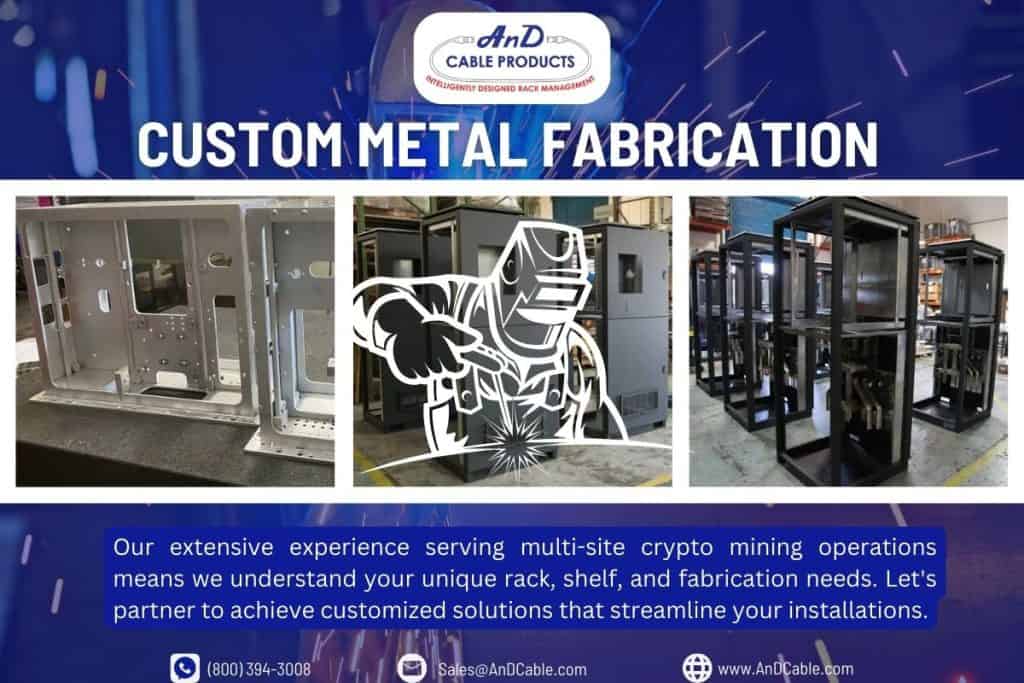
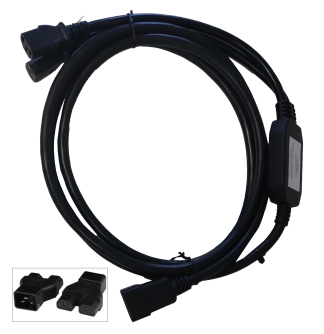
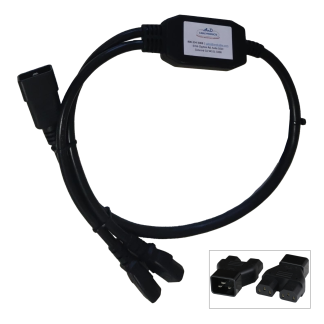


 Louis Chompff – Founder & Managing Director, AnD Cable Products


