Posted on

Data Center Microgrid: A Modern Necessity for Tech’s Power-Hungry Future

Data Center Microgrid featured image green energy

As the digital world continues to expand, data centers have grown exponentially with it – supporting everything from cloud computing to artificial intelligence. However, this growth comes at a significant cost: energy consumption. Fortunately, things are becoming a little brighter, thanks to data center microgrid technology.

Data centers require ridiculous amounts of energy to operate, with global consumption expected to double in the next few years. In fact, according to this year’s IEA (International Energy Agency) Electricity 2024 Analysis and Forecast to 2026:

Electricity consumption from data centers, artificial intelligence (AI), and the cryptocurrency sector could double by 2026.

After globally consuming an estimated 460 terawatt-hours (TWh) in 2022, data centers’ total electricity consumption could reach more than 1,000 TWh in 2026.

This surge in power usage is putting immense pressure on traditional power grids, leading to concerns about reliability, efficiency, and environmental impact.

Amid these challenges, microgrids have emerged as a vital solution.


Key Takeaways

By the end of this article, you’ll know:

  • How Microgrids are a solution to the rising energy demands of data centers.
  • The numerous Benefits of microgrids.
  • The challenges of utilizing microgrids in data centers.
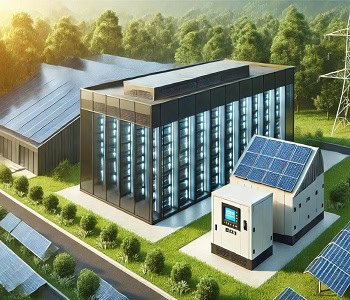
Data Center Microgrid in clean and green environment

What Are Microgrids?

Unlike traditional power systems that depend on centralized grids, microgrids generate energy locally. That means data centers no longer have to tap into the country’s central power systems. 

Data center microgrids are also greener and more sustainable. They can tap into renewable sources like wind and solar, offering flexibility and better resilience to meet the tech industry’s growing power needs. 

As the world intensifies its efforts to reduce carbon footprints, the tech sector should play a leading role. The shift to microgrids is not only a solution to power challenges but a significant step toward aligning with today’s core environmental goals. 

Rising Energy Demands in Data Centers

Data centers are now among the largest consumers of electricity. According to the International Energy Agency (IEA), data centers and data transmission networks accounted for 1-3% of the world’s electricity consumption in 2022 (global power consumption in 2022 is at 24,398 TWh). The strain on traditional power grids is already evident in areas where many data centers are established (Northern Virginia, California, etc.).

Let’s dissect this for a bit because 1-3% may not look much. To put things into perspective, consider the power consumption of an average U.S. household, which uses about 10,715 kWh per year. At the lower end of 243.98 TWh (1% of global consumption), this is equivalent to the annual electricity usage of over 22.7 million U.S. households. At the upper end of 731.94 TWh (3% of global consumption), it’s like powering 68.3 million households for a year.

Please keep in mind that South Korea used only 568 TWh in 2022. The data center industry is on par with advanced countries’ power consumption.

Electricity consumption worldwide 2022

Utility companies are struggling to keep up, leading to delays in power distribution and concerns about grid stability. There are now more power interruptions not just in the data centers but also in cities and highly urbanized regions.

Rising energy demands have two impacts: they challenge the reliability of power grids and worsen environmental concerns. As data centers consume more power, their carbon footprint grows, intensifying the pressure to find sustainable energy solutions. Without addressing these challenges, the expansion of data centers could lead to more frequent outages and a larger environmental impact.

The Role of Microgrids in Data Centers

By incorporating energy storage systems, microgrids ensure that data centers have a continuous power supply, even when the grid is down. This resilience is vital for data centers to keep essential digital services running.

Real-World Data Center Microgrid Examples

One prominent example is Microsoft’s San Jose data center, which partnered with Enchanted Rock and U.S. Energy to implement a microgrid system using food waste gas. This setup ensures that the data center can maintain operations during grid outages.

Similarly, other companies are exploring data center microgrids as a solution to the growing energy demands of data centers. Startups like Donato Solar are focusing on powering new data centers in Illinois with solar energy.

These examples demonstrate that microgrids are not just a theoretical solution – leading tech companies are actively implementing them to ensure both operational continuity and environmental responsibility.

In fact, microgrids are not only utilized by data centers; almost every power-hungry facility can benefit from them. There are 692 microgrids in the U.S. alone, growing significantly every year. 

Benefits of Data Center Microgrids

Immediate Resilience and Reliability

Microgrids empower data centers to function independently from the grid. That translates to continuous operations regardless of regional outages. Think of microgrids as colossal backup generators or smaller power plants. They keep things running, even in emergencies.

Increased Energy Efficiency

Microgrids reduce the energy losses that occur during long-distance transmission by generating electricity closer to where it’s used. Localized energy production makes data centers more efficient and lowers overall energy costs, especially when combined with advanced energy management systems.

Environmental Sustainability

Microgrids enable data centers to integrate renewable energy sources. You can expect to see more solar and wind power being used. This reduces reliance on fossil fuels, significantly lowering the industry’s carbon footprint.

Wind and solar energy for data center sustainability

Cost Savings

 While the initial investment in microgrid technology may be significant, the long-term cost savings can be substantial. Microgrids allow data centers to take advantage of lower energy prices during off-peak hours and utilize stored energy during peak demand periods. This reduces energy costs and provides a more stable and predictable energy budget.

Grid Support and Flexibility

Microgrids not only benefit the data centers but also the broader power grid. They can support the grid by providing ancillary services, such as frequency regulation and voltage support. Additionally, microgrids can participate in demand response programs, reducing the load on the grid during peak times and contributing to overall grid stability.

Energy Independence

For data centers located in remote or underserved areas where extending the traditional grid is impractical, microgrids offer a viable solution. They provide energy independence, ensuring that data centers can operate without relying on unstable external power sources.

Future-Proofing

As energy demands continue to rise, data center microgrids offer a scalable solution that can grow with the data center’s needs. By integrating new energy technologies and storage solutions, microgrids ensure that data centers remain adaptable to future energy challenges.

Microgrid for Data Centers – Why Isn’t Everyone Building It

Microgrids are fantastic and have a tangible impact on data centers’ general performance and operations. However, they’re not easy to deploy. They involve high initial setup and integration costs, the complexity of managing diverse energy sources, and the challenge of ensuring a consistent power supply from intermittent renewables like solar and wind.

Scaling microgrids to meet the ever-growing energy demands of data centers, especially in densely populated areas, can be difficult. Supply chain issues for necessary equipment and the need for advanced energy management systems to optimize efficiency and reliability further complicate the deployment of microgrids.

AnD Cable Products on Energy-Efficient and Quick-Deployment Solutions

As data centers look for ways to boost energy efficiency and speed up deployment of microgrids, AnD Cable Products also offers solutions that do a bit of the same thing for smaller facilities, organizations, and businesses that require their modular data centers or servers: Prefabricated Modular Data Centers.

We offer a range of high-performance IT cabinets and modular systems that help save energy and make setup quick and easy. Our Data Center in a Box, for example, uses intelligent natural air cooling to bring down power usage. It’s the perfect solution for Universities, Human Resource Management, Retail Businesses, and Hospitals.

Energy efficient and fast solution for data center deployment

The Future of Data Centers and Microgrids

The future of data centers hinges on the continued development and adoption of microgrids. As energy demands soar, traditional power grids will struggle to keep pace. Data center microgrids offer a sustainable solution by providing the flexibility, resilience, and local energy generation data centers require. With advancements in renewable energy integration and battery storage, microgrids will become increasingly vital in reducing the carbon footprint of these power-hungry facilities.

Collaboration between tech companies, energy providers, and policymakers will be key to overcoming the challenges of implementing data center microgrids at scale. As the tech industry prioritizes sustainability, microgrids will ensure data centers remain reliable, efficient, and aligned with environmental goals.

FAQs

What is a data center microgrid?

A data center microgrid is a localized energy system that can generate and manage its own power, reducing its reliance on the traditional, centralized power grid.

Why are data center microgrids becoming more important?

Global electricity consumption from data centers, AI, and cryptocurrency is projected to double by 2026. Microgrids offer a sustainable and resilient solution to this growing energy demand by providing local power generation and reducing pressure on the main grid.

What are the main benefits of using microgrids for data centers?

The key benefits include enhanced reliability, improved energy efficiency, long-term cost savings, and a lower carbon footprint through the integration of renewable energy sources like wind and solar.

What are the challenges in implementing data center microgrids?

The implementation of microgrids faces several challenges, such as high initial costs, the complexity of managing diverse energy sources, and difficulties in scaling the systems to meet large-scale needs.

What is the future outlook for data center microgrids?

The future of data centers is seen as being dependent on the continued adoption and development of microgrids. Successful, large-scale implementation will require collaboration among tech companies, energy providers, and policymakers.

About the Author

Louis Chompff - Founder, AnD Cable Products, Rack and Cable ManagementLouis Chompff – Founder & Managing Director, AnD Cable Products
Louis established AnD Cable Products – Intelligently Designed Cable Management in 1989. Prior to this he enjoyed a 20+ year career with a leading global telecommunications company in a variety of senior data management positions. Louis is an enthusiastic inventor who designed, patented and brought to market his innovative Zero U cable management racks and Unitag cable labels, both of which have become industry-leading network cable management products. AnD Cable Products only offer products that are intelligently designed, increase efficiency, are durable and reliable, re-usable, easy to use or reduce equipment costs. He is the principal author of the Cable Management Blog, where you can find network cable management ideas, server rack cabling techniques and rack space saving tips, data center trends, latest innovations and more.
Visit https://andcable.com or shop online at https://andcable.com/shop/

Posted on

Quantum Computing Enters the Data Center: New Infrastructure Possible Requirements

Current prototype of an actual quantum computer for quantum computing data centers featured image

Quantum computing, once a theoretical concept confined to academic research, is rapidly transitioning into a practical technology with the potential to revolutionize various industries. 

Although, at the moment, there isn’t a single fully operational quantum computer, projections suggest that this will change significantly in the next six years, with estimates of up to 5,000 working models by 2030. This number, while seemingly modest, represents a monumental leap forward, comparable to the impact of the first digital computers.

To put this into perspective, our current generation of computers has ushered in transformative technologies such as artificial intelligence (AI), which powers sophisticated models like GPT-4 and Gemini (Bard), enabling advancements in natural language processing, data analysis, and machine learning. 

These developments have already begun reshaping industries ranging from healthcare to finance. Similarly, the advent of quantum computing promises to unlock new capabilities, solving problems that are currently intractable for classical computers, such as complex optimization issues, molecular modeling for drug discovery, and cryptographic security.

As we stand on the brink of this quantum revolution, the implications for data centers—the backbone of our digital infrastructure—are profound. Integrating quantum computing into these centers will require a reevaluation of the current infrastructure, including the development of specialized quantum processing units (QPUs), cryogenic cooling systems (more sophisticated than liquid cooling), and advanced quantum networking solutions. 

In this article, we will explore these emerging requirements, the potential benefits, and the challenges associated with this next-generation technology, providing a comprehensive overview of the future of quantum data centers.


Key Takeaways

By the end of this article, you’ll know:

  • The necessary changes to data center infrastructure and hardware to deploy quantum computers in them.
  • The benefits and challenges of deploying quantum computers in data centers.
  • How quantum computers can change data encryption standards.
Current prototype of an actual quantum computer for quantum computing data centers

Understanding the Basics of Quantum Computing

Quantum computing is a paradigm shift in computing that harnesses the principles of quantum mechanics to perform calculations. Unlike classical computers, which use bits representing either a 0 or a 1, quantum computers employ qubits. Qubits can exist in a superposition state, meaning they can be 0, 1, or both simultaneously. This unique property, combined with quantum entanglement—a phenomenon where qubits become interconnected and share the same fate—enables quantum computers to process vast amounts of information in parallel.

Quantum Computing Key Concepts

Quantum Bits (Qubits): The fundamental unit of quantum information, capable of representing multiple states at once.

Superposition: The ability of qubits to exist in a combination of 0 and 1 states simultaneously, allowing for parallel computations.

Quantum Entanglement: The phenomenon where two or more qubits become linked, such that the state of one qubit instantly affects the state of the others, regardless of distance.

Quantum Algorithms and Their Applications

Quantum algorithms are designed to leverage quantum computers’ unique properties to solve problems unmanageable for classical computers. Some prominent quantum algorithms include:

  • Shor’s Algorithm: For factoring large numbers with potential implications for breaking current encryption standards.
  • Grover’s Algorithm: For searching unsorted databases faster than classical algorithms.
  • Quantum Simulation Algorithms: For simulating quantum systems with applications in drug discovery, materials science, and chemistry.

Potential Applications in Various Fields

  • Drug Discovery: Simulating molecular interactions to design new drugs.
  • Finance: Optimizing investment portfolios and risk management.
  • Materials Science: Developing new materials with enhanced properties.
  • Artificial Intelligence: Accelerating machine learning algorithms.
  • Logistics: Optimizing supply chains and transportation routes.
  • Energy: Designing more efficient solar cells and batteries.

The potential applications of quantum computing are vast and far-reaching, with the potential to transform numerous industries and solve problems we once considered impossible.

Quantum Computing Impact on Data Centers

Integrating quantum computing into data centers promises to revolutionize data processing capabilities. Quantum computers, with their ability to handle complex calculations at unprecedented speeds, are set to transform the landscape of data centers. Here’s a closer look at the benefits and challenges of this integration.

Creative take on quantum computing data center

Benefits of Integrating Quantum Computing into Data Centers

Enhanced Processing Power and Efficiency: Quantum computers can solve problems currently too complicated for classical computers. This means tasks that require significant computational power, such as optimization problems, complex simulations, and cryptographic analysis, can be performed more efficiently. The speed and efficiency improvements can lead to faster data processing and better resource utilization within data centers.

Advanced Problem Solving: Quantum computing enables the tackling of complex issues in various fields, including drug discovery, financial modeling, and artificial intelligence. This capability can open up new opportunities for data centers to offer their clients more advanced services and solutions.

Energy Efficiency: Quantum computers have the potential to perform specific calculations with significantly less energy than classical computers, which can lead to more sustainable data center operations. This is particularly important as data centers strive to reduce their environmental impact and improve energy efficiency.

How Significant is the Energy Efficiency?

Quantum computers can be far more energy-efficient than classical computers, especially for specific tasks. For example, Google’s Sycamore quantum processor consumes about 26 kilowatts of electrical power, significantly less than a typical supercomputer, which might use several megawatts for similar tasks.

For more clarity, the experiment compared the speed between a quantum computer (Google’s Sycamore) and our current supercomputers (the ones we use for weather forecasting). Google’s Sycamore completes the task in only 200 seconds, whereas a state-of-the-art classical supercomputer would take 10,000 years – 315,569,520,000 seconds!

This dramatic speed difference equates to massive power consumption savings. A task that used to take hours or days of computations can now be achievable in just a fraction of a second. 

Energy Efficiency in AI Data Centers: A quantum computing-based optimization framework can reduce energy consumption in AI data centers by as much as 12.5% and cut carbon emissions by nearly 9.8%. This efficiency is achieved through advanced quantum algorithms that manage energy systems more effectively than classical methods​.

Current Challenges for Quantum Computing Data Centers

Technical Challenges in Integration

Qubit Stability: Maintaining the delicate quantum states of qubits over time is challenging due to environmental interference and decoherence. This requires extremely low temperatures and stable environments, often achieved through cryogenic cooling systems.

Quantum Error Correction: Quantum computations are highly susceptible to errors. Developing robust quantum error correction methods is essential to ensure reliable and accurate results. This complicates the infrastructure required to support quantum computing in data centers.

Scalability Concerns:

Scaling Quantum Systems: Building and maintaining large-scale quantum systems with thousands of qubits is a significant challenge. Current quantum computers are still in the early stages, and scaling up these systems to meet the demands of modern data centers involves overcoming substantial technical and logistical hurdles.

Cost and Accessibility: The infrastructure required for quantum computing is expensive and complex, limiting its accessibility. The high costs associated with developing and maintaining quantum systems can hinder widespread adoption in data centers.

Security Issues:

Quantum Cryptography: While quantum computing offers advancements in cryptographic methods, it also threatens current encryption standards. Quantum computers can break widely used encryption algorithms, necessitating the development of quantum-resistant cryptographic techniques to ensure data security.

Quantum Key Distribution (QKD): Implementing QKD can enhance security by providing theoretically unbreakable encryption. However, integrating QKD into existing data center infrastructure presents additional challenges and requires significant investment.

Quantum Computing Data Center Hardware Realities and New Infrastructure Requirements

Quantum computers are not just faster versions of classical computers; they’re a fundamentally different breed. At their core are Quantum Processing Units (QPUs), housing qubits that demand extreme conditions to function. This necessitates a new approach to data center infrastructure:

Cryogenic Cooling: QPUs operate near absolute zero, requiring specialized cryogenic systems like dilution refrigerators. These systems must maintain stable, ultra-low temperatures while minimizing vibrations and electromagnetic interference that could disrupt delicate quantum states.

Specialized Control Electronics: Manipulating and measuring qubits requires sophisticated electronics designed for the cryogenic environment. Shielding is crucial to protect these electronics from external noise that could introduce errors in quantum calculations.

Robust Shielding: The sensitivity of QPUs to electromagnetic interference demands comprehensive shielding throughout the data center to ensure accurate and reliable quantum operations.

Quantum network for ultra-fast data transfer

Networking for Quantum Computing

Quantum computers aren’t isolated equipment; they thrive on connectivity. Quantum networking is essential for linking these machines, enabling distributed quantum computing and sharing quantum resources. However, this requires upgrades to traditional data center networks:

Quantum-Ready Networks: Existing networks may not be equipped for quantum communication, which involves transmitting quantum states over long distances. Quantum repeaters and routers are needed to extend the range of quantum signals and manage quantum traffic efficiently.

Super Low-Latency Priority: Quantum algorithms often rely on real-time communication between qubits. Therefore, data center networks must prioritize ultra-low latency to ensure the smooth execution of quantum operations.

Security in the Quantum Computing

Quantum computing’s immense power also poses a threat to current encryption standards. To protect data in this new landscape, data centers must adopt robust quantum security measures:

Post-Quantum Cryptography: The transition to cryptographic algorithms resistant to quantum attacks is imperative. These algorithms will safeguard sensitive data from future quantum computers capable of breaking current encryption methods.

Quantum Key Distribution (QKD): QKD leverages quantum mechanics to create unbreakable encryption keys, offering a promising solution for secure communication in the quantum age.

Preparing for Quantum Integration: Infrastructure and Management Solutions

While quantum computing promises to revolutionize data centers, current infrastructure needs and cable management solutions are still evolving. At AnD Cable Products, we recognize that our traditional cable management systems are perfectly suited to support the growth and efficiency of today’s data centers. Our high-quality, reliable cable management solutions ensure that data centers operate smoothly, maintaining optimal organization, airflow, and security. These systems are essential for the seamless operation of classical computing infrastructure, which remains the backbone of most data centers today.

AnD Cable Products cable management transformation using cable managers

As technologies advance and quantum computing infrastructure becomes more defined, AnD Cable Products is committed to diving headfirst into this new frontier. We are poised to become the go-to source for cutting-edge solutions tailored to the unique demands of quantum computing environments. Our dedication to innovation and quality ensures that, as new technologies emerge, we will be ready to provide the advanced cable management systems needed to support the next generation of data centers.

Conclusion

The integration of quantum computing into data centers heralds a new era of computational capabilities, offering unprecedented processing power, advanced problem-solving, and significant energy efficiency. However, this transition also presents unique challenges, including the need for specialized hardware, cryogenic cooling, advanced networking solutions, and robust security measures. As we navigate these complexities, the potential benefits for industries across the board are immense.

For AnD Cable Products, this quantum revolution represents both an opportunity and a call to innovation. As data centers evolve to accommodate quantum computing, the demand for advanced cable management solutions will grow. AnD Cable Products is well-positioned to lead in providing the high-quality infrastructure needed to support these cutting-edge technologies, ensuring reliable and efficient operations in the data centers of the future.

FAQs

What is quantum computing?

Quantum computing uses the principles of quantum mechanics to perform complex calculations. Unlike classical computers that use bits (0s and 1s), quantum computers use qubits, which can exist in a superposition of both states simultaneously, allowing for parallel computations.

How will quantum computing impact data centers?

The integration of quantum computing will necessitate significant changes to data center infrastructure. This includes the need for specialized hardware like Quantum Processing Units (QPUs), advanced cryogenic cooling systems, and new networking solutions designed for quantum data transmission.

What are the main benefits of using quantum computing in data centers?

Quantum computing offers several advantages, including vastly superior processing power for solving complex problems, improved energy efficiency compared to classical supercomputers, and the ability to handle large-scale data and simulations more effectively.

What are the key challenges in integrating quantum computing into data centers?

Major challenges include maintaining qubit stability and correcting errors, overcoming scalability issues, managing the high costs associated with quantum hardware, and developing new infrastructure to support the technology.

What is the relationship between quantum computing and data security?

Quantum computing poses a threat to current encryption standards because a sufficiently powerful quantum computer could break widely used cryptographic algorithms. To address this, the industry is exploring solutions like post-quantum cryptography (PQC) and Quantum Key Distribution (QKD) to secure data against future quantum attacks.

About the Author – John Lester

John Lester - General Manager, AnD Cable Products

John Lester, General Manager at AnD Cable Products, brings a rich tapestry of IT and project management experience to the forefront of cable management solutions for data centers. His career, spanning over three decades, includes significant roles in IT project management and consultation with renowned companies. John served in the Marine Corps during Desert Storm. John’s journey in the tech world is further distinguished by his proficiency in advanced programming and systems expertise. 

His leadership at AnD Cable Products encapsulates a blend of innovation, strategic planning, and a relentless commitment to delivering excellence in the field of data center infrastructure.  John was with AnD Cable Products when Louis was designing his innovative Zero U cable management racks and Unitag cable labels, both of which have become industry-leading network cable management products. AnD Cable Products only offer products that are intelligently designed, increase efficiency, are durable and reliable, re-usable, easy to use or reduce equipment costs. He is the co-author of the Cable Management Blog, where you can find network cable management ideas, server rack cabling techniques and rack space saving tips, data center trends, latest innovations and more. Visit https://andcable.com or shop online at https://andcable.com/shop/

Posted on

Self-Healing Cables: The Next Frontier in Data Center Resilience

Self-healing wires and cables for data centers - featured image for blog

Data center outages are a nightmare scenario for any business. A single hour of downtime can cost millions of dollars in lost revenue, productivity, and damaged reputation. The advent of self-healing materials (trending technology) is transforming the cable industry, offering a new frontier in data center resilience. Imagine cables that can automatically repair themselves after being damaged, virtually eliminating the risk of unexpected failures. This isn’t science fiction – it’s the reality of self-healing cables.

In this article, we’ll explore the science behind self-healing cables and their numerous advantages for data centers.


Key Takeaways

By the end of this article, you’ll know:

  • How self-healing cables improve reliability.
  • The cost saving and safety benefits of self-healing cables.
  • The challenges to deploying self-healing cables and the ways they are being addressed.
Self-healing wires and cables for data centers

What Are Self-Healing Cables

Self-healing cables are a revolutionary innovation in cable technology designed to address weaknesses of traditional cables. These cables are engineered with special materials that enable them to repair damage autonomously, such as cuts, punctures, or cracks, without human intervention.

There are two main types of self-healing cables:

  1. Self-Healing Wire Insulation – This type of cable features insulation that can mend itself after being damaged. When the insulation is breached, the self-healing material reacts to the exposure, flowing into the damaged area and effectively sealing it. This healing reaction prevents electrical shorts, ensures the integrity of the signal transmission, and extends the cable’s lifespan.
  2. Self-Healing Wire – This type refers to cables where the conductive core possesses self-healing properties. In the event of a break in the conductor, the material can re-establish electrical connectivity, restoring the flow of current and preventing a complete cable failure.

The science behind self-healing cables is rooted in developing advanced polymers with unique chemical properties. Scientists designed these polymer materials to respond to damage by triggering a chemical reaction that forms new bonds, effectively “healing” the damaged area. This self-healing process happens at a microscopic level, but its impact on cable performance is significant.

Advantages of Self-Healing Cables in Data Centers

Self-healing cables offer many benefits for data centers, addressing critical challenges and paving the way for a more resilient and efficient future.

Enhanced Reliability

The most significant advantage of self-healing cables is their ability to reduce the risk of unplanned outages. These cables can maintain continuous operation by autonomously repairing damage, ensuring uninterrupted power delivery and data transmission. This reliability is crucial for data centers, where even a brief outage can have severe consequences.

Extended Cable Lifespan

Self-healing technology can dramatically extend the lifespan of cables. By repairing minor damage before it escalates into significant failures, these cables can last significantly longer than traditional cables. Long-life cables translate to reduced maintenance costs, less frequent cable replacements, and a lower total cost of ownership.

Improved Safety 

Damaged cables can pose electrical hazards, especially in high-voltage environments like data centers. Self-healing cables minimize these risks by quickly sealing insulation breaches, preventing electrical shorts and potential fires.

Cost Savings

While self-healing cables may have a higher upfront cost than traditional cables, their long-term cost benefits are substantial. The reduced need for maintenance, repairs, and replacements can lead to significant savings over time, making self-healing cables a wise investment.

Sustainability

By extending cable lifespans and reducing the need for frequent replacements, self-healing cables contribute to a more sustainable data center ecosystem. It aligns with the growing emphasis on environmental responsibility in the tech industry.

Self-healing network cables for data centers operations

Applications of Self-Healing Cables in Data Centers

Power Cables

Self-healing cables are ideal for power delivery systems in data centers, where reliable power is paramount. They can be used for primary power feeds, backup power supplies, and distribution networks, ensuring uninterrupted power to critical equipment.

Data Cables

In a data center’s data-centric environment, self-healing cables can safeguard against data loss by maintaining continuous connectivity and preventing signal disruptions. They are well-suited for high-speed data transmission cables, server interconnects, and storage area networks.

Other Applications

We can also apply self-healing technology to various other cables within data centers, such as those used for cooling systems, monitoring equipment, and security systems. This versatility further enhances the overall resilience of the data center infrastructure.

Challenges and Future Outlook

Despite the promising advantages of self-healing cables, several challenges must be addressed to realize their potential in data center applications. One significant limitation is the current cost of self-healing materials, which can be higher than traditional materials. This cost factor can hinder widespread adoption, particularly for smaller data centers with limited budgets. Integrating self-healing technologies into existing cable infrastructure can also be complex, requiring careful planning and significant investment.

Another area of concern is the performance of self-healing materials under extreme conditions. Data centers often operate in environments with varying temperatures, humidity, and electromagnetic interference. Ensuring that self-healing cables maintain integrity and self-repair capabilities under these conditions is crucial for their long-term viability.

Future Developments

Advancements in self-healing materials and technologies are continually being made, paving the way for more effective and affordable solutions. Researchers are exploring new polymers and composites that offer enhanced self-healing properties at lower costs. For example, developing more efficient microencapsulation techniques and using bio-inspired materials could lead to significant improvements in self-healing capabilities.

Another exciting development area is the integration of intelligent technologies with self-healing cables. Sensors and IoT (Internet of Things) devices in cable systems could enable real-time monitoring and predictive maintenance. These smart cables, like Smart PDU, could detect potential issues before they cause significant damage, activating the self-healing process proactively and further reducing downtime and maintenance costs.

In the long term, adopting self-healing cables could become a standard data center design and construction practice. As the technology matures and becomes more cost-effective, it will likely see broader acceptance and implementation. The potential for self-healing cables to enhance data center resilience, reliability, and sustainability is critical to future infrastructure development.

Discover the EDGEasyair All-In-One Cabinet

AnD Cable Products sells EDGEasyair All-in-One Cabinet, a forward-thinking cabinet that aligns with the core principles of resilience and adaptability championed by self-healing cables.

All-in-One cabinet for small-scale data centers and other facilities

By integrating power, cooling, security, and monitoring into a single, efficient unit, EDGEasyair simplifies data center management for universities, retail stores, hospitals, and HR agencies. This system reduces deployment time and optimizes resource utilization. Its self-regulating climate control helps mitigate environmental stressors that could contribute to cable damage, extending the lifespan of existing infrastructure. 

EDGEasyair is designed for scalability, ensuring your data center can seamlessly integrate with emerging technologies like self-healing cables as they become more readily available. By choosing EDGEasyair today, you’re investing in a future-proof solution that bridges the gap between current needs and tomorrow’s innovations.

Paving the Way for Resilient Data Centers

Both challenges and opportunities mark the journey toward integrating self-healing cables into data centers. Overcoming limitations will require years (even decades) of continued research, innovation, and collaboration between industry stakeholders. However, the potential benefits – from increased reliability and cost savings to reduced environmental impact – make this pursuit worthwhile.

As advancements in self-healing materials and technologies continue to unfold and become commercialized, the future of data center resilience looks promising. Embracing these innovations will be vital to building more robust, efficient, and sustainable data centers capable of meeting the demands of an increasingly digital world.

At AnD Cable Products, we are dedicated to helping data centers achieve peak performance. We offer a range of quality power cables, network cables, and cable management solutions. Explore our product offerings and ensure your data center operates at its best with our innovative solutions.

FAQs

What are self-healing cables?

Self-healing cables are a new type of cable designed with special materials that allow them to automatically repair minor damage like cuts, cracks, or punctures. This technology helps to prevent unexpected failures and downtime, particularly in critical environments like data centers.

How do self-healing cables work?

The self-healing process is based on advanced polymers within the cable’s structure. When damage occurs, these polymers trigger a chemical reaction to form new bonds, effectively “healing” the damaged area on a microscopic level and restoring the cable’s integrity. There are two types of self-healing: one where the insulation repairs itself to maintain signal integrity and another where the conductive core can re-establish electrical connectivity.

What are the key benefits of using self-healing cables in data centers?

–Enhanced Reliability: They ensure continuous operation and uninterrupted power and data transmission.

-Reduced Costs: Their ability to repair themselves extends their lifespan, leading to lower maintenance and replacement costs.

-Improved Safety: By quickly mending insulation breaches, they reduce the risk of electrical hazards and fires.

-Sustainability: Their longer lifespan contributes to a more sustainable infrastructure by reducing the frequency of replacements.

What are some of the main applications for self-healing cables in a data center?

–Power Delivery Systems: Ensuring uninterrupted power to critical equipment.

–Data Cables: Safeguarding against potential data loss.

–Other Systems: They can also be used in cooling and security systems.

What are the challenges or disadvantages of this technology?

–Higher Initial Cost: The advanced materials used in their construction can make them more expensive upfront.

-Integration Complexity: Integrating them into existing infrastructure can be challenging.

–Performance Concerns: Ensuring they perform effectively under extreme conditions, such as varying temperatures, is a key concern.

What is the future outlook for self-healing cables?

Future developments in this technology aim to address the current challenges. Researchers are working on new polymers and more affordable materials. There are also plans to integrate intelligent technologies like sensors and IoT devices into the cables to enhance their capabilities and support wider adoption.

About the Author – John Lester

John Lester - General Manager, AnD Cable Products

John Lester, General Manager at AnD Cable Products, brings a rich tapestry of IT and project management experience to the forefront of cable management solutions for data centers. His career, spanning over three decades, includes significant roles in IT project management and consultation with renowned companies. John served in the Marine Corps during Desert Storm. John’s journey in the tech world is further distinguished by his proficiency in advanced programming and systems expertise. 

His leadership at AnD Cable Products encapsulates a blend of innovation, strategic planning, and a relentless commitment to delivering excellence in the field of data center infrastructure.  John was with AnD Cable Products when Louis was designing his innovative Zero U cable management racks and Unitag cable labels, both of which have become industry-leading network cable management products. AnD Cable Products only offer products that are intelligently designed, increase efficiency, are durable and reliable, re-usable, easy to use or reduce equipment costs. He is the co-author of the Cable Management Blog, where you can find network cable management ideas, server rack cabling techniques and rack space saving tips, data center trends, latest innovations and more. Visit https://andcable.com or shop online at https://andcable.com/shop/

Posted on

Power Struggles: Addressing Crypto’s Energy Demands through Strategic Cable Management

Crypto mining data center using new-generation GPUs - featured image

The cryptocurrency boom has been a double-edged sword. While generating excitement in the tech and finance worlds for its versatile uses, major debates around energy consumption have sparked everywhere. 

Crypto mining operations are notoriously power-hungry, with global estimates suggesting their energy use rivals that of entire nations. For data centers accommodating crypto rigs – stacks of graphics processing units (GPU) that consume up to 120 watts per GPU or 1000 watts per rig – addressing power efficiency is not just good environmental practice – it’s a business necessity!

That number may seem small if we’re talking about small-time crypto miners. However, crypto mining facilities or data centers with at least 50,000 rigs (consuming 180 megawatts) can quickly translate to millions of dollars in monthly electricity costs. To put things into perspective, 180 megawatts is enough to power 180,000 U.S. homes! 

This is where strategic cable management plays a surprising but crucial role. It might seem like a minor factor, but how cables are organized within crypto mining rigs, server racks, and throughout the data center can significantly impact power usage and overall efficiency. 


Key Takeaways

By the end of this article, you’ll know:

  • The power and heat challenges of crypto mining rigs.
  • The Crucial Role of Strategic Cable Management in saving energy and regulating temperature.
  • The benefits of custom fabricated metal frames GPU rigs.
Crypto mining data center using new-generation GPUs

Challenges of Crypto Mining in Data Centers

Massive Power Draw

Crypto mining rigs are designed to run at full capacity 24/7, consuming vast amounts of electricity. Unlike typical data centers that store and transfer data to where it is needed, where the operating parts are storage devices, crypto mining uses GPUs. These processing units are extremely power-demanding and are used all day at maximum capacity to acquire cryptocurrencies like BitCoin.

Heat Generation 

This continuous operation creates substantial heat output, straining traditional cooling systems and increasing energy costs. GPUs generate more heat than storage devices. GPUs can peak at 203°F (95°C). Storage devices like SSDs operate only at around 86°F to 122°F (30°C to 50°C), which dwarfs in comparison to the average operating temperature of GPUs at around 158°F (70°C).

Density Demands  

To maximize computing power, crypto rigs are often packed tightly into custom racks, increasing the thermal and power management challenges. Moreover, crypto mining facilities are relatively new, unlike traditional data centers that are now more standardized and with proper facility regulations. Hence, crypto mining data centers can design and create racks with poor efficiency. 

Crypto mining facility using old-gen GPUs and power cable rigging methods

How Cable Management Helps in Crypto Mining Data Centers

Optimizing Airflow  

Tangled cables create obstructions that hinder efficient airflow around servers. Well-organized cables, using proper management tools and techniques, improve airflow and reduce the strain on cooling systems. This directly saves energy.

Streamlined Power Delivery 

Chaotic power cable routing leads to voltage drops, wasted power, and potential equipment instability. Clean cable pathways ensure consistent power to rigs, maximizing their utilization and preventing costly inefficiencies.

Easier Maintenance and Upgrades  

Unmanageable cables make troubleshooting and replacing components within racks a nightmare. Strategic cable organization simplifies maintenance, reducing downtime and conserving power that would be wasted on idle equipment during extended repairs.

Practical Cable Management Solutions

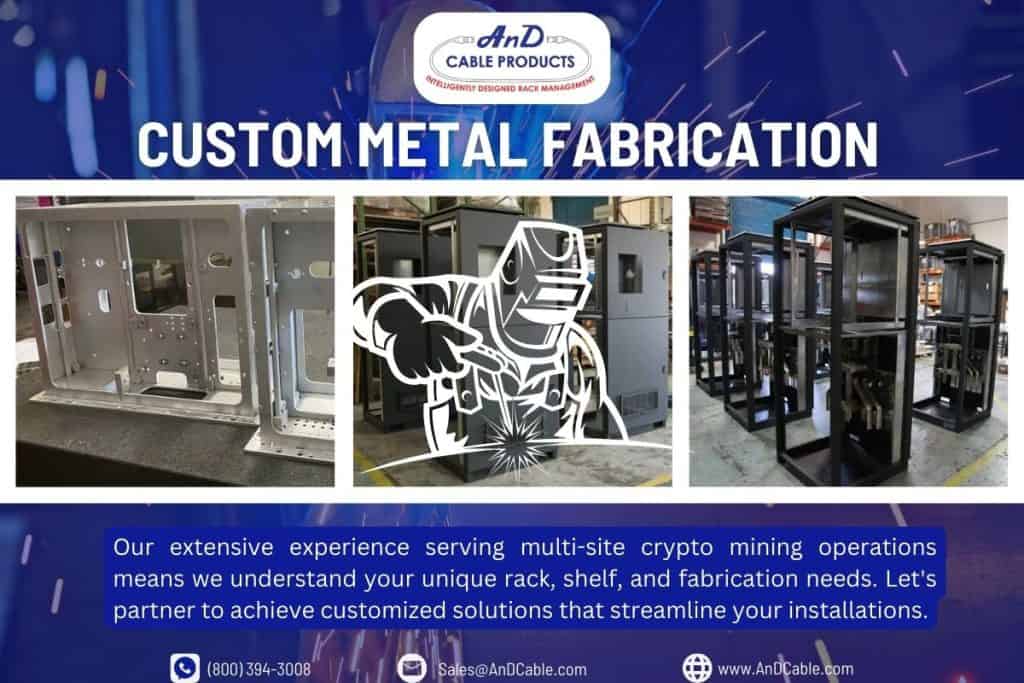
Custom Metal Fabrication: Building Better GPU Rigs

While cable management optimizes existing setups, Custom Metal Fabrication takes crypto mining rigs to the next level. Here’s how it can benefit data centers and dedicated mining facilities:

  • Maximized Airflow: Precision-designed metal frames and enclosures for your specific GPU configurations ensure optimal airflow around each card. This translates to better cooling and the ability to push your hardware further.
  • Enhanced Scalability: Open frame designs built to your exact specifications allow easy expansion and reconfiguration, future-proofing your mining operations.
  • Sturdier Construction: Custom metal fabrication delivers robust rigs that withstand continuous mining operations’ constant vibration and thermal stress. This increased durability means less downtime for repairs and more excellent long-term value.
  • Unique Space Constraints: Custom-built solutions adapt to challenging layouts or unusual spatial requirements, ensuring you maximize computing power within your available footprint.
AnD Cable Product's Custom Metal Fabrication Service

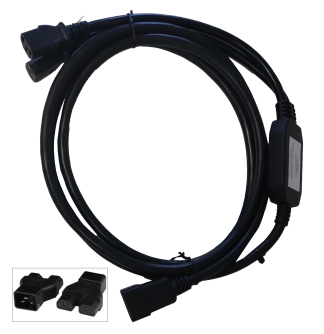
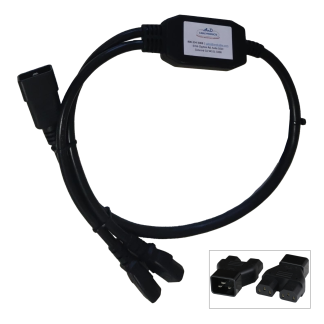
Y Power Cables and Ethernet Cables – see all

Partnering for Success

AnD Cable Products doesn’t just provide cable management solutions; we have extensive capabilities in custom metal fabrication. Our team can work with you to design and produce:

  • Specialized GPU mounting frames
  • Multi-rig enclosures and racks
  • Integrated cooling system supports
  • Custom branding and design elements

Let us help you design and build crypto mining rigs that perform exceptionally, look professional, and stand the test of time. Contact us today to explore custom Custom Metal Fabrication. 

Beyond the Thousands of GPU Rigs

While focusing on GPU rigs is crucial, also consider broader cable management practices throughout the crypto mining facility.

  • Overhead Trays and Pathways: Use pathways that distribute power cables efficiently, reducing the need for excessively long runs and minimizing clutter.
  • Underfloor Management: Strategically routed power cables under raised floors create cleaner pathways and improve airflow. 

The Future of Industrial-Scale Crypto Mining

In the high-energy world of crypto mining, every optimization counts. Effective cable management isn’t just about neatness; it translates to lower operating costs, reduced environmental impact, and greater operational reliability for your data center.At AnD Cable Products, we’re here to help crypto mining data centers get all the quality cables and cable managers they need. If you’re operating a crypto mining facility, please see our range of products relevant to your industry here.

FAQs

Why is cryptocurrency mining so energy-intensive?

Cryptocurrency mining operations are extremely power-hungry because they involve a large number of computer rigs, often equipped with powerful GPUs, that run at full capacity 24/7. A single large-scale facility can consume as much as 180 megawatts of electricity.

What are some of the main challenges related to the energy consumption of crypto mining?

The high energy consumption leads to two major challenges: high operating costs for the mining facilities and significant heat generation. This heat requires robust cooling systems, which in turn consume more energy.

How can strategic cable management help with these challenges?

Effective cable management optimizes airflow around the mining rigs, which reduces the strain on cooling systems. This leads to energy savings and helps maintain stable equipment temperatures. Well-routed power cables also ensure consistent power delivery, preventing voltage drops and equipment instability.

What is the role of custom metal fabrication in improving crypto mining operations?

Custom metal fabrication can be used to create precision-designed frames for GPU rigs. These custom frames can maximize airflow, improve scalability, provide sturdier construction, and be adapted to fit unique space constraints within a data center.

What services does AnD Cable Products offer to the crypto mining industry?

AnD Cable Products provides services in both strategic cable management and custom metal fabrication. These services are designed to help crypto mining data centers lower their operating costs, reduce their environmental impact, and improve overall operational reliability.

About the Author

Louis Chompff - Founder, AnD Cable Products, Rack and Cable ManagementLouis Chompff – Founder & Managing Director, AnD Cable Products
Louis established AnD Cable Products – Intelligently Designed Cable Management in 1989. Prior to this he enjoyed a 20+ year career with a leading global telecommunications company in a variety of senior data management positions. Louis is an enthusiastic inventor who designed, patented and brought to market his innovative Zero U cable management racks and Unitag cable labels, both of which have become industry-leading network cable management products. AnD Cable Products only offer products that are intelligently designed, increase efficiency, are durable and reliable, re-usable, easy to use or reduce equipment costs. He is the principal author of the Cable Management Blog, where you can find network cable management ideas, server rack cabling techniques and rack space saving tips, data center trends, latest innovations and more.
Visit https://andcable.com or shop online at https://andcable.com/shop/

Posted on

Exploring the Significant Advancements in Rack PDU Power Quality

Rack PDU Used in New Data Center Featured Image

When asked about the most critical aspect of running a data center, you might think of components and network infrastructure. Although they are essential, there’s something more valuable that many new data center operators are focused on – power. 

Electric power is the crude lifeblood of data centers – it’s what makes everything work. To ensure that everything runs smoothly and that expensive equipment and systems stay reliable and in top condition, your power quality is imperative. 

How do we make sure our servers and network devices get quality electricity? Common options include quality transformers and switchgear to UPS (Uninterruptible Power Supply) and PDUs (Power Distribution Units). 

In this article, we will focus on Rack PDUs and how far this technology has advanced. Let’s dive into some recent PDU advancements and explore how they set new efficiency, reliability, and sustainability standards.


Key Takeaways

By the end of this article, you’ll know:

  • How intelligent PDUs have evolved over time.
  • What a DCIM system is and how it benefits data centers.
  • Why Power quality at the rack level is important.
Rack PDU (Power Distribution Unit) Used in New Data Center

Rack PDU Evolution and Significant Advancements 

Rack PDUs Back Then

Traditionally, rack PDUs were simple power distribution devices designed to deliver electrical power to various equipment within a data center rack. Think of the cheapest extension cord you can buy today – yes, those were once the relied-on PDUs before the internet boom. However, as data centers have grown in complexity and scale, power quality and management demands have intensified. 

New systems and network devices are more sensitive to power surges, and the old electricity-only PDUs have become more of a liability. This demand has spurred innovation in rack PDU technology, transforming it into intelligent power management solutions that optimize power quality and distribution, enhance energy efficiency, and provide real-time monitoring and control capabilities.

Introduction of Metered and Monitored Server Rack PDUs

The next phase in the evolution of server rack PDUs saw the introduction of metered PDUs. These units came equipped with digital displays showing power usage, enabling data center managers to monitor power consumption at a glance. While a step up from their predecessors, these first-generation PDUs could not provide detailed power usage data or alert managers to potential power quality issues.

The development of monitored PDUs marked a significant advancement. These PDUs could not only measure power consumption but also transmit this data to a central management system. This capability allowed for remote monitoring of power usage and the early detection of potential issues, improving the overall efficiency and reliability of data center operations. It also helped data center operators see which clients/customers are consuming more power, allowing data centers to create better pricing options for customers based on their needs with accurate data. 

The Rise of Switched PDUs

As technology advanced again, switched PDUs emerged, allowing remote control of individual power outlets. This feature enabled data center operators to reboot servers and turn off unused equipment remotely, further enhancing power management capabilities. It also helped technicians only visit the data center room when there was an actual need for troubleshooting.

Smart or Intelligent Rack PDUs

The most significant leap forward, however, has been the advent of intelligent PDUs. These devices represent the pinnacle of rack PDU evolution, incorporating various features such as environmental monitoring, individual outlet metering, remote management, and real-time alerts. Intelligent PDUs provide unparalleled visibility and control over power distribution, allowing data center managers to optimize energy usage, prevent downtime, and manage power distribution more effectively.

Integration with DCIM Systems

A key aspect of the evolution of rack PDUs has been their integration with Data Center Infrastructure Management (DCIM) systems. This integration allows for comprehensive monitoring and management of all data center power and environmental conditions, offering a holistic view of operations. Through DCIM systems, intelligent PDUs can automate power management tasks, enhance capacity planning, and contribute to more sustainable data center practices.

Data center technician installing new rack PDUs on server cabinet

Why Is Power Quality at the Rack Level So Important?

Power quality at the rack level in data centers is crucial for several compelling reasons, impacting everything from operational reliability to financial efficiency and equipment longevity:

Ensuring reliability and uptime – High power quality prevents downtime and keeps critical services running smoothly, avoiding equipment malfunctions and system failures.

Protecting sensitive equipment – Stable power safeguards sensitive and costly equipment from damage, prolonging its lifespan and ensuring data integrity.

Optimizing energy efficiency – Good power quality leads to better energy efficiency, reducing power consumption and operational costs while contributing to sustainability goals.

Facilitating scalability – Maintaining power quality allows for predictable and efficient data center expansion, ensuring new equipment integrates seamlessly without power issues.

Reducing maintenance and operational costs – High power quality decreases the need for repairs and maintenance, lowering downtime and operational expenses, and minimizing data loss risks.

Complying with Service Level Agreements (SLA) and avoiding penalties – Adhering to SLA is easier with good power quality, helping avoid financial penalties and maintain customer trust.

Enhancing safety – Effective power quality management minimizes safety hazards like overheating and fires, ensuring a safer environment for equipment and personnel.

Looking to the Future of PDUs

The journey of Rack PDUs from simple power distribution units to intelligent power management solutions illustrates the rapid pace of innovation in data center technology. As we look to the future, we can expect Rack PDUs to continue evolving, incorporating advances in artificial intelligence, machine learning, and sustainability practices. If you’re looking for the latest PDU products, we can help:

Reduce Downtime and Increase Savings With AnD Cable Products’ PDUs

We offer a wide range of Power Distribution Units that are highly capable of offering various features mentioned in this article – from ultra-low profile PDUs for exceptional space-saving on your server cabinets to intelligent PDUs that can monitor performance, equipped with hydraulic-magnetic circuit breakers for added safety. 

Power Distribution Unit Request a Quote Ad

Elevate your data center efficiency with real-time monitoring, remote control capabilities, and energy-saving features. Ensure reliability, optimize power usage, and enhance your network’s performance with enhanced safety and high-quality power at the rack level. 

These future advancements will further enhance the efficiency, reliability, and environmental friendliness of data centers, ensuring they can meet the growing demands of the digital world.

FAQs

What is a traditional rack PDU?

Traditionally, rack PDUs (Power Distribution Units) were simple devices that delivered electrical power to equipment within a data center rack.

How have rack PDUs evolved?

The evolution of rack PDUs has progressed from basic units to monitored PDUs, then switched PDUs, and finally to intelligent or smart PDUs.

What is the purpose of monitored PDUs?

Monitored PDUs can measure power consumption and transmit this data to a central management system, allowing for remote monitoring and early detection of potential issues.

What do switched PDUs do?

Switched PDUs allow remote control of individual power outlets, enabling data center operators to remotely reboot servers and turn off unused equipment.

What are intelligent PDUs?

Intelligent PDUs are the most advanced type, providing a wide range of features such as environmental monitoring, individual outlet metering, remote management, and real-time alerts.

Why is power quality at the rack level important?

Good power quality at the rack level is crucial for optimizing energy efficiency, reducing operational and maintenance costs, and enhancing safety in the data center.

How do intelligent PDUs integrate with DCIM systems?

Intelligent PDUs can integrate with Data Center Infrastructure Management (DCIM) systems, providing a holistic view of operations and allowing for the automation of power management tasks and enhanced capacity planning.

How do these advancements contribute to energy efficiency?

Advancements in rack PDU technology lead to better energy efficiency by providing visibility into power usage and allowing for optimization, which helps reduce power consumption and operational costs.

About the Author

Louis Chompff - Founder, AnD Cable Products, Rack and Cable ManagementLouis Chompff – Founder & Managing Director, AnD Cable Products
Louis established AnD Cable Products – Intelligently Designed Cable Management in 1989. Prior to this he enjoyed a 20+ year career with a leading global telecommunications company in a variety of senior data management positions. Louis is an enthusiastic inventor who designed, patented and brought to market his innovative Zero U cable management racks and Unitag cable labels, both of which have become industry-leading network cable management products. AnD Cable Products only offer products that are intelligently designed, increase efficiency, are durable and reliable, re-usable, easy to use or reduce equipment costs. He is the principal author of the Cable Management Blog, where you can find network cable management ideas, server rack cabling techniques and rack space saving tips, data center trends, latest innovations and more.
Visit https://andcable.com or shop online at https://andcable.com/shop/

Posted on

Data Center Liquid Cooling – Is It Time for an Upgrade?

Featured image of a Liquid Cooling Data Center using immersion cooling

As the demand for cloud services, big data analytics and AI computations grows, data centers are housing increasingly dense and powerful computing equipment. This trend has led to higher heat loads, making efficient cooling not only desirable but necessary. In some situations, traditional air-cooled systems, once the backbone of data center cooling, are now being supplemented and even replaced by data center liquid cooling solutions.

In this article, we explore how far our cooling innovations have come and uncover the reality of today’s liquid cooling landscape. We’ll break down the tech news outlet hype around liquid-cooled data centers – what are the options? What makes it special? Is it suitable for every data center? And is this technological shift inevitable? Let’s dive in.


Key Takeaways

By the end of this article, you’ll know:

  • How the growing demands drive a need for better cooling.
  • How liquid cooling works and its benefits in data centers.
  • The challenges of implementing liquid cooling systems in data centers.
A Liquid Cooling Data Center using immersion cooling technology

Immersion Cooling Technology for Data Centers

Why is Liquid Cooling Superior?

Liquid cooling is superior in data centers due to its higher thermal conductivity – liquids conduct heat up to 1,000 times better than air – allowing it to efficiently remove heat directly from high-power computing components. 

This direct heat removal leads to significantly lower operational temperatures, enhancing the performance and longevity of sensitive electronic equipment. Additionally, liquid cooling systems are more energy-efficient than traditional air cooling, reducing operational costs and a creating a smaller carbon footprint.

Energy Savings

Another core benefit that liquid-cooled data centers enjoy is energy savings. In quantitative research conducted by NVIDIA and Vertiv, data centers that use liquid cooling systems reduced their total data center power consumption by 10.2% – an 18.1% reduction in facility power! From a financial perspective, this reduction is $740,000 less than from power-hungry data centers that consume $7.4 million annually.

Types of Data Center Liquid Cooling Systems

There are many data center liquid cooling systems in place – some more complex than others. However, these three are the most dominant ones in use today:

Direct-to-Chip Liquid Cooling

Direct-to-chip (D2C) cooling involves circulating a coolant directly over the heat-generating components, such as CPUs and GPUs. This method significantly increases cooling efficiency by removing heat directly at the source. D2C systems can use a variety of coolants, including water, dielectric fluids, or refrigerants, depending on the application’s needs and the desired cooling capacity.

Immersion Cooling

Immersion cooling takes liquid cooling a step further by submerging the entire server, or parts of it, in a non-conductive liquid. This technique is highly efficient as it ensures even and thorough heat absorption from all components. Immersion cooling is particularly beneficial for high-performance computing (HPC) and can dramatically reduce the space and energy required for cooling.

Rear-Door Heat Exchangers

Rear-door heat exchanger units are a hybrid solution, combining air and liquid cooling. These units are attached to the back of server racks, using a liquid-cooled coil to remove heat from the air exiting the servers. This method is often used as an intermediary.

Direct-to-Chip Liquid Cooling solution for CPU in a Data Center

Close-up view of Direct-to-Chip Liquid Cooling

Data Center Liquid Cooling Cons

“If liquid cooling is so great, why haven’t we implemented it in every data center?” you may be asking yourself. The answer is simple: we haven’t perfected the technology. There are still a number of cons that make this solution more of an option for massive data centers who are willing and can afford to take the risk.

Higher Initial Setup Cost

Implementing liquid cooling in data centers requires a substantial initial investment. This includes the cost of the cooling system itself, such as pumps, pipes, and liquid handling units, and potential modifications to the existing infrastructure to accommodate these new components.

Complex Maintenance Requirements

Liquid cooling systems are day-and-night more complex to maintain than traditional air cooling systems. They require regular monitoring for leaks, proper handling of the cooling liquids, and maintenance of additional components like pumps and liquid distribution systems, necessitating specialized skills and training (more initial expense). Moreover, modern servers that use denser equipment and computers require crane-system assistance for immersion cooling setups, which can be a massive infrastructure endeavor for data centers considering making the shift. 

Risk of Leaks and Liquid Damage

There is an inherent risk of leaks in any liquid cooling system, which can significantly damage expensive data center equipment. Ensuring leak-proof systems and having emergency response plans are essential, but they add to the operational complexity and costs.

Should Your Data Center Opt for Liquid Cooling Solutions?

Probably not. With the current tech and innovation, upgrading to a full liquid-cooled data center can be incredibly expensive with many unknowns. Even apart from its complexity and cost, there are no currently established standards for data centers to follow. However, we’re not saying that it’s a bad idea. 

Liquid cooling data centers have their place in the tech world, but it’s mainly for data centers ready to shell out billions of dollars. The ones eager to be at the forefront of the industry and pave the way for better big data analytics, AI computations, and cloud services. 

For edge computing and businesses requiring a more straightforward, more reliable solution – Modular Data Centers and All-in-One Data Center Cabinets can provide the same benefit without the hefty price tag. 

Are Liquid-Cooled Data Centers the Future 

Based on the current forecast, it looks like it. 

“The global data center liquid cooling market is projected to grow from USD 2.6 billion in 2023 to USD 7.8 billion by 2028“

But is it for every data center operator? Not at the moment. 

In the future, as more and more innovations come up, standards are created, and OEMs create more liquid-cooled-stable equipment, liquid cooling will become a more dominant cooling technology due to its efficiency and eco-friendliness. In the meantime, there are other ways you can increase airflow – contact us to find out more!

FAQs

What is the primary reason for the shift towards data center liquid cooling?

The demand for cloud services, big data analytics, and AI is leading to higher-density, more powerful computing equipment. This equipment generates significant heat, making efficient cooling necessary. Liquid cooling is increasingly being adopted as an alternative or supplement to traditional air-cooled systems.

Why is liquid cooling considered superior to traditional air cooling?

Liquids can conduct heat up to 1,000 times better than air. This allows liquid cooling systems to remove heat more efficiently and directly from high-power components, which helps lower operational temperatures and can enhance the performance and lifespan of electronic equipment.

What are the main types of liquid cooling systems mentioned in the article?

–Direct-to-Chip (D2C) Liquid Cooling: A coolant is circulated directly over heat-generating components like CPUs and GPUs.

-Immersion Cooling: Servers are completely submerged in a non-conductive liquid.

–Rear-Door Heat Exchangers: A hybrid solution that uses a liquid-cooled coil to remove heat from the air exiting the servers.

What are the main disadvantages of implementing liquid cooling?

-Higher initial setup costs.

-Complex maintenance requirements.

-The inherent risk of leaks, which could damage expensive equipment.

-A current lack of established standards for implementation.

Is liquid cooling a suitable solution for every data center?

According to the article, liquid cooling is primarily an option for massive data centers that can handle the substantial investment and are at the forefront of the industry. For most businesses, especially those involved in edge computing, more reliable and straightforward solutions may be a better fit.

About the Author

Louis Chompff - Founder, AnD Cable Products, Rack and Cable ManagementLouis Chompff – Founder & Managing Director, AnD Cable Products
Louis established AnD Cable Products – Intelligently Designed Cable Management in 1989. Prior to this he enjoyed a 20+ year career with a leading global telecommunications company in a variety of senior data management positions. Louis is an enthusiastic inventor who designed, patented and brought to market his innovative Zero U cable management racks and Unitag cable labels, both of which have become industry-leading network cable management products. AnD Cable Products only offer products that are intelligently designed, increase efficiency, are durable and reliable, re-usable, easy to use or reduce equipment costs. He is the principal author of the Cable Management Blog, where you can find network cable management ideas, server rack cabling techniques and rack space saving tips, data center trends, latest innovations and more.
Visit https://andcable.com or shop online at https://andcable.com/shop/

Posted on

Edge Computing – A Contrast to Colocation

Featured image of edge computing server cabinets

Edge computing is an innovative strategy that moves data storage and processing closer to users and data sources. On the contrary, colocation utilizes a third party’s centralized area and data to share resources and space with our clients. Although it may appear that location differentiates the two, there are still many other distinctions that make them suitable for different uses and needs. 

In 2025, the world’s data creation is forecast to hit a new record high of over 180 zettabytes. Of course, this will inevitably increase the demand for low-latency and high-bandwidth applications. As a result, it paved the way for new and improved data processing paradigms like edge colocation. As the name implies, it combines the best of edge computing and colocation to address the drawbacks of both and provide a better and more convenient solution to customer needs. 


Key Takeaways

By the end of this article, you’ll know:

  • What edge computing is and its advantages and applications.
  • What colocation is and its advantages and applications.
  • What an edge data center is and their use cases.
Rows of server cabinets used for Edge Colocation

What Is Edge Computing

Edge computing is a method that places data processing and storage at the network’s “edge,” where it’s closer to both resources and users. Since discovering the “edge,” edge computing has become a vital modern technology. After years of relying on huge rooms as centralized data centers, edge computing decentralized the processing across multiple edge nodes or devices to create local networks and servers. Since then, it has provided numerous functions and solutions to a wide range of users. 

Because it reduces the distance between data sources and users, edge computing has a faster response time, less bandwidth consumption, better security, and many other benefits. Since it processes data on-site, it’s highly reliable, provides real-time data, works efficiently on on-demand applications, and more.

Read Specific Use Cases for Edge Computing

Advantages of Edge Computing

Edge computing offers several benefits that make it an attractive and valuable approach in today’s digital landscape:

Reduced Latency

Edge computing reduces data transmission latency to centralized data centers by processing data closer to the source or end-users. This reduction in latency is critical for applications that require real-time data processing, such as autonomous vehicles, industrial automation, and immersive virtual reality experiences.

Improved Performance

Because data processing occurs locally, performance and response times improve, enhancing the overall user experience and allowing time-sensitive applications to function smoothly.

Bandwidth Optimization

By processing and filtering data at the edge, edge computing helps optimize bandwidth usage. The central cloud or data center receives only relevant or summarized data, reducing network traffic. As a result, it saves bandwidth and minimizes the costs associated with data transmission.

Enhanced Reliability

Edge computing improves reliability by reducing reliance on centralized data centers. This function guarantees the continuity of data processing during connection or network failures. Hence, edge computing is particularly essential for mission-critical applications that cannot afford any downtime.

Scalability and Flexibility

Edge computing makes it possible to scale applications efficiently as demand changes. This means that services and applications can be changed at the network edge without requiring significant infrastructure changes for the company.

These advantages of edge computing make it a compelling solution for various applications and industries. In today’s data-driven, interconnected world, edge computing can open new doors, boost efficiency, and improve user experiences.

Person looking at graph with edge computing text overlay

Use Cases for Edge Computing

Edge computing has been beneficial to many use cases, such as the following:

  • Autonomous or Self-driving Cars

Edge computing allows real-time data processing from the vehicle’s sensors. As a result, it enables cars to process information quickly, allowing them to avoid obstacles, make decisions, and navigate autonomously. 

  • Healthcare

It allows accurate data collection and processing from medical devices in real time. Additionally, it’s essential for medical devices that must monitor a patient continuously and aren’t reliant on network connectivity. Furthermore, edge computing can improve healthcare services in rural and remote areas by allowing faster access to patient information, diagnosis, and treatment. 

  • Manufacturing and Industrial

Edge computing can also improve efficiency and productivity in factories and industrial settings. It monitors operations, controls equipment and machines, and performs other real-time tasks. It’s also useful for energy efficiency monitoring, predictive maintenance, and more. 

  • Retail

It is also helpful in processing retail sensors and other applications, allowing faster and more accurate inventory management, better customer service, and even loss or fraud detection. 

  • Human Resources (HR)

Edge computing offers numerous advantageous use cases for Human Resources (HR) departments across various industries. One prominent use case is the integration of edge devices and sensors in the workplace to gather real-time data on employee attendance, well-being, and safety.

Edge computing also makes security more robust for organizations, reducing the amount of data transmitted and processed in the cloud. That means sensitive data are less vulnerable to attacks. HR departments from established companies can deploy more secure tools exclusive to the organization for employee queries, performance, and requests. 

  • Universities

Edge computing enhances a university’s capabilities in processing and analyzing large volumes of data significantly faster. For academic researchers and doctoral students, this means more frequent breakthroughs and innovation.

Edge computing also enhances Internet of Things (IoT) capabilities. By installing servers closer to devices, they can perform better. End users will experience reduced latency, while universities will benefit from less bandwidth consumption.  

Edge computing has become a significant part of many businesses and industries by processing data from sensors, cameras, machines, smart devices, etc. 

What Underlying Concept Is Edge Computing Based On

Edge computing is based on the concept of distributed computing. The idea is that instead of a centralized data center or central cloud, it distributes data processing and storage across multiple devices. Edge computing processes data closer to the “edge,” where the users and sources are. Since it’s not reliant on a central cloud for data processing, it reduces the number of “hops” the data must travel. As a result, it saves on bandwidth, makes real-time responses, performs better, and can function independently even with a poor network connection.

What Is Colocation

Colocation is the method of renting a space from a third-party colocation data center facility. It gives you access to the facility’s resources, infrastructure, and services other renters share. Colocation can be a more cost-effective and secure option than building and maintaining your data center. 

What Is a Colocation Data Center

Colocation data centers are huge facilities that house servers and resources many users share. These centers offer physical security, hardware maintenance, storage, servers, and other efficiency resources. Typically, space is rented per rack, room, cabinet, or area unit. Many companies and businesses prefer colocation, particularly if they need space to house the equipment and wish to avoid the hassle of maintaining network servers and infrastructure. 

Advantages of Colocation

Colocation has several advantages that make it ideal for many companies, such as:

Space and Lower Expenditure Costs

Of course, the most appealing colocation assets are space and cost savings. Whether you’re a startup, a small business, or a large corporation, space is valuable. Colocation provides space and security, power systems, cooling, etc., so you can save on overhead expenses.

Scalability and Flexibility

Because you can easily rent more space and add more applications, scaling as your business expands is also convenient.

Skilled Staff and Maintenance

Experts and personnel in data centers can help monitor and maintain hardware, equipment, and other systems to ensure everything runs at peak performance. 

Better Security

Security personnel can ensure that no one comes into contact with any of the company’s sensitive information or data. Furthermore, experts in data centers can also help design applications and network security to help manage risks and other cyber threats. 

Colocation is becoming a more popular option for businesses of all sizes – not just giant organizations. It’s a great choice if you’re looking for a cost-effective, secure, and scalable way to host your data and applications. 

Use Cases for Colocation

Colocation is excellent for small businesses and large corporations requiring space and security for their tech infrastructure. Here are a few use cases that work well with colocation

  • Financial institutions

Financial institutions, such as banks that need an extra level of security benefit from colocation. Physical security and expert risk managers help protect clients’ personal information and the company’s assets.

  • E-commerce

Online businesses can thrive with strong connectivity without building additional infrastructure, cutting costs, and saving space. 

  •  Technology Companies

Many tech companies also use colocation to house high-powered hardware and other applications that require reliability and security. 

As the digital world expands and the need for connectivity of resources becomes more valuable, colocation will undoubtedly play a significant part in the future and evolution of data centers. 

Key Differences Between Edge Computing and Colocation

Edge computing and colocation have many key differences. Here are some of them:

Edge ComputingColocation 
Location and Proximity to End-UsersCloser to the end-usersA separate and distant area away from the end-user
Infrastructure and HardwareSmaller, more distributed data units or devices

Hardware is smaller, more efficient, and can be moved anywhere
Large and centralized data centers

More extensive and powerful hardware that can handle big operations shared by multiple users
Scalability and FlexibilityScalable as you can add resource requirements based on business needs

Flexible because it can be used to support a wide variety of applications
Also scalable since you can simply rent more or less space Also flexible because you can customize it on demand

Biggest difference is that colocation data centers can handle massive upgrades
Cost and MaintenanceTypically more expensive since it requires specialized hardware and software to process on the “edge”

Regular maintenance and updates can also be costly
It can be less expensive as multiple users can share maintenance costs

Users only pay for bandwidth and resources that they need
Best forApplications that require real-time processingApplications that require high availability and depends more on data storage than dynamic processing

What Is Edge Colocation

Simply put, edge colocation is edge computing implemented through colocation. It’s a combination of strategically located data centers and high-performance systems. Its edge data centers have eliminated the need for businesses to construct new facilities for their edge computing needs and have it handled by a third-party organization that offers colocation and edge computing services. Additionally, since the data travels a shorter distance because these data centers are located close to the end user, performance is also better and more efficient. 

Black colocation server cabinets that are edge ready

What Is an Edge Data Center

Edge data centers are smaller “colocation” facilities located closer to the network’s edge. An edge colocation data center is a type of edge data center that provides faster content delivery with minimal latency because it is located close to the population it serves. 

When choosing a data center, there are several factors you should consider aside from location, such as:


Save Thousands and Generate Millions in Revenue

For data centers, on the other hand, one way to ensure savings and smarter hardware expansion and footprint usage is to use optimization devices. One that allows your data center engineers to use all of your server rack units (RU) is through a Zero U Cable Manager. 

This server rack cabinet management tool allows you to replace the traditional 1RU or 2RU cable managers that use unnecessary space. For already established data centers, you can recover up to 30% of your rack units by installing a Horizontal Zero U Cable Management Shelf. That means you get to free one whole server rack cabinet for every three optimized cabinets to secure more storage, switches, and other devices without paying thousands of dollars. 

For edge colocation data centers where floor space management is paramount, Zero U cable managers are no longer a “nice-to-have” upgrade but a necessity. 

Side-by-side comparison of 1U and Zero U cable manager

Who Is Edge Colocation For

Edge colocation can be an exceptional option for companies that need high-performance applications or services for many users in a particular area or region. It can benefit organizations and industries looking to enhance their software and services’ efficiency, security, reliability, and cost-effectiveness.

Use Cases of Edge Colocation

Here are some use cases that benefit from edge colocation:

  • Telecom

As we move to 5G, there is a greater opportunity to place network function virtualization (NFV) nodes further from antennas while keeping base stations near their communities. Instead of building a bigger server in one location, they can cut costs by creating smaller servers and distributing them to different areas. 

  • Bare-metal Services 

Meta’s bare metal offerings on edge colocation allow applications and services to run on physical servers at the network’s edge at a lower cost because you can rent space or pay by the hour. Edge colocation can offer high performance, flexibility, and more control.

  • Virtual Machines (VMs) or Containers

Edge colocation’s reduced latency, better connectivity, improved security, rapid scaling, and portability can benefit high-powered VMs and containers. For example, a gaming company could use edge colocation to host its game servers closer to end users. Of course, it’s expected to result in better connectivity and performance.  

Edge colocation is expected to grow rapidly in the coming years due to the increased use of the IoT, 5G, and the demand for greater security. 

Data Center Companies

There are already a growing number of data center companies worldwide. Here are some of the leading names:

  • Digital Realty

Another leading data center and cloud solution provider, it has a global footprint that connects over 310+ data centers across 25+ countries.

  • Equinix

Equinix is another global leader in data center and colocation services for enterprise networks and cloud computing. It has 248 data centers in 27 countries on five continents. 

  • NTT Communications

NTT Communications is a global provider of cloud, managed data center services, and IT solutions. They have over 200 data centers in 70 markets across the Americas, Europe, and Asia.

These are just some of the many data center companies around. When selecting an edge data center provider, it is critical to consider your specific company’s needs and requirements.

Should Your Organization Use Edge Colocation Services

As the amount of data used and created at the edge boosts, colocation at the edge is becoming increasingly crucial. Selecting the right data center is crucial if you think edge colocation will benefit your company. You also need the right equipment and configuration to maximize efficiency and space in the data center. 

Data Center Cabinets

The 5G revolution, Edge Computing and the demand for Distributed Data requires data centers to become greater in capacity and ability. This simultaneously increases the complexity and difficulty in managing the data center infrastructure.

The amount of data centers required for processing the exponentially increasing amounts of data for streaming, Al, AR and the Internet of Things (IoT) also puts a greater demand on capital expenditures. Companies must scale upwards quickly but efficiently with an eye on both performance and economy. lT executives are given a seemingly impossible task to expand services, improve efficiencies, manage the growth and stay within an already stretched budget.

All-in-One IT Cabinet by Rakworx with text overlay showing  benefits

Modular Data Center Solutions

In addition to precisely prefabricated, modular structures and components, these high-quality Modular Data Centers efficiently utilize natural air and an evaporative cooling system to help maximize productivity from the lT infrastructure. Intelligent power distribution systems help self-monitor and regulate all activities within the structure.

Find out more about Modular Data Centers

At AnD Cable Products, we understand these challenges. We offer everything your data center needs, from Zero U Rack Solutions to every type and style of cable you need. We can customize cables for your application and offer various other hardware solutions to help your business succeed and grow. When you are ready to upgrade your cables, make moves and changes, or even deploy a new colocation or edge colocation data center or edge computing center – contact us at (800) 394-3008 or click HERE for a FREE 30-day TRIAL of our Zero U Cable Managers.

FAQs

What is the fundamental difference between edge computing and colocation?

Edge computing moves data processing and storage to the “edge” of the network, closer to the users and data sources. This is a decentralized model. In contrast, colocation is a centralized model where a business rents space in a third-party data center to house its own servers and equipment.

What are the key benefits of edge computing?

Edge computing provides several benefits, including reduced latency and improved performance because data doesn’t have to travel to a distant, centralized data center. It also offers enhanced reliability as it reduces reliance on a single central data center, and it optimizes bandwidth by processing data locally.

What are the advantages of using a colocation data center?

Colocation offers several benefits, such as cost savings on infrastructure and maintenance. Businesses can leverage the provider’s physical security, power, cooling systems, and skilled staff without the high costs of building and maintaining their own data center. Colocation also provides scalability, allowing companies to easily rent more space as their needs expand.

What is an edge data center?

An edge data center is a smaller colocation facility located closer to the network’s edge. It provides faster content delivery with minimal latency because it is located close to the population it serves.

How can edge computing and colocation be combined?

The article mentions a concept called edge colocation, which is a combination of both approaches. It utilizes strategically located data centers to implement edge computing, allowing businesses to use third-party facilities for their edge computing needs. This hybrid approach helps to address the drawbacks of both individual methods.

About the Author

Louis Chompff - Founder, AnD Cable Products, Rack and Cable ManagementLouis Chompff – Founder & Managing Director, AnD Cable Products
Louis established AnD Cable Products – Intelligently Designed Cable Management in 1989. Prior to this he enjoyed a 20+ year career with a leading global telecommunications company in a variety of senior data management positions. Louis is an enthusiastic inventor who designed, patented and brought to market his innovative Zero U cable management racks and Unitag cable labels, both of which have become industry-leading network cable management products. AnD Cable Products only offer products that are intelligently designed, increase efficiency, are durable and reliable, re-usable, easy to use or reduce equipment costs. He is the principal author of the Cable Management Blog, where you can find network cable management ideas, server rack cabling techniques and rack space saving tips, data center trends, latest innovations and more.
Visit https://andcable.com or shop online at https://andcable.com/shop/

Posted on

Faster Polymer Plastic Cables? Not So Fast!

Faster Polymer Plastic Cables? Not So Fast - AnD Cable Management Blog

Just about a year ago a group from MIT demonstrated a polymer plastic cable the size of a human hair that could transmit data faster than copper – much faster. 

How fast? Well, they recorded speeds of more than 100 gigabits per second! So where is this new technology and where is it headed? Well, here are some answers for you.


Key Takeaways

By the end of this article, you’ll know:

  • The speed of polymer plastic cables compared to other cables.
  • How Polymer plastic cables simplify connections.
  • The future potential and current limitations of polymer plastic cables.
Faster Polymer Plastic Cables? Not So Fast - AnD Cable Management Blog
MIT demonstrated a plastic polymer cable the size of a human hair. Photo: MIT, https://news.mit.edu/2021/data-transfer-system-silicon-0224

The Need for Speed

First, perhaps we need to qualify what this speed is, and why computers and data centers need it. 

The first big deal is that these cables act like copper – they can directly connect devices without the need to reformat data. While standard fiber cables are faster, they require a converter to change light signals to electrical signals at each end of the connection. 

Of course, there are a lot of immediate uses for faster cables like these, including in data centers. Artificial intelligence applications like self-driving cars, manufacturing, and countless other applications where data provided as close to “real-time” as possible makes a huge difference. 

But of course, as with all such applications, speed is not the only factor.

Distance

At the moment in a laboratory setting, these cables are only good for short distances, not long ones. That doesn’t mean researchers are not confident in the impact these cables can have. 

Think of a polymer plastic cable that is both durable and lightweight, and can transmit terabits of data over a meter or beyond? Theoretically, this is the possibility, with the idea that such cables could replace USB and even the faster USB-C cables. 

Even at shorter lengths, such cables could be exceptionally useful for transferring data between more than one chip inside a device. The thinner fibers could be used to revolutionize these applications as well, making even smaller and more efficient devices possible. 

We Have the Power

The problem as it currently exists is that transferring data through copper cables consumes more and more power, to the point of diminishing returns, and such transfer generates heat – a lot of heat that must be dissipated and can actually cause damage to cables. 

The fiber optic alternative is not always compatible with silicon chips without the light to electronic transfer mentioned above. The idea behind polymer plastic is to save energy, generate less heat, and still allow for compact connections. 

If this is such a great idea, why is it not on the market yet?

From Laboratory To Market

To transfer such technology from the lab to the market takes a lot of work and requires some potential changes. First, the technology needs to be tested and perfected at a higher level. Since the concept has been established, other labs are now working on it as well, and this could be the fastest part of the process. 

But there is more:

  • New standards would have to be developed for IEEE, established, and agreed upon
  • Potentially, new connectors would need to be created for these cables to interface with other chips and other devices
  • The manufacture of new cables needs to be established at scale before they can become commonly used in any application.
  • A supply chain or the use of existing ones must be established to get cables from the plant to the end-user.

Does this sound like a lot? It is, but it has been done before. The question is, what do those who are building data centers – and would use these cables on a regular basis – think?

The Future is Now

“The need for speed has never been so great,” Bill Lambert, a data center engineer told us. “Ten years ago, no one would even have been talking about devices that would need this kind of speed. We would have told you we would never need that capacity.”

And he’s right. Many of the devices we now use every day, and their speeds would have been unimaginable before, let alone the amount of data we use. But the more we look at the uses for real-time data, the faster we need to get that information from one place to another. 

“It’s like the work from anywhere revolution,” he told us. “The last two years have totally changed what data transfer and speed look like, inside and outside of data centers. It’s a sure bet that the next few will revolutionize these ideas again.”

In an ever-changing field where speed and data matter more than ever, science has just begun to catch up with what we need. And we’re lucky enough to be a part of it. 

Have a question about updating the infrastructure in your current data center or want to learn more about building the infrastructure in a new one? Contact us here at AnD Cable Products. We have everything from the cable management you need to remote monitoring and more. 

We’re glad to be your partners going forward to tomorrow and beyond. 

Physical Layer Environment Network Security Monitoring and Control

A150 Physical Layer Environment Network Security Monitoring and Control System Brochure

Full visibility, network security and control of your physical layer environment. Monitor your entire hybrid cloud and IT infrastructure from a cloud-based, integrated dashboard:

  • Introducing the A150 System
  • A150 System Architecture – High-Level Overview
  • A150 System Features
  • System Controller Hardware and Specifications
  • Monitoring Controllers, Probes and Sensors

FAQs

What are polymer plastic cables?

Polymer plastic cables are a new type of data cable, developed by a group at MIT, that can transmit data faster than traditional copper cables. They are extremely thin, about the size of a human hair.

How fast are these cables?

The MIT team recorded speeds of more than 100 gigabits per second, which is significantly faster than copper cables.

What are the main advantages of these cables over copper and fiber?

  • No signal conversion: Unlike standard fiber optic cables, they can directly connect devices without needing a converter to change light signals to electrical signals.
  • Energy efficiency: They consume less power and generate less heat than copper cables, which helps save energy and prevents heat-related damage.
  • Compactness: Their thin and lightweight design makes them ideal for small, efficient devices and for use in data centers where space is a premium.

What are the current limitations of this technology?

Currently, these cables are only effective for short distances, primarily in a laboratory setting. They are not yet suitable for long-distance data transfer.

When will these cables be available on the market?

The technology is still in the “laboratory to market” phase. The process requires further testing, perfecting the technology, and establishing new standards and manufacturing processes before it can be widely used.

What applications could benefit from this new cable technology?

Faster polymer plastic cables could be used in a variety of applications, especially those requiring near real-time data transfer, such as data centers and applications for artificial intelligence like self-driving cars. They could also potentially replace USB and USB-C cables and be used for data transfer between chips inside a device.

About the Author

Louis Chompff - Founder, AnD Cable Products, Rack and Cable ManagementLouis Chompff – Founder & Managing Director, AnD Cable Products
Louis established AnD Cable Products – Intelligently Designed Cable Management in 1989. Prior to this he enjoyed a 20+ year career with a leading global telecommunications company in a variety of senior data management positions. Louis is an enthusiastic inventor who designed, patented and brought to market his innovative Zero U cable management racks and Unitag cable labels, both of which have become industry-leading network cable management products. AnD Cable Products only offer products that are intelligently designed, increase efficiency, are durable and reliable, re-usable, easy to use or reduce equipment costs. He is the principal author of the Cable Management Blog, where you can find network cable management ideas, server rack cabling techniques and rack space saving tips, data center trends, latest innovations and more.
Visit https://andcable.com or shop online at https://andcable.com/shop/

Posted on

How a Fire-Rated Power Distribution System Reduces Risk

How a Fire-Rated Power Distribution System Reduces Risk - AnD Cable Management Blog

Fires are not super common in data centers, but they do happen, and most often when they do, they are not reported (at least not in the news). Much of the reason for this is that fires are usually small and quickly contained. It is unusual for a data center to become fully engulfed. 

Even when such fires are reported on, details can be sketchy, causes, and investigations hidden behind NDA’s and are therefore difficult to learn from. While companies want to retain control over the narrative and how it impacts their reputation, the information around fires can and should be shared within the industry to prevent further similar events. And there are some things you can do now – such as remote monitoring – to keep your staff and facilities safe. 


Key Takeaways

By the end of this article, you’ll know:

  • The few key fire risks common to all data centers.
  • The importance of fire prevention and how to accomplish it in a data center.
  • The use of fire-rated busbar trunking systems and the guidelines for their testing.
Remote monitoring can help your data center keep staff and equipment safe from fire damage

The OVHCloud Incident

On 10 March 2021, near midnight local time, a fire started in the OVHCloud SBG2 data center, quickly got out of control, and even damaged two other nearby data centers. The fire started near two UPS units, one of which was worked on that same day. 

The company is considered a European alternative to the giant US cloud operators and is a key participant in the European Union’s GaiaX cloud project. Data centers serve some key functions in the French government, the UK vehicle licensing department, and others. Operations were directly impacted by the fire, although the company did have backup data centers, and quickly restored service to most customers. 

But poor design and operational practices that seem to sacrifice dependability for innovation have caused some issues, including major outages, for OVHCloud. The fire just punctuated an ongoing issue but also caused many data center operators and customers to pause and think about something probably not mentioned often enough: the risk of fire in data centers. 

What are the Fire Risks?

When broken down there are a few key fire risks common to all data centers, and most of the time they are relatively easy to mitigate.

  • Electrical Equipment – temperature changes can increase this risk, and of course, a source of risk is also backup power equipment. Generator rooms that contain gas or diesel fumes can create intense fires quickly that would be hard to fight.  
  • Cables – data center power cables are usually not enough to start a fire by themselves, but a damaged cable can release sparks or overheat and cause a small fire or thermal incident that can then spread. Proper cable management and monitoring of underfloor and overhead cabling can help prevent these events. 
  • HVAC Infrastructure – heating and cooling units present some fire danger to data centers and should be inspected often and monitored carefully. Its operation is also critical to maintaining optimal temperatures in the data center to prevent other thermal events. 
  • External Fire Sources – California wildfires. The recent blaze in Boulder. The Texas fires last year. All are examples of external fire risk to data centers, specifically those Edge data centers in less populated areas. 

Most of these can be controlled by properly managing the data center, but there are some events that can only be prepared for. Having fire suppression systems and plans in place is critical regardless of the likelihood of the danger. 

Fire Prevention Systems

Of course, the best prescription for dealing with fire is prevention. The key to this in the modern data center environment is a complete remote monitoring system. The A150 Network Monitoring System is designed specifically for data centers, IT rooms, and confidential lab operators with virtual graphics showing temperature, rack power consumption, and humidity. 

But most importantly for this topic, the system provides alerts for mission critical events like the sudden temperature changes associated with fires, smoke alarms, and sprinkler activation alerts. You can also be alerted to things like power spikes, a rise in server temperatures, or even UPS unit failures so you can make emergency repairs and mitigate fire risk before one starts. 

The reality is that anything you can do to prevent fire before it happens is preferrable than anything you can do to suppress and extinguish an active blaze. However, those are contingencies you need to prepare for. 

Fire Rated Power Distribution Systems

There are two primary principles when it comes to any fire safety plan, anywhere. They are the two P’s: prevent (which we discussed above) and protect. Part of both of these is the vital role of uninterrupted power. Enter the role of a fire-rated busbar trunking system.

These systems can be operational for a period of up to two or even three hours depending on their ratings. They’re also cased in a fire-retardant self-extinguishing resin that essentially protects the power supply itself. The idea is that this will give first responders time to extinguish the fire before it can spread.

How do you choose the right one for your data center? Well, there are established guidelines that indicate the type of fire, the duration they were tested for, how they endured water spray, such as that from sprinkler systems, and the power supply integrity in a fire situation.

Technically, they look like this: 

  • BS IEC 60331-1: 2019 – Tests for electric cables under fire conditions; circuit integrity
  • BS 8602:2013 – Method for assessment of fire integrity of cast resin busbar trunking systems for the safety-critical power distribution to life safety and firefighting systems
  • BS 6387:2013 (CWZ Protocol) – Test method for resistance to fire of cables required to maintain circuit integrity under fire conditions. Fire-resistant cables are classified by a sequence of symbols (for example, CWZ) in accordance with the fire resistance criteria they meet, the selected test temperature, and the length of the fire resistance test per BS 6387
  • NFPA 75 – Standard for the fire protection of IT equipment
  • ISO 834 – Fire resistance tests- elements of building construction
  • ATEX & IECEx – ATEX certification is given to equipment that has gone through rigorous testing outlined by European Union directives and proved safe to use in specific environments with explosive atmospheres, according to the zone/s they are certified to be used in.

The most important part of this discussion is the planning stage. It’s vital to have a disaster plan in place and address both prevention and keeping a fire from happening in the first place to protect the data center and minimize the fire’s impact. 

The more we learn from data center fires, the more likely we are to be able to prevent them going forward, and mitigate the damage in the rare event they do occur. 

Need some advice on cable management, remote monitoring, or other aspects of data center planning? Contact us – we’d love to start a conversation about how we can help you with your data center management plan. 

Physical Layer Environment Network Security Monitoring and Control

A150 Physical Layer Environment Network Security Monitoring and Control System Brochure

Full visibility, network security and control of your physical layer environment. Monitor your entire hybrid cloud and IT infrastructure from a cloud-based, integrated dashboard:

  • Introducing the A150 System
  • A150 System Architecture – High-Level Overview
  • A150 System Features
  • System Controller Hardware and Specifications
  • Monitoring Controllers, Probes and Sensors

FAQs

Why is a fire-rated power distribution system important for data centers?

A fire-rated power distribution system helps reduce the risk of fires in data centers. While fires in these facilities may not be common, they can lead to significant and costly downtime and data loss.

What are the primary fire risks in a data center?

The main fire risks come from electrical equipment, cables, HVAC infrastructure, and external sources such as wildfires.

What is the difference between fire prevention and fire protection in this context?

Fire prevention focuses on proactive measures to stop a fire from starting. This includes using remote monitoring systems to detect early signs of trouble, like sudden temperature changes or power spikes. Fire protection involves measures to protect the power supply and other critical systems after a fire has started, ensuring they remain operational.

What is a fire-rated busbar trunking system?

A fire-rated busbar trunking system is an alternative to traditional cabling for power distribution. It is encased in a fire-retardant resin and is designed to remain operational for up to three hours during a fire, helping to ensure a continuous power supply.

Are there any industry standards or guidelines for these systems?

Yes, these systems adhere to various established guidelines and certifications, including BS IEC 60331-1, NFPA 75, and ATEX.

About the Author

Louis Chompff - Founder, AnD Cable Products, Rack and Cable ManagementLouis Chompff – Founder & Managing Director, AnD Cable Products
Louis established AnD Cable Products – Intelligently Designed Cable Management in 1989. Prior to this he enjoyed a 20+ year career with a leading global telecommunications company in a variety of senior data management positions. Louis is an enthusiastic inventor who designed, patented and brought to market his innovative Zero U cable management racks and Unitag cable labels, both of which have become industry-leading network cable management products. AnD Cable Products only offer products that are intelligently designed, increase efficiency, are durable and reliable, re-usable, easy to use or reduce equipment costs. He is the principal author of the Cable Management Blog, where you can find network cable management ideas, server rack cabling techniques and rack space saving tips, data center trends, latest innovations and more.
Visit https://andcable.com or shop online at https://andcable.com/shop/

Posted on

Extreme Ultraviolet (EUV) Lithography – Keeping Moore’s Law Alive

Extreme Ultraviolet (EUV) Lithography - Keeping Moore’s Law Alive - Feature

In 1975, looking at the next decade, a guy named Gordon Moore revised his previous forecast of the number of integrated circuits in a microchip doubling every year to doubling every two years. Moore was not a prophet, nor a brilliant data analyst, but as his prediction held true, it later became known as a law. 

The law has become more of a guide, influencing the policies for research and development of the largest companies and chip manufacturers in the world. And it, and a new machine helping to keep Moore’s law alive, are what your iPhone and those robots from Boston Dynamics with the best dance moves have in common.


Key Takeaways

By the end of this article, you’ll know:

  • What Lithography is.
  • How the extreme ultraviolet lithography machines have kept Moore’s law alive.
  • The Challenges of keeping Moore’s law going into the future.
Macro photo/Shutterstock.com

Let There Be Light

First, we must understand lithography, an analogous method for making printed circuits. Technically defined, lithography is printing on a plane surface treated to repel the material being printed except where it is intended (or in the case of circuits, needed) to stick. 

The use of light for this treating and etching process is common, but one machine, built by ASML, a Dutch company that has cornered the market for etching the tiniest nanoscopic features into microchips with light, is playing a huge role in keeping Moore’s law viable. 

ASML introduced the first extreme ultraviolet (EUV) lithography machines for mass production in 2017, after decades spent mastering the technique, and the machine needed for the process is to put it mildly, massive and mind blowing. It’s expensive too, with a sticker price of around $150 million. TSMC, Samsung, and Intell are initial customers. 

Amazon Prime won’t be enough to get the massive machine delivered, unless you have 40 freight containers, three cargo planes, and 20 trucks on standby. What’s the big deal with this machine, and why does it (and it’s future children) matter?

How it Works

Think of a machine the size of a bus with 2 kilometers of cabling and over 100,000 parts. Inside are a series of nano-mirrors polished to precision that literally project extremely focused ultraviolet light into future chips to etch features that are often just a few atoms wide. That’s right, atoms. 

This means chips with components smaller (and more durable in many ways) than they have ever been. Smaller chips that are just as powerful, nano-sensors that are just as sensitive or accurate in a fraction of the space they take up now, and more will enable chips to get tinier, lighter, and more powerful than ever before. 

The Moore’s Law Limit

How small can chips get? Some think that Moore’s law is reaching the point where it is no longer viable, for three key reasons: 

  • Electrical leakage – As transistors get smaller, they at first become more efficient, but as they have reached nano-size, the transistor often can’t handle all of the electricity, and that means heat, and heat means potential damage to the transistor and maybe even the entire chip in some circumstances. Therefore, we can only decrease the size of a chip as we increase cooling power.
  • Heat – The electrical leakage and resulting heat means that one of two things must be limited: the amount of voltage or the number of the transistors in a given chip, thus limiting the power. The technology of Extreme Ultroviolet Lithography may offer some help in this area, but that remains unknown.
  • Economics – The price of this machine is just one factor. As chips get hotter and need more cooling the cost of keeping a data center at a viable temperature goes up, and that cost must be passed on to someone, generally the consumer. And businesses also want to extend the life of their equipment, ensuring it lasts as long as possible. Faster equipment with a shorter lifespan may not be as appealing to the average buyer or data center manager.

What does all this mean when we break it down?

Well, the data center of tomorrow may be a fraction of the size of those we have today. Or it may be equally as large, but able to store and deliver data at rates we can’t even imagine. Equipment, servers, remote sensors, everything may keep shrinking, to a point. But there will be a point when Moore’s law will no longer be valid or achievable, and that day may come sooner rather than later.

Are you running the data center of today, but looking forward to the data center of tomorrow? Are you interested in the latest remote monitoring and cabling solutions? Contact us at AnD Cable Products. We’d love to talk about what tomorrow looks like, and how we can help you head the right direction today. 

WHITEPAPER – Optimizing Server Cabinet Rack Space to Maximize Efficiency and Reduce Costs

Optimizing Server Cabinet Rack Space to Maximize Efficiency and Reduce Costs FREE Guide - AnD Cable Products

Smart optimization can help you increase rack space and realize significant equipment cost savings. Read our step-by-step guide that shows you how – and how much you could save.

  • How Much Rack Space You Could Save
  • How to Optimize for Maximum Efficiency
  • Savings for New and Retrofit Installations
  • Overall Cost and Space Savings Post-Optimization

FAQs

What is Moore’s Law?

Moore’s Law is a guiding principle in the chip manufacturing industry, first predicted by Gordon Moore in 1975. It states that the number of integrated circuits on a microchip will double approximately every two years. This has been a key driver for the creation of smaller, more powerful microchips over the decades.

How is Extreme Ultraviolet (EUV) Lithography related to Moore’s Law?

EUV lithography is a technology that helps keep Moore’s Law alive. It uses focused ultraviolet light to etch incredibly tiny features onto microchips, which allows for smaller and more dense transistor designs. This process enables the creation of more powerful and durable chips, continuing the trend of increasing transistor count predicted by Moore’s Law.

What makes EUV lithography so unique?

EUV lithography utilizes a highly precise process with specialized mirrors to project light and create features that are only a few atoms wide. The equipment used for this is massive and extremely expensive, with the first machines for mass production introduced by the Dutch company ASML in 2017.

Is Moore’s Law facing any challenges?

Yes, Moore’s Law is reaching its physical and economic limits. The article notes three key challenges:

  • Electrical Leakage: As transistors become smaller, they are more prone to electrical leakage, which generates heat.
  • Heat: The heat generated by electrical leakage can damage the chip and limits the number of transistors or the amount of voltage that can be included.
  • Economics: The high cost of EUV machines (around $150 million) and the increased cooling requirements for data centers add to the overall economic burden of continued scaling.

Will Moore’s Law continue indefinitely?

The article suggests that while EUV lithography helps extend Moore’s Law, there will eventually be a point where it is no longer achievable due to the physical and economic limitations mentioned. However, the technology may also lead to the development of smaller data centers and equipment as a result of its progression.

About the Author

Louis Chompff - Founder, AnD Cable Products, Rack and Cable ManagementLouis Chompff – Founder & Managing Director, AnD Cable Products
Louis established AnD Cable Products – Intelligently Designed Cable Management in 1989. Prior to this he enjoyed a 20+ year career with a leading global telecommunications company in a variety of senior data management positions. Louis is an enthusiastic inventor who designed, patented and brought to market his innovative Zero U cable management racks and Unitag cable labels, both of which have become industry-leading network cable management products. AnD Cable Products only offer products that are intelligently designed, increase efficiency, are durable and reliable, re-usable, easy to use or reduce equipment costs. He is the principal author of the Cable Management Blog, where you can find network cable management ideas, server rack cabling techniques and rack space saving tips, data center trends, latest innovations and more.
Visit https://andcable.com or shop online at https://andcable.com/shop/