Posted on

Data Center Planning Post COVID – 4 Drivers of Change

Feature Data Center Planning Post COVID - 4 Drivers of Change - Cable Management Blog

COVID and the other events of 2020 have had a huge impact on data centers. Traffic has shifted to residential areas with the work from anywhere trend, and overloaded centers are in need of expansion. But that expansion has been slowed by the pandemic, and social distancing and other restrictions.

So what’s next for the post COVID world of 2021? How do data centers plan for the coming vaccine, the impact on their operations and expansion plans? Here are 4 drivers of change you should keep in mind when making your plans.

Key Takeaways

By the end of this article, you’ll know:

  • How remote work has effected data centers.
  • How faster connectivity has effected data center planning.
  • How remote monitoring and artificial intelligence have effected data center management.

Jump to Section:

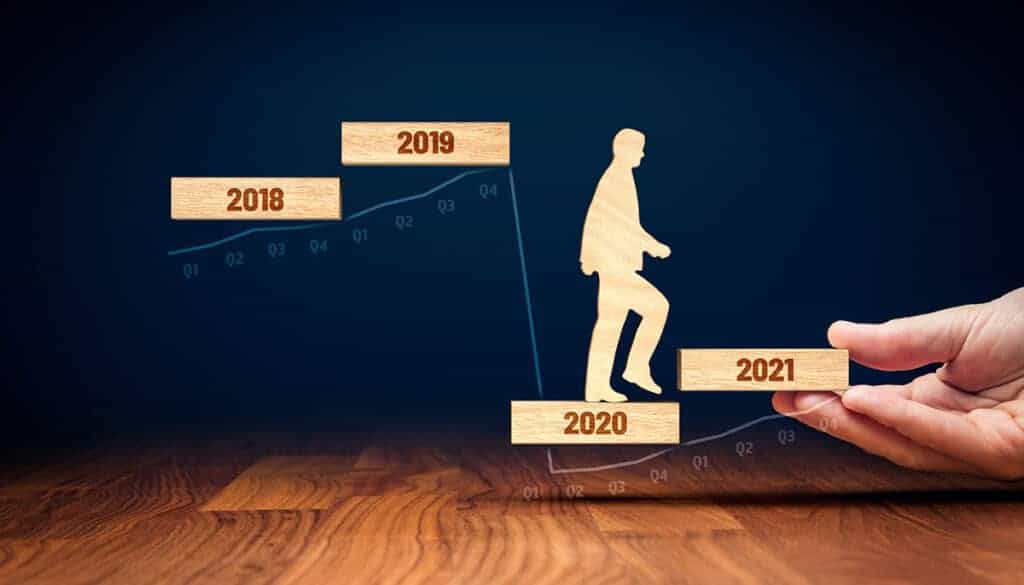
Wooden Business Man Progresses Post COVID Into 2021- Cable Management Blog
The post COVID era presents some unique challenges for data centers

Work From Anywhere is Here to Stay

Both businesses and employees have learned that working from anywhere, specifically from home, does not mean a less productive workforce. On the contrary, many people are more productive from home, value not having to commute to an office every day and have adjusted to the new normal.

Companies have discovered thousands in savings from a smaller physical footprint, and those savings are enhanced by benefits to the environment as well. Companies like Twitter and other tech giants have promised employees the option to work from anywhere indefinitely.

While some people remain anxious to return to the office (and will do so as soon as they’ve been vaccinated) many more are more than happy to continue working remotely. Whatever the post COVID workplace looks like, it seems work as we know it has already changed forever.

Faster Internet, More Data and 5G

Regardless of where people work from, the need for faster internet, more data transmission, and the continuing expansion of 5G mean data centers will experience more demand and require more moves and changes than ever before. This is about more than just technology and changing devices. It is also about the physical arrangement of data centers – an area likely to pick up once the vaccine becomes available.

The physical layer of data centers will change post COVID, as devices grow into the Internet of Things (IoT), high performance cables come into common use, and the demand for greener operations is prioritized. Perhaps the most important factor is that data center managers stay in touch with emerging trends and remain nimble, able to adapt when needed.

Remote Monitoring

Monitoring equipment, maintenance, and up time will become even more important – despite the vaccine. Customers have come to expect reliability, and it is no longer optional. However, the additional demand on human technicians to perform moves and changes means that monitoring should be automated whenever possible.

Remote monitoring systems can help do just that, allowing personnel to focus on more pressing tasks. A sensor network can send messages when human attention is needed, and can also monitor physical spaces for unauthorized access, providing an additional layer of physical security.

These monitoring systems continue to advance, and many can even react intelligently to many issues, readjusting HVAC and humidity systems and shifting loads away from problematic devices as needed. Automation creates a number of labor saving opportunities and can even alert human managers to issues before failures can cause service interruptions and additional issues.

Artificial Intelligence Adoption

Even as hardware evolves, cables become more sophisticated, and the physical spaces in data centers changes, software also continues to improve. From simple tasks like monitoring remote sensors and sending alerts, artificial intelligence can do much more.

Think of AI as the brain of the data center. It can monitor hardware, shift server loads as needed and intelligently, learn efficiency and streamline operations, prevent downtime, and even alert human managers as needed when software changes will not solve problems.

Artificial Intelligence can also be used to project future needs, generate expansion plans and ideas, and even develop plans for the physical layer of the data center. From optimal server rack placement to cabling choices to ventilation and HVAC needs, modeling can tell you what will and won’t work ahead of time, and AI can be a big part of that.

Post COVID, artificial intelligence will impact nearly every business going forward, and the increase in the number of enhanced data centers using this technology continues to rise.

What Will Next Year Bring to Data Centers?
“It is difficult to make predictions, especially about the future,” said the Danish Politician Karl Kristain Steincke in 1948. Nothing much has changed since then. The future is still hard to predict. But there are some things we do know:

Like 2020, next year will be one where many changes will happen. What changes are you making in your data center? What things do you think will be trending into the new year?

Introducing the Ultimate Data Center Cable Labeling System

Cable Management Just Got More Economical, Efficient and Robust

Ultimate Cable Labeling System - Epson Labelworks PX Printers and AnD Cable Products UniTag Cabel Labels
Ultimate Cable Labeling System – Epson Labelworks PX Printers and AnD Cable Products UniTag Cabel Labels

AnD Cable Products and Epson Labelworks have teamed up to develop the Ultimate Data Center Cable Labeling System with a selection of bundled cable labeling products that, when used together will revolutionize your cable management, efficiency and costs.

UniTag® Reusable Cable Labels – A plastic snap-on cable labeling system that provides a quick and easy way to mark and identify cables

Epson Labelworks PX Printers – A portable label and wire marker solution with exclusive time and costsaving features for creating custom labels

Epson’s PX Label Tapes Fit Onto AnD Cable’s UniTag® Cable Labels PERFECTLY!


FAQs

How has the “Work From Anywhere” trend affected data center planning?

The widespread shift to remote work has changed network traffic patterns, with more data moving to residential areas. This has increased the demand on data centers and requires them to expand to handle the new traffic distribution.

What role do high-performance cables and IoT play in post-COVID data centers?

With increased data demands from technologies like 5G, data centers need to adopt high-performance cables to handle the traffic. IoT devices are also being used to enable more efficient remote monitoring, allowing for better control over physical infrastructure.

Why is remote monitoring so critical for data centers today?

Remote monitoring has become a necessity for ensuring reliability, especially with fewer on-site staff. Automated monitoring systems with sensor networks allow technicians to oversee operations and respond to issues like HVAC and humidity problems from a distance.

How is Artificial Intelligence (AI) being used to manage data centers?

AI is functioning as the “brain” of the data center, helping to monitor hardware, shift server loads, and prevent downtime. It can also analyze data to predict future needs and generate expansion plans for the physical infrastructure.

What are the key certainties for data centers in the post-COVID era?

The article identifies several certainties, including the continuation of a hybrid work approach, the creation of more data, rising customer expectations for speed, and a larger role for AI in data center management.

About the Author

Louis Chompff - Founder, AnD Cable Products, Rack and Cable ManagementLouis Chompff, Founder & Managing Director, AnD Cable Products
Louis established AnD Cable Products – Intelligently Designed Cable Management in 1989. Prior to this he enjoyed a 20+ year career with a leading global telecommunications company in a variety of senior data management positions. Louis is an enthusiastic inventor who designed, patented and brought to market his innovative Zero U cable management racks and Unitag cabel labels, both of which have become industry-leading network cable management products. AnD Cable Products only offer products that are intelligently designed, increase efficiency, are durable and reliable, re-usable, easy to use or reduce equipment costs. He is the principal author of the Cable Management Blog, where you can find network cable management ideas, server rack cabling techniques and space saving tips, data center trends, latest innovations and more.
Visit https://andcable.com or shop online https://andcable.com/shop/

Posted on

How Cable Management and Airflow Management Impact Each Other in Data Centers

How Cable Management and Airflow Management Impact Each Other - Cable Management Blog

Here’s the simple truth of the matter. Cable management can impact airflow management , and airflow should definitely inform the method, type, and execution of cable management. To understand how the two impact each other and what the best overall solution will be for your data center, it is important for use to take a look at cable management and airflow from a high level perspective.

Key Points

–Integrated Design is Crucial: Airflow and cable management should be planned together as a single, integrated part of a data center’s design to prevent issues like increased costs, equipment failures, and downtime.

–Poor Cable Management Impedes Airflow: Incorrectly bundled cables (e.g., with zip ties) can act as a physical barrier, disrupting the separation of supply and return air. This leads to lower fan efficiency, higher HVAC costs, and potential equipment damage.

–Proper Management Improves Efficiency: Research has shown that disorganized cables can increase component temperatures by up to nine degrees. Using tools like ZeroU rack cable managers and chimney cabinets ensures proper air intake and egress, which is critical for maintaining equipment health and energy efficiency.

Jump to Section:

How Cable Management and Airflow Management Impact Each Other
Airflow is an Important Factor in Data Centers

The Goal of Airflow Management

So what is the goal of airflow management? The goals are twofold: preventing large variations in air temperature and air pressure. This means separating supply air mass and return air mass through design.

Just grouping cables together with a zip tie does nothing to facilitate this and can actually result in a seridisruption of airflow. What happens as a result? Lower fan efficiency, higher HVAC costs, potential changes in pressure, and even equipment damage or failure.

The current problem? Because more people are working from home or adopting the work from anywhere culture as a result of COVID, data centers are having to increase capacity, and they may not have additional floorspace to accommodate more server racks. Since conventional cable management can use up as much as 25% of rack space, this means that intelligently designed rack cable management is more important than ever.

Because of this it is important that cable management and airflow be looked at as an entire package. There are two areas of cable management in a data center: cable management in the room itself, essentially the cables that run between server racks, and rack cable management.

Cable Management in the Room

Of course, we must manage the cables that run between server racks, and they have to go somewhere. There are essentially two approaches, and both can create unique issues. They are running cables under the floor or running cables overhead.

Perhaps the most common is underfloor cabling where the underfloor space is also used for cool air transport. This is usually a very efficient method for separating supply and return air masses. However. When you put more holes in the floor, say to accommodate more server racks, the risk of “bypass air” or mixing the two airflows increases.

Why not just go with overhead cable management then? In some cases, this works exceptionally well, although there are budget and logistical obstacles. The height of the cable pathway is also often an issue.

Think of it this way. If your data center uses the underfloor space for air system management and not cable management, overhead pathways are fine. If they are placed too high though, the warm return air underneath can actually get too turbulent, resulting in a mix of the supply and return air. This created a temperature bypass.

But this bypass also can increase variations in pressure throughout the data center, causing the fans and other mechanisms to work harder. It’s a delicate balance.

Rack Cable Management

There are a lot of best practices and industry standards for airflow and cable management between servers, but often rack cable management falls into the “out of sight, out of mind” category. That’s a mistake, as cable management at this critical point can have a huge impact on airflow management.

While this seems like it should be common sense, the practice of good rack cable management seems to be hit or miss. As early as 2002, research done by Paul Artman, David Moss and Greg Bennett (Dell PowerEdge 1650: Rack Impacts on Cooling of High Density Servers) showed that poorly bundled cables, overloading cables on a horizontal lacing bar (particularly 1U configurations) could result in as much as a nine degree increase in component temperature.

This is a good argument for ZeroU rack cable managers and other more advanced techniques. Also, more data centers are moving to 23” or larger racks as opposed to the standard 19” racks, because equipment manufacturers are constantly increasing the computing power per U space. As a result there are more cables per rack. As cable bundles get larger, they also need more space between them to increase airflow.

For some components that possess a single fan intake side and hot-switchable components on the other, there is really only one path for cables to go. Careful cable management means not only ensuring that the fan intake is not blocked, but that there is an airflow egress as well. Often specialized chimney cabinets that allow air to enter both the front and the rear of the cabinet can be used for these applications.

The Effect of Poor Cable Management

Poor cable management, whether cables between server racks or rack cable management, will negatively impact airflow management. More than just the increased costs associated with HVAC systems, poor airflow can also lead to premature equipment and cable failures, overheating, and even increased downtime.

5 Ways Effective Cable Management Benefits Your Data Center - Cable Management Blog
A ‘Spaghetti Mess’ of cables blocks network rack airflow very effectively!

Since uptime is the most important metric to most data centers, cable management solutions need to be an integral part of any planned data center and prioritized expansion.

Devising a Comprehensive Solution

What’s the solution? The best path is to be proactive rather than reactive. Plan airflow management and cable management together as part of an overall data center plan. Be sure you and your staff have the right tools and materials. This not only includes the right racks and rack cable management tools like ZeroU rack managers and chimney racks where needed, but things like Velcro, wire tags, and even colored zip ties to keep things organized.

If you do have to do a sudden expansion due to increases in demands, bring in the whole team and listen to everyone’s ideas. Use industry best practices where possible, but understand that creative solutions and innovation may be necessary in extraordinary times.

Do you have questions about effective rack cable management, or do you need tools and supplies to get started? Contact us here at AnD Cable. We have the materials you need and the know how to help you select the best product for your situation.

WHITEPAPER – Understanding Stranded and Solid Conductor Wiring in Modern Networks

Understanding Stranded and Solid Conductor Wiring in Modern Networks - AnD Cable Products Whitepaper

An overview of the differences between stranded and solid conductor wiring, the properties of each and the best cable type to use in a variety of typical settings.

  • Types of Stranded and Solid Conductor Wiring
  • Comparison of Electrical Properties
  • Factors Impacting Attenuation / Insertion Loss
  • Choosing the Right Cable


FAQs

What is the most important first step to effective cable management?

The first and most important step is to proactively plan for cable and airflow management as an integrated part of a data center’s design, rather than reacting to problems after they occur.

Why is proper cable management so critical for a data center?

Poorly managed cables can create a “spaghetti mess” that blocks airflow, leading to lower fan efficiency, higher HVAC costs, and potential equipment damage from overheating. It can also lead to premature equipment and cable failures and increased downtime.

What are some common mistakes to avoid in data center cable management?

Common mistakes include using tight zip ties that can damage cables, not using blanking panels to prevent air recirculation, and not using cable management accessories like trays and clips to organize cables and allow for proper airflow.

How do cable management and airflow management relate to each other?

Effective cable management is a critical contributor to effective airflow management. By keeping cables organized and out of the way, you can ensure that cool air gets to the equipment and hot air can be properly exhausted, preventing them from mixing.

What tools or methods can help with effective cable management?

Effective management involves using solutions like ZeroU rack cable managers and specialized chimney cabinets. It also includes using appropriate fasteners like Velcro ties instead of plastic zip ties, and implementing a consistent labeling protocol for all cables.

About the Author

Louis Chompff - Founder, AnD Cable Products, Rack and Cable ManagementLouis Chompff, Founder & Managing Director, AnD Cable Products
Louis established AnD Cable Products – Intelligently Designed Cable Management in 1989. Prior to this he enjoyed a 20+ year career with a leading global telecommunications company in a variety of senior data management positions. Louis is an enthusiastic inventor who designed, patented and brought to market his innovative Zero U cable management racks and Unitag cabel labels, both of which have become industry-leading network cable management products. AnD Cable Products only offer products that are intelligently designed, increase efficiency, are durable and reliable, re-usable, easy to use or reduce equipment costs. He is the principal author of the Cable Management Blog, where you can find network cable management ideas, server rack cabling techniques and space saving tips, data center trends, latest innovations and more.
Visit https://andcable.com or shop online https://andcable.com/shop/

Looking for other Cable Management Blogs? Top 5 Cable Management Blogs

Posted on

The Impact on Data Center Services – Before and After COVID

The Impact on Data Center Services - Before and After Covid - Cable Management Blog

The COVID pandemic has impacted nearly every industry, and while some have been impacted negatively, others are thriving. The key to all of these things is the ability to adapt. Nowhere is this truer than in data centers. The impact of COVID on data center services has been significant, and those in this “essential industry” can’t work remotely for the most part.

Key Points

–Increased Demand: The global shift to remote work, virtual learning, and online entertainment during the pandemic caused a massive surge in internet traffic and the use of digital services. This led to a significant increase in demand for data center services, including cloud computing and data storage.

–Accelerated Digital Transformation: The pandemic acted as a catalyst for digital transformation efforts across many industries. Companies that had been slow to adopt cloud-based solutions were forced to accelerate their move to the cloud to support remote operations and meet changing consumer demands.

–Operational and Supply Chain Challenges: While demand for data center services soared, operators faced new challenges. They had to implement strict health and safety protocols to protect on-site staff, which sometimes included creating reserve teams and limiting access to facilities. Additionally, the pandemic caused disruptions in the global supply chain, which could lead to delays in the construction and maintenance of data centers.

Jump to Section:

The Impact on Data Center Services - Before and After Covid - Cable Management Blog
The Impact on Data Center Services – Before and After Covid

The truth is, troubled industries like airlines, hotels, travel sites, and restaurants were not huge consumers anyway.

“The upside cases are actually higher than any of the drawdowns coming in from the troubled sectors,” said Sami Badri, Senior Equity Analyst at Credit Suisse said during a CAPRE presentation. “These troubled sectors were not big customers in the first place, whereas the newer industries that represent a large cash flow stream for data center services are flexing even larger than they ever have before. This is creating a new high-tide environment for demand for the overall tech sector.”

While the financial impact has been positive overall, it has created an increased demand, which has an direct impact on what data centers are and how they operate. What has that impact been, and what are data centers doing about it?

Increased Demand in Unusual Places

“Almost as soon as lockdown started,” David Issel, the asset manager at a Comcast data center known as a “headend” told us, “this place was running at 95%. Fans and our HVAC system was at capacity.”

The Work from Home or rather Work from Anywhere demands of COVID have increased the need for residential reliability and speed on a larger scale. What was evenings of surfing and streaming are now days filled with workers tethered to their home offices, computers, standing desks, and dependent on their routers and home WiFi in ways we never would have thought of in January of 2020.

Data Centers Services have been quick to respond and increase capacity. “Even though the components are getting smaller, the units themselves are getting larger,” Issel told us. “We’re using 23” racks instead of 19” racks, and that means it’s more important than ever to conserve space.”

The other issue? It takes people to add hardware and capacity to a data center, but only so many people can be present in the facility and still remain socially distanced and adhering to mask requirements. Keeping employees safe is a top priority.

Changing Attitude in Lagging Industries

“Some industries have never been well architected to handle work from home or organize a virtual workforce,” Badri told us. “Three of those sectors are healthcare, government and education. We’ve been hearing that government IT spending pledges alone are up more than 20 percent. Education budgets are also increasing and shifting up. Other categories playing catch-up include healthcare, which has been a very big pain point for the U.S.”

This includes things like telemedicine, schools that are either operating 100% virtually or at least offering distance options to students and parents alike. Higher education is struggling the most, as universities train staff, shift to online platforms, and prepare for an entirely new education platform.

While even the Federal government has been lagging in using technology, local, regional, and state governments find themselves even further behind. The question is whether these industries will continue to advance digitally or whether, as the impact of COVID inevitably recedes, the demand will recede with it.

The Need for Speed

Consumers and others often confuse bandwidth and speed. However, there is a need for both, as more people are online at the same time than under normal circumstances. This is bandwidth, or the capacity of the network to handle volume.

Speed is about how fast data can be delivered. Both are vital for consumers. Imagine a neighborhood populated with day traders whose income can be impacted by millisecond delays. That same neighborhood might be filled with school children doing school work online during work hours.

For data centers and companies like Comcast and other internet providers, it is about the ability to scale. “We’ve got plans for getting ahead, and we’re working on expanding HVAC and capacity,” David Issel told us about his particular headend.

This need for speed may mean that new data centers and headends need to be built in order for companies to keep up.

Coming 5G and Other Advancements

A digital revolution and a move to more remote operations, companies like Zoom, Slack, and other communication platforms were things many thought would take years to manifest. Due to COVID, this digital revolution has manifested in months instead.

But there was already a revolution on the horizon. The 5G and IoT revolution was already putting pressure on data centers to adapt and be ready for a new, faster normal. 5G is about more than just speed though. It makes a data center more flexible in more ways.

“The flexibility includes things such as the desegregation of the control and user plains of the network and also migration towards distributed baseband processing and the radio access network (RAN). In turn, this leads to opportunities for virtualization of RAN network functions and it enables the convergence of the RAN into the data center space,” Mike Wolfe, Vice President of Wireless Network Engineering at CommScope explained in a recent DCD article, How 5G will Affect the Structure of Data Centers?

“What this means is there could be a lot of smaller data centers, distributed geographically in such a way that’s going to make them a little bit more difficult to manage. Connectivity will be important in terms of how we do that,” Jamie Birdnow, also of CommScope shared in the webinar.

While it is safe to say that data center services will require huge changes to accommodate and enable 5G, there is still a lot that is unknown.

For example, we don’t know is how applications are likely to develop over a number of. Some things will not evolve as expected, and there are surprises. Autonomous cars will require far more sophistication than remote surgeries.

The key is to understand that data centers were already in a state of change, and the COVID crisis has only accelerated that.

The Bottom Line in Data Center Services

The data center industry has experienced a focus shift due to COVID, and as with any revolution during a crisis, it comes with challenges. That means the efficient use of space, the expansion of capacity more rapidly than planned, and employing other techniques to “future proof” data center services.

Virtual connectivity is a must,” Badri told us. “It’s no longer a debate. It’s now a case of survival and relevance and productivity. You’re starting to see permanent shifts.”

That speaks back to David Issel and Comcast, not only scrambling to catch up and expand, but to prepare for whatever tomorrow may bring.

A key to Issel’s success is his partnership with Louis and AnD Cable Products. Not only does his data center depend on their products and reliability, but they’ve also worked together to create custom hardware that is “perfect for the application,” Issel told us.

It’s these types of cooperation and efficiency, like the ZeroU Horizontal Cable Managers AnD Cable Products offers, which allow technicians to work more easily, increase the life of cables, and more.

If you want to “future proof” your data center services and you are looking for a physical hardware supplier that will be there for you as you expand and adapt, contact us at AnD Cable Products today. We’d love to talk about how we can best work together.


FAQs

How did the COVID-19 pandemic affect data center demand?

The pandemic caused a massive and sudden surge in demand for data center services. With a global shift to remote work, virtual education, and online entertainment, data centers became critical infrastructure, seeing unprecedented increases in internet traffic and cloud service usage.

What were the main operational challenges for data centers during the pandemic?

Data centers, deemed essential businesses, had to maintain uptime while facing significant operational challenges. These included implementing new health and safety protocols, limiting on-site staff, and navigating disruptions in the global supply chain for critical equipment.

Did the pandemic accelerate any pre-existing trends in the data center industry?

Yes, the pandemic dramatically accelerated digital transformation efforts that were already underway. It pushed many companies to adopt cloud computing and other digital solutions much faster than they had planned, solidifying the importance of a scalable and agile digital infrastructure.

How did data centers adapt their physical operations to ensure business continuity?

To keep services running and protect staff, data centers introduced measures like restricting physical access to facilities, creating remote “skeleton crews,” and increasing the use of remote monitoring and management tools. They also adopted “no-touch” solutions, such as remote-hands services, to perform maintenance and installations.

What is the long-term impact of COVID-19 on the data center industry?

The pandemic solidified the data center’s role as a critical utility and is expected to have a lasting impact. It has driven continued growth in cloud adoption, increased focus on cybersecurity, and spurred innovations in remote management and automated operations.

About the Author

Louis Chompff - Founder, AnD Cable Products, Rack and Cable ManagementLouis Chompff, Founder & Managing Director, AnD Cable Products
Louis established AnD Cable Products – Intelligently Designed Cable Management in 1989. Prior to this he enjoyed a 20+ year career with a leading global telecommunications company in a variety of senior data management positions. Louis is an enthusiastic inventor who designed, patented and brought to market his innovative Zero U cable management racks and Unitag cabel labels, both of which have become industry-leading network cable management products. AnD Cable Products only offer products that are intelligently designed, increase efficiency, are durable and reliable, re-usable, easy to use or reduce equipment costs. He is the principal author of the Cable Management Blog, where you can find network cable management ideas, server rack cabling techniques and space saving tips, data center trends, latest innovations and more.
Visit https://andcable.com or shop online https://andcable.com/shop/

Looking for Blogs on Co-Location? Top 10 Colocation Blogs