Posted on

Proper Power Cable Usage Prevents Poor Performance

Feature - Proper Power Cable Usage Prevents Poor Performance - AnD Cable Management Blog

Data centers are moving away from under floor cooling and cabling, and in many cases to overhead cables and more advanced cooling systems. At the same time, what may seem the simplest of things, power cables, are evolving and changing as well. The reasons are quite simple. New angles, new cable types, and even new connection types are designed to ensure maximum uptime, no cable failures and the prevention of disastrous accidental disconnects or power loss.


Key Takeaways

By the end of this article, you’ll know:

  • Power cable considerations to minimize power loss, improve efficiency and future-proof data centers.
  • What to look for in power cables to easily trace power paths and prevent electromagnetic interference.
  • The importance of proper cable management and locking connections.

Jump to Section:

So what do these cables look like, and how can proper power cable usage prevent poor data center performance? Here are seven things to consider.

Cable Length Matters

In the case of power cables, the shorter the cable the better. No matter how good the power cord is, what gauge it is, or how it is insulated, aggregate power loss occurs over the length of the cord. The longer the cord, the greater the loss. In a large data center this can add up to thousands of dollars of wasted power annually.

Not only does this harm the data center’s overall power usage efficiency (PUE) but it is also harmful to the environment, increasing carbon emissions or even just diminishing efficiency in centers that rely on renewable energy sources.

Use the shortest cable you can for the application, but one that is long enough to prevent any breaks or damage caused by odd connection angles or cable stress.

Choose Your Gauge

While shorter cables are better, larger gauge cables are better than their smaller counterparts, and for good reason. First, they carry power more efficiently. Even if smaller cables might meet your needs now, moves and changes or new equipment can increase the demand on power cables.

In that case, a larger gauge cable can future proof your data center, eliminating the need to change cables later on. Larger gauge cables also run cooler, so there is no additional burden on your HVAC systems or cooling plans.

Color Coding

We often talk about color coding data center cords, but color coding and labeling power cords is just as essential for avoiding the “spaghetti mess” server we have all encountered. But there’s more. Color coding helps you trace power from equipment to source, prevents duplicate power paths, and helps prevent accidental disconnects during moves or changes.

Choosing to color code power cords now will save you a lot of time and effort later on.

Use Shielded Power Cords

Electromagnetic Interference (EMI) can be a nightmare in data centers. Unshielded data cables used in the same area as unshielded power cords can have a serious impact on data transmission and can result in data loss. Shielded power cords can reduce or even eliminate those odd “data drops” that are hard to find and isolate.

As with other power cable properties, a little foresight here can go a long way to preventing problems down the road.

Grab a Jacket

Power cables are required to be jacketed, and the type of jacket is often dictated by local regulations and building codes. There are different materials you can and often must use based on where the cord is located, how it is used, and the restriction of the use of certain materials in various areas.

The key is to know the rules where you are, work with a vendor who can get the right cables for you consistently, and pay attention if regulations were to change.

Work the Angles

The right length of cable is important, but so is the placement of equipment in relation to those cables. The wrong angle, too tight of turns, and other issues can cause cable breakage, disconnection and more. If necessary, use angled connectors and plugs.

Keep power cords tidy, angles to a minimum, and avoid crimping, bending, and tangling them with data cables.

Lock it Up

Locking connections ensure that your cables stay where they are supposed to, and stay connected. There are several different types of locks, and each serves its own purpose. Be sure any connections you have, male, female, or otherwise, are appropriately locked in place with a tight and secure connection.

This prevents accidental disconnects, power loss through slight separation or loose connection, and other common power problems.

Are you planning your data center? Making moves and changes? Or are you looking for new, long term power cord solutions? Contact us here at AnD Cable. We have the cables you need to future proof your data center and ensure maximum uptime.

Shop Our Power Cable Range


FAQs

What is the ideal length for a power cable?

The ideal length for a power cable is the shortest one possible that still allows for a safe connection. Using the shortest cable helps minimize power loss, improve a data center’s power usage efficiency (PUE), and reduce environmental impact.

Why are larger gauge cables better than smaller ones?

Larger gauge cables are more efficient at carrying power and can handle greater demand, which helps “future-proof” a data center. They also run cooler than smaller gauge cables, which reduces the burden on cooling systems.

How can color coding power cords benefit a data center?

Color-coding power cords helps prevent the “spaghetti mess” of tangled cables and makes it easier to trace power from equipment to its source. It also helps prevent duplicate power paths and reduces the chance of accidental disconnections during equipment changes.

Why is using shielded power cords important?

Shielded power cords are crucial because they reduce or eliminate electromagnetic interference (EMI). This interference can be caused by unshielded data and power cables being in close proximity, which can lead to data loss or “data drops.”

Why is it important to pay attention to cable angles and placement?

The placement of power cables and equipment is critical because incorrect angles or tight turns can cause cable breakage and disconnections. Using angled connectors and keeping cables tidy and untangled can help prevent these issues.

About the Author

Louis Chompff - Founder, AnD Cable Products, Rack and Cable ManagementLouis Chompff, Founder & Managing Director, AnD Cable Products
Louis established AnD Cable Products – Intelligently Designed Cable Management in 1989. Prior to this he enjoyed a 20+ year career with a leading global telecommunications company in a variety of senior data management positions. Louis is an enthusiastic inventor who designed, patented and brought to market his innovative Zero U cable management racks and Unitag cabel labels, both of which have become industry-leading network cable management products. AnD Cable Products only offer products that are intelligently designed, increase efficiency, are durable and reliable, re-usable, easy to use or reduce equipment costs. He is the principal author of the Cable Management Blog, where you can find network cable management ideas, server rack cabling techniques and space saving tips, data center trends, latest innovations and more.
Visit https://andcable.com or shop online https://andcable.com/shop/

Posted on

Data Center Cabling Above and Below – Raised vs Concrete Floors

Feature - Data Center Cabling Above and Below - Raised vs Concrete Floors - Cable Management Blog

It used to be that data centers were simply built with raised flooring. This was for several reasons: to allow for airflow, power and other cable routing, and flexibility during moves and changes. However, for most modern data centers, concrete floors, or slabs, have become a more common choice, with cables and even cooling running above rather than below.

But what is best for data centers, and is there still room for raised flooring in new and more modern data centers?


Key Takeaways

By the end of this article, you’ll know:

  • Why concrete floors are increasingly preferred in modern data centers.
  • The contextual usefulness of raised floors in data centers.
  • How advancements in cabling and rack technology have influenced.

Jump to Section:

Feature – Data Center Cabling Above and Below – Raised vs Concrete Floors – Cable Management Blog

The Reasons for Concrete Flooring

First, let’s look at why some data centers might choose concrete floors or a slab rather than a raised floor during construction, including power density, cooling, and more.

First, today’s high power density data centers need a lot of cooling, and a raised floor may not be up to the task. New fresh air systems and “hot aisle” containment systems do a better job than air routing under the floor.

Second, data centers are getting larger and denser at the same time. Components are actually getting larger, and cables are getting thicker. As the need for storage capacity rises, so does the demand on a particular data center. These larger data centers need more sophisticated cooling, not to mention the ability to hold more weight than a raised floor.

Contrariwise, even smaller data centers often lack the space to add ramps on raised floors, making their application impractical. In compact spaces, it’s difficult to achieve the proper power density with a raised floor.

These are all good arguments for concrete floors in data centers, but does that mean raised floors don’t really have a place? Not really.

Reasons Data Centers Might Want Raised Floors

Raised floors still have some uses in various spaces, including two primary scenarios.

  • Low Power Density might mean a lot of moves and changes, and especially in some caged hosting spaces, a raised floor is often still the best choice.
  • If water is needed to cool the IT space. In the case of some modern cooling systems, water is needed as part of the process, so raised floors provide a place to transport that water safety, without compromising electronic equipment.

However, these are just a couple of potential scenarios. Let’s look next at raised and concrete floors in a side by side comparison.

The Debate About Raised Floors vs. Concrete Floors

Here are some things to consider:

  • Irregular layouts – Once quite common, these led to the need for space under the floor for cooling and the need for flexibility for moves and changes. As equipment is modernized and standardized in both size and configuration, layouts are more predictable.
  • Cable length and brackets – Cables once had to be much shorter to protect against signal degradation. As fiber optics and high bandwidth Ethernet cables are used, it is no longer critical that cables be short, and the need for a lot of brackets to hold them and route them under the floor is no longer prevalent.
  • Power cables – Power cables once came from the bottom up, and it was necessary to have a raised floor for access. Now, racks and cabinets allow power connections from above, meaning the underfloor space is no longer needed. However, for older systems still in use, a raised floor is still a necessity.
  • Equipment grounding – Copper mesh used to be used to achieve a strong ground between devices. Newer cabling options mean this is no longer a concern. Their grounding wires ensure the integrity of each circuit.

In short, the more technology advances, the less raised floors are needed. But not every data center moves forward and updates at the same pace, and raised floors still remain useful in many cases.

Dust and Static Electricity

There is a final concern when it comes to concrete floors. While most modern devices have anti-static protection, there are some that are still vulnerable, even at low voltages such as a static discharge from a technician.

Solid floors are often constructed with grounded statics that may also use either anti-static panels or floor coatings to prevent the buildup in the first place. For raised floors, anti-static panels have been in use for a long time.

Of course, many will argue that the gaps between floor panels or even grout between panels applied to hard floors is a dust magnet, and dust is a killer in any data center. However, concrete floors can be coated with anti-static material that is seamless, allowing for easy cleanup and the prevention of dust buildup.

But what is right for your data center? Only you can look at all the options and determine what will work best with your overall cooling plan, moves, changes, and updates.

Shop Our Network Cable Range


FAQs

What is the primary reason for the shift from raised floors to concrete floors in modern data centers?

Modern data centers have higher power densities, requiring more sophisticated cooling systems like fresh air and “hot aisle” containment, which are more effective than underfloor air routing. Additionally, concrete floors can support the increasing weight and size of modern IT equipment.

Are raised floors still used in any data centers today?

Yes, raised floors still have a place in specific scenarios. They are often a good choice for data centers with low power density that experience frequent moves and changes. They also provide a safe way to route water lines for certain modern cooling systems that require water.

How do modern cable technologies impact the need for raised floors?

Older cable technologies required a raised floor for routing and to keep cables short to prevent signal degradation. With the widespread use of fiber optics and high-bandwidth Ethernet cables, signal integrity is no longer as dependent on cable length. Furthermore, modern racks and cabinets often allow for power connections from above, eliminating the need for underfloor power routing.

What are the pros and cons regarding dust and static electricity for both raised and concrete floors?

Concrete floors can be coated with seamless, anti-static materials that prevent dust buildup and are easy to clean. Raised floors have traditionally used anti-static panels. However, both can be dust magnets due to gaps between panels or grout lines. Modern devices often have built-in anti-static protection, but solid floors can also be constructed with grounding statics to further mitigate static discharge.

How does the predictability of data center layouts affect the choice between raised and concrete floors?

Older, irregular layouts led to the need for raised floors to accommodate frequent changes and provide space for cooling. Modern equipment is more standardized in size and configuration, leading to more predictable layouts. This predictability reduces the need for the flexibility and underfloor space that a raised floor provides.

About the Author

Louis Chompff - Founder, AnD Cable Products, Rack and Cable ManagementLouis Chompff, Founder & Managing Director, AnD Cable Products
Louis established AnD Cable Products – Intelligently Designed Cable Management in 1989. Prior to this he enjoyed a 20+ year career with a leading global telecommunications company in a variety of senior data management positions. Louis is an enthusiastic inventor who designed, patented and brought to market his innovative Zero U cable management racks and Unitag cabel labels, both of which have become industry-leading network cable management products. AnD Cable Products only offer products that are intelligently designed, increase efficiency, are durable and reliable, re-usable, easy to use or reduce equipment costs. He is the principal author of the Cable Management Blog, where you can find network cable management ideas, server rack cabling techniques and space saving tips, data center trends, latest innovations and more.
Visit https://andcable.com or shop online https://andcable.com/shop/

Posted on

Data Center Planning Post COVID – 4 Drivers of Change

Feature Data Center Planning Post COVID - 4 Drivers of Change - Cable Management Blog

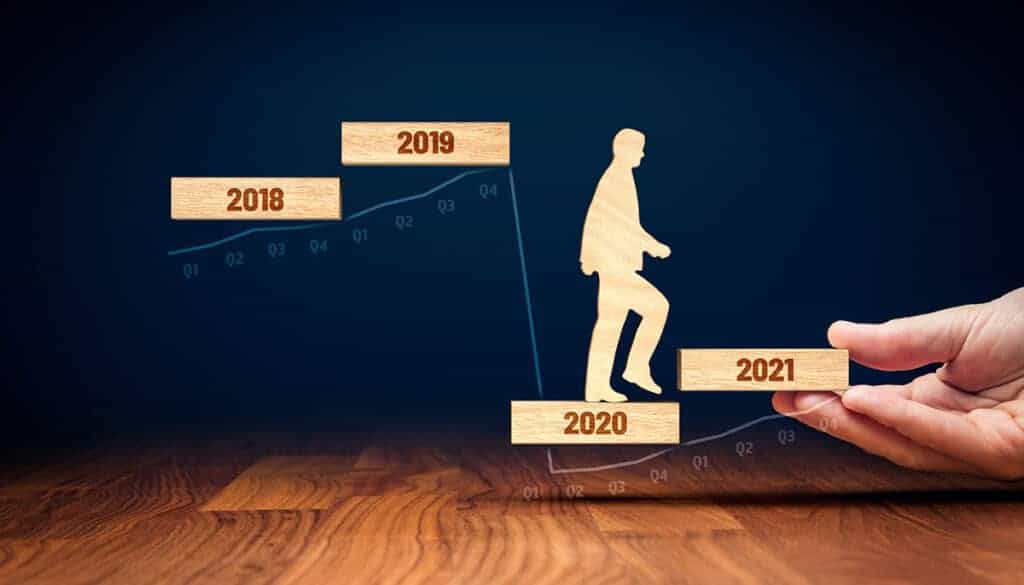
COVID and the other events of 2020 have had a huge impact on data centers. Traffic has shifted to residential areas with the work from anywhere trend, and overloaded centers are in need of expansion. But that expansion has been slowed by the pandemic, and social distancing and other restrictions.

So what’s next for the post COVID world of 2021? How do data centers plan for the coming vaccine, the impact on their operations and expansion plans? Here are 4 drivers of change you should keep in mind when making your plans.

Key Takeaways

By the end of this article, you’ll know:

  • How remote work has effected data centers.
  • How faster connectivity has effected data center planning.
  • How remote monitoring and artificial intelligence have effected data center management.

Jump to Section:

Wooden Business Man Progresses Post COVID Into 2021- Cable Management Blog
The post COVID era presents some unique challenges for data centers

Work From Anywhere is Here to Stay

Both businesses and employees have learned that working from anywhere, specifically from home, does not mean a less productive workforce. On the contrary, many people are more productive from home, value not having to commute to an office every day and have adjusted to the new normal.

Companies have discovered thousands in savings from a smaller physical footprint, and those savings are enhanced by benefits to the environment as well. Companies like Twitter and other tech giants have promised employees the option to work from anywhere indefinitely.

While some people remain anxious to return to the office (and will do so as soon as they’ve been vaccinated) many more are more than happy to continue working remotely. Whatever the post COVID workplace looks like, it seems work as we know it has already changed forever.

Faster Internet, More Data and 5G

Regardless of where people work from, the need for faster internet, more data transmission, and the continuing expansion of 5G mean data centers will experience more demand and require more moves and changes than ever before. This is about more than just technology and changing devices. It is also about the physical arrangement of data centers – an area likely to pick up once the vaccine becomes available.

The physical layer of data centers will change post COVID, as devices grow into the Internet of Things (IoT), high performance cables come into common use, and the demand for greener operations is prioritized. Perhaps the most important factor is that data center managers stay in touch with emerging trends and remain nimble, able to adapt when needed.

Remote Monitoring

Monitoring equipment, maintenance, and up time will become even more important – despite the vaccine. Customers have come to expect reliability, and it is no longer optional. However, the additional demand on human technicians to perform moves and changes means that monitoring should be automated whenever possible.

Remote monitoring systems can help do just that, allowing personnel to focus on more pressing tasks. A sensor network can send messages when human attention is needed, and can also monitor physical spaces for unauthorized access, providing an additional layer of physical security.

These monitoring systems continue to advance, and many can even react intelligently to many issues, readjusting HVAC and humidity systems and shifting loads away from problematic devices as needed. Automation creates a number of labor saving opportunities and can even alert human managers to issues before failures can cause service interruptions and additional issues.

Artificial Intelligence Adoption

Even as hardware evolves, cables become more sophisticated, and the physical spaces in data centers changes, software also continues to improve. From simple tasks like monitoring remote sensors and sending alerts, artificial intelligence can do much more.

Think of AI as the brain of the data center. It can monitor hardware, shift server loads as needed and intelligently, learn efficiency and streamline operations, prevent downtime, and even alert human managers as needed when software changes will not solve problems.

Artificial Intelligence can also be used to project future needs, generate expansion plans and ideas, and even develop plans for the physical layer of the data center. From optimal server rack placement to cabling choices to ventilation and HVAC needs, modeling can tell you what will and won’t work ahead of time, and AI can be a big part of that.

Post COVID, artificial intelligence will impact nearly every business going forward, and the increase in the number of enhanced data centers using this technology continues to rise.

What Will Next Year Bring to Data Centers?

“It is difficult to make predictions, especially about the future,” said the Danish Politician Karl Kristain Steincke in 1948. Nothing much has changed since then. The future is still hard to predict. But there are some things we do know:

Like 2020, next year will be one where many changes will happen. What changes are you making in your data center? What things do you think will be trending into the new year?

Introducing the Ultimate Data Center Cable Labeling System

Cable Management Just Got More Economical, Efficient and Robust

Ultimate Cable Labeling System - Epson Labelworks PX Printers and AnD Cable Products UniTag Cabel Labels
Ultimate Cable Labeling System – Epson Labelworks PX Printers and AnD Cable Products UniTag Cabel Labels

AnD Cable Products and Epson Labelworks have teamed up to develop the Ultimate Data Center Cable Labeling System with a selection of bundled cable labeling products that, when used together will revolutionize your cable management, efficiency and costs.

UniTag® Reusable Cable Labels – A plastic snap-on cable labeling system that provides a quick and easy way to mark and identify cables

Epson Labelworks PX Printers – A portable label and wire marker solution with exclusive time and costsaving features for creating custom labels

Epson’s PX Label Tapes Fit Onto AnD Cable’s UniTag® Cable Labels PERFECTLY!


FAQs

How has the “Work From Anywhere” trend affected data center planning?

The widespread shift to remote work has changed network traffic patterns, with more data moving to residential areas. This has increased the demand on data centers and requires them to expand to handle the new traffic distribution.

What role do high-performance cables and IoT play in post-COVID data centers?

With increased data demands from technologies like 5G, data centers need to adopt high-performance cables to handle the traffic. IoT devices are also being used to enable more efficient remote monitoring, allowing for better control over physical infrastructure.

Why is remote monitoring so critical for data centers today?

Remote monitoring has become a necessity for ensuring reliability, especially with fewer on-site staff. Automated monitoring systems with sensor networks allow technicians to oversee operations and respond to issues like HVAC and humidity problems from a distance.

How is Artificial Intelligence (AI) being used to manage data centers?

AI is functioning as the “brain” of the data center, helping to monitor hardware, shift server loads, and prevent downtime. It can also analyze data to predict future needs and generate expansion plans for the physical infrastructure.

What are the key certainties for data centers in the post-COVID era?

The article identifies several certainties, including the continuation of a hybrid work approach, the creation of more data, rising customer expectations for speed, and a larger role for AI in data center management.

About the Author

Louis Chompff - Founder, AnD Cable Products, Rack and Cable ManagementLouis Chompff, Founder & Managing Director, AnD Cable Products
Louis established AnD Cable Products – Intelligently Designed Cable Management in 1989. Prior to this he enjoyed a 20+ year career with a leading global telecommunications company in a variety of senior data management positions. Louis is an enthusiastic inventor who designed, patented and brought to market his innovative Zero U cable management racks and Unitag cabel labels, both of which have become industry-leading network cable management products. AnD Cable Products only offer products that are intelligently designed, increase efficiency, are durable and reliable, re-usable, easy to use or reduce equipment costs. He is the principal author of the Cable Management Blog, where you can find network cable management ideas, server rack cabling techniques and space saving tips, data center trends, latest innovations and more.
Visit https://andcable.com or shop online https://andcable.com/shop/

Posted on

Artificial Intelligence in Data Centers: The New Reality

Artificial Intelligence in Data Centers - AnD Cable Management Blog

For years, artificial intelligence, or AI has been the topic of science fiction, from Skynet in the Terminator movies to more benevolent systems. But AI has now become a reality, and that reality has put artificial intelligence in data centers, and the trend is growing. Data centers employing this technology are often referred to as enhanced data centers.


Key Takeaways

By the end of this article, you’ll know:

  • How AI can increase efficiency and emissions control.
  • How AI improves server and human resource management.
  • How AI enhances uptime and security.

Jump to Section:

Artificial Intelligence in Data Centers - AnD Cable Management Blog
Use of artificial intelligence in data centers continues to grow

But this idea of an enhanced data center will likely become the norm, as customer expectations rise. Unprecedented demand means and centers rapidly reaching capacity mean a need for one of two solutions: increased capacity and increased efficiency. Artificial intelligence can help with both. Here’s how.

Artificial Intelligence and Data Center Emissions Control

Data centers use a lot of power, and that power often converts to carbon emissions. While technology advances and the use of solar can help, there are other solutions as well. It’s all about the efficient use of power, HVAC efficiency and flow rates, and more.

How does it work? Well, sensors, relatively small ones, can be placed throughout the data center to measure airflow rates, temperature, humidity, and power consumption in detail, down to individual racks and components. The artificial intelligence algorithm will learn from data it gathers, and can do one of two things with that data:

  • The AI can take control – cycling HVAC systems as they are needed, redirect fans and other smart devices, increasing or decreasing speed to enhance flow rates, and more. This technique is being deployed in both new and existing data centers when possible.
  • AI can report – What the AI can’t control, such as physical placement of racks, wiring, and more can be reported on and recommendations made to human operators who can make those changes.

For instance, let’s say that you have a human maintenance crew who performs certain tasks at the data center such as cleaning, moves, additions, and transfers. This involves those bodies impacting airflow, opening and closing doors adding to HVAC loads, and more. The AI can recommend the best time when there is the lowest demand on these systems, to perform these tasks.

This reduces energy loads and therefore carbon emissions, but it can do even more.

It’s All About That Balance

Server balance is a critical function of data centers and has been overseen by human managers up until now. But smart data centers are using AI and predictive algorithms to assist these managers, freeing up their time to perform other important tasks.

Much like the advantages gained with sensors and algorithms that learn HVAC needs, the predictive management software will learn as it goes, and distribute loads to servers that will handle them best. This analysis and learning not only saves time but helps decrease wear and tear on overloaded equipment and removes the human error factor that can lead to critical mistakes and downtime.

AI has also made human resources management simpler. Through automating some processes, it frees up data center personnel, and makes scheduling simpler, helping to prevent short- staffing. Then, through video conferencing and using similar technology, companies can get even more done remotely.

Keeping it Up, Locking it Down

The concern of downtime is a real one, and one that can keep data center managers up at night. Keeping up with and preventing downtime manually can seem like an impossible task. AI can help, anticipating downtime based on server loads, traffic, and other factors. Not only can it predict downtime, but AI offers other advantages as well.

Because of the other things it has “learned” AI can devise solutions, and advise human managers on workarounds and prevention, keeping downtime to an absolute minimum. While it’s not yet possible to eliminate downtime completely, stellar numbers can be achieved using AI.

But what about data center security? Threats from malware, hackers, and other digital threats are an ever present danger. AI can analyze traffic at a granular level, and often stop such threats before they get a chance at a foothold.

Like downtime, security breaches are inevitable as new threats arrive all the time. But AI can help minimize risk, isolate threats, and remove them to minimize any damage and data loss.

Designing the Physical Layer of Data Centers

There’s more to the picture than just security, uptime, and human resources. There’s also the matter of the design of data centers themselves. What is the ideal placement for servers and server racks? What is the most efficient method to achieve maximum airflow in the data center? What impact will moves and changes have on HVAC and other systems?

There will always be a physical layer to every data center, and security related to that physical layer is nearly as vital as digital security. An AI algorithm, in combination with AR software, can help you design your data center physical layer the right way from the start, and even guide you as you make those inevitable moves and changes.

The same sensors that feed the AI data about efficiency and power savings can also detect pressure changes, unauthorized data center access, and other data points that help you keep the physical layer of your data center functioning properly and secure at the same time.

More to Come

This is by far simply the tip of the iceberg when it comes to physical layer security, the use of AI in data center enhancement, efficiency, and more. Artificial intelligence is set to impact every single business in one way or another, and the data center is no exception.

Want to learn more about the security of the physical layer of your data center? Need materials to make your enhanced data center design a reality? Contact AnD Cable Products today. We’d love to start a conversation about your needs and can provide you with the right solutions for your data center today and into the next innovations in data center management.

Introducing the Ultimate Data Center Cable Labeling System

Cable Management Just Got More Economical, Efficient and Robust

AnD Cable Products and Epson Labelworks have teamed up to develop the Ultimate Data Center Cable Labeling System with a selection of bundled cable labeling products that, when used together will revolutionize your cable mangaement, efficiency and costs.

UniTag® Reusable Cable Labels – A plastic snap-on cable labeling system that provides a quick and easy way to mark and identify cables

Epson Labelworks PX Printers – A portable label and wire marker solution with exclusive time and costsaving features for creating custom labels

Epson’s PX Label Tapes Fit Onto AnD Cable’s UniTag® Cable Labels PERFECTLY!


FAQs

What is the difference between an AI data center and a traditional data center?

AI data centers are specifically designed to support the immense computational demands of AI and machine learning. Unlike traditional data centers that primarily use CPUs for general computing tasks, AI data centers rely heavily on powerful GPUs (Graphics Processing Units) and other specialized AI accelerators.

How does AI improve data center efficiency and operations?

AI is used to optimize data center operations in several key ways. It can be used for predictive maintenance to anticipate hardware failures before they happen, for automating tasks like workload distribution to prevent resource shortages, and for optimizing energy consumption by adjusting cooling systems in real-time based on temperature and workload.

What are some of the main challenges of using AI in data centers?

The biggest challenges include managing the massive power and cooling demands of AI hardware, dealing with network bottlenecks caused by rapid data transfer between processors, and the overall high cost of specialized AI equipment and infrastructure.

Why are cooling and power consumption such big issues for AI data centers?

AI computations, especially training deep learning models, generate significantly more heat than traditional computing tasks. This requires advanced cooling solutions, such as liquid cooling, to prevent overheating. As a result, AI data centers consume a much larger amount of energy, which puts a significant strain on power grids and operational costs.

How do AI data centers handle the massive amounts of data required for AI?

AI workloads require high-speed networking and low-latency interconnects to move large volumes of data quickly between processors. They also need high-performance storage solutions, such as NVMe SSDs and parallel file systems, to handle the vast amounts of both structured and unstructured data, including images, videos, and sensor data.

About the Author

Louis Chompff - Founder, AnD Cable Products, Rack and Cable ManagementLouis Chompff, Founder & Managing Director, AnD Cable Products
Louis established AnD Cable Products – Intelligently Designed Cable Management in 1989. Prior to this he enjoyed a 20+ year career with a leading global telecommunications company in a variety of senior data management positions. Louis is an enthusiastic inventor who designed, patented and brought to market his innovative Zero U cable management racks and Unitag cabel labels, both of which have become industry-leading network cable management products. AnD Cable Products only offer products that are intelligently designed, increase efficiency, are durable and reliable, re-usable, easy to use or reduce equipment costs. He is the principal author of the Cable Management Blog, where you can find network cable management ideas, server rack cabling techniques and space saving tips, data center trends, latest innovations and more.
Visit https://andcable.com or shop online https://andcable.com/shop/

Posted on

Rapid Data Center Growth: Keys to Rack Management Success

Rapid Data Center Growth: Keys to Rack Management Success - AnD Cable Management Blog

The COVID pandemic hit, and workers headed home for good, but not just to binge old episodes of Fringe and eat ice cream on the sofa. They headed there to work, which meant that suddenly data centers were overloaded. Operating at near maximum capacity, HVAC systems strained to keep up, and data center managers lost fistfuls of hair seeking solutions to keeping up with the exponential pace of data center growth.

Jump to Section:

Rapid Data Center Growth: Keys to Rack Management Success - AnD Cable Management Blog
Data center growth has been rapid in response to COVID-19, with remote workers needing to be online, all the time

But they recovered rapidly, developing plans for expansion and revamping of their current space, and socially distanced technicians went to work on keeping up with growth as best they could.

Now, even as recovery looms, many companies have discovered the huge advantage of remote work, and more workers will be staying in their home offices wearing athletic-leisure wear (at least from the waist down) than at any time in history.

That means the boom of data center growth is not yet over. So what are the keys to rack management success and making the most of your data center space? Here are some thoughts for you.

Assess Your Rack Management

The first step is to look at your current space. Do you have a spaghetti mess of wiring at the rear of each rack, and is your hardware suffering from previous rushed expansion and repair attempts? There is hope.

There is a very common two rack configuration in data centers. The first rack is a network rack and the second is used for horizontal cross connects. There is nothing wrong with this staple setup except that with some small and rapid changes, you can free up a great deal of space in each rack. Here’s how. 

Change Your Cable Managers

First, the cross connect rack on average contains 10 2RU cable managers managing the cables from 9 2RU patch panels with 48 ports each. A simple way to free up 20 RU of space is to replace the 2RU cable managers with Zero U Cable Management Racks.

It’s actually a simple change, and you have literally transformed your cabinet space in a matter of moments. But that isn’t all. In your two cabinet system, you typically have two 2RU cable managers, which if replaced using the above mentioned ZeroU Cable Management Racks frees up an additional 4RU of space.

Zero U Horizontal Cable Management Rack - AnD Cable Products
Our Zero U Cable Management Rack helps you keep track of your cables and manage troubleshooting – while saving you heaps of rack space

Between the two cabinets you have now freed up 24 RU of rack space. Is your configuration different? Simply think of it this way – every 2 RU cable manager you replace with a ZeroU unit frees up 2 RU of space.

For every 1 RU cable manager you replace, you gain 1 RU of space. Check out some of our best sellers below:

What else can you do to improve the utilization of your racks?

Use the Right Cables

We mentioned that 2 RU patch panels are common in the cross connect rack. In fact, there are nine of them in our example. But there is a simple change you can make to reduce the rack space you use.

Switch to 28 AWG patch cables. Because they are 36% skinnier than their counterparts, you can have the same 48 port patch panel, but substitute a compact 1RU unit instead. That cuts the amount of space you are using in half. This means your two rack system can now hold twice as many ports in the same space. Select your prefered option below – and don’t forget some cable labels for easy identification and to make troubleshooting easier:

Show me the Money

So what will this cost you? Let’s look really quickly at a breakdown if you are retrofitting your existing racks:

  • 10 ZeroU Cable Management Racks will cost you $211.00.
  • However, since you are going to free up enough room to add another 10 to the same rack, your cost will be $422.00.
  • You’ve eliminated the need for another rack, saving you $1,600.00 – $3,000.00 – or you’ve freed up space in that rack for another system.

Repeating the process of course saves you money quickly. You can also replace bulky vertical cable managers with smaller 4” units at the same time, saving yourself even more space and money.

This works the same way with new installations, reducing the space you use initially. Now you are using five cabinets rather than eight for four systems with the same number of ports.

The Cable Management Difference

One of the largest issues in rapid data center growth is floor space, airflow management, and HVAC requirements. The key to getting ahead of all of those things is the right cable management plan and efficient rack management.

Starting with ZeroU Cable Managers and the right patch cables can get your data center off on the right foot.

The Right Partnership

There are a lot of companies who sell racks, cables, and cable management equipment, but you need more than just a salesman. You need someone who understands data centers, can respond to your individual needs, and can create and ship you what you need in a timely manner.

Personal service makes all the difference. AnD Cable Products offers unique products and customized solutions should you need them. You’ll talk to a real person with real-world knowledge and experience.

Is your data center growing? Contact us today. We’re here to help you grow efficiently and manage the space you already have. We can’t wait to talk with you.


Optimizing Server Cabinet Rack Space to Maximize Efficiency and Reduce Costs

Optimizing Rack Space and Air Flow in Server Racks and Cabinets

Smart optimization can help you increase rack space and realize significant equipment cost savings. Read our step-by-step guide that shows you how – and how much you could save.

  • How Much Rack Space You Could Save
  • How to Optimize for Maximum Efficiency
  • Savings for New and Retrofit Installations
  • Overall Cost and Space Savings Post-Optimization

FAQs

How has the COVID-19 pandemic affected data center growth?

The pandemic led to a rapid increase in data center growth due to the shift to remote work, causing many data centers to operate at near-maximum capacity. This trend is expected to continue as companies recognize the benefits of a remote workforce.

What is a key strategy for optimizing rack space?

A key strategy is to assess your current data center space and replace standard cable managers with more efficient solutions, such as Zero U Cable Management Racks.

How much space can be saved by using Zero U Cable Management Racks?

The article provides an example where replacing ten 2RU managers and two 1RU managers with Zero U Cable Management Racks can free up a total of 24 RU of space in a typical two-cabinet system.


About the Author

Louis Chompff - Founder, AnD Cable Products, Rack and Cable ManagementLouis Chompff, Founder & Managing Director, AnD Cable Products
Louis established AnD Cable Products – Intelligently Designed Cable Management in 1989. Prior to this he enjoyed a 20+ year career with a leading global telecommunications company in a variety of senior data management positions. Louis is an enthusiastic inventor who designed, patented and brought to market his innovative Zero U cable management racks and Unitag cabel labels, both of which have become industry-leading network cable management products. AnD Cable Products only offer products that are intelligently designed, increase efficiency, are durable and reliable, re-usable, easy to use or reduce equipment costs. He is the principal author of the Cable Management Blog, where you can find network cable management ideas, server rack cabling techniques and space saving tips, data center trends, latest innovations and more.
Visit https://andcable.com or shop online https://andcable.com/shop/

Posted on

The Spaghetti Mess – Rack Cable Management Essentials

The Spaghetti Mess – Rack Cable Management Essentials - AnD Cable Management Blog

We often talk about the importance of network cable management in data centers, and how important it is to efficiency, airflow, equipment longevity, and more. But what about on managing cables on the rack itself? 

Key Points

-The Server Rack Itself: A sturdy, properly sized server rack is the foundation of a good cable management system. Wider racks are becoming more common to accommodate larger components.

-Cable Managers, Bundling, and Labeling: Using tools like horizontal lacing bars, bundling cables with Velcro ties, and clearly labeling them are crucial for organization, reducing interference, and simplifying troubleshooting.

-Planning and Proper Cable Length: The most important element is having a detailed plan. This includes determining the number of racks and managers needed and ensuring cables are cut to the appropriate length to avoid tangling and data failures.

Jump to Section:

Do your racks have a ‘Spaghetti Mess’ of cables?

In fact, we know (because you’ve told us) that nearly everyone has encountered the “spaghetti mess” at some point or another. This is a bad thing, not just because of how it looks, but because of the possible damage, lack of efficiency, and even increased maintenance costs.

But there are solutions, and if you understand the essentials of rack cable management, things can be pretty simple for you. You don’t ever have to look at the “spaghetti mess” in your data center again. 

Let’s start at the beginning: 

The Server Rack Itself

First of all, we all know there are different kinds of racks and different sizes. While improving technology means some things are getting smaller, server components are actually getting larger. That means that wider racks, on the order of 23” cable racks or wider are more common. You can’t use a 19” cable rack for a 23” component. The end result will not only be ugly but could be disastrous.

In addition, racks, specifically in California but in other locations as well, must be built to withstand earthquakes and other natural disasters. It’s a pretty major requirement, and even if you aren’t in California, there may be state or local ordinances that cover the kind of racks you can use in your data center. The rack is the foundation for a good rack cable management system.

Racks also come in different levels of quality. Always remember that cheap is probably cheap for a reason. You want racks to not only be the right size, but to be sturdy and reliable. Cheap racks that bend, fit together poorly, and that don’t work well with standard adapters and rack cable managers will end up costing you more in the long run. Make sure you have the right rack for the right job. 

Rack Cable Managers

Rack cable managers, sometimes called horizontal lacing bars, are a critical part of cable management. There are a number of varieties, both horizontal and vertical. They are often classified by the amount of space they take up on the rack. 

Horizontal Zero U Cable Management Server Rack – 23″

For example, our ZeroU rack cable management systems doesn’t take up any rack space, allowing you to be more efficient with the use of your space, reducing the overall footprint of your servers. This means using fewer racks and leaving more space for airflow. 

A good rack cable management system also gives installers and maintenance personnel space to work. They have room to get tools and their hands in where needed, meaning they can work faster and more efficiently. 

Bundling and Labeling

Bundling like cables together keeps your racks looking neat, avoiding the spaghetti mess look. But it does more than that. Running like cables together reduces electromagnetic interference, makes finding what you are looking for easier, and again reduces maintenance time. 

Bundling can be done with zip ties, and while sometimes that is appropriate, most often Velcro is a better solution. It’s reusable, can be loosened or tightened as needed when doing adds, moves, and changes. 

The other important essential? Labeling. When was the last time you thought, “I wish I (or someone else) had labeled that?” When troubleshooting and executing repairs, a simple label can reduce the time needed to sort through cables exponentially. Also, if you properly and accurately label cables, you are less likely to forget where they should be terminated. They are less likely to get tangled as you install them, allowing you to avoid the spaghetti mess.

Cable Length and Rack Cable Management

Another simple way to avoid the Spaghetti mess? Be sure your cables are cut to the right length and terminate them appropriately. Network cables that are too long are much more likely to tangle or get wrapped around one another. 

The key is simply following the old carpenter’s rule: measure twice, cut once. You don’t want cables to be too short either. This can result in sharp bends and even breakage, and those things can result in data slowdowns or worse, failures. 

Have a Rack Cable Management Plan

What is the most important element of efficient rack cable management and avoiding the spaghetti mess? Having a plan and having everything on hand that you need. Whether you are renovating and updating your data center, building a new one, or replacing old components, develop a plan.

  • How Many? – Determine the size and number of racks you will need and order them ahead of time. 
  • Plan Ahead – Develop a plan to manage cables and order the horizontal rack managers you will need – and vertical racks!
  • Network Cable Requirements – Determine the amount of cable and the type you will need. Order them ahead of time, but also make sure you have the terminals you will need on hand. 
  • Velcro! Need we say it again? – Make sure you have more than enough Velcro cable ties on hand to bundle cables as needed. 
  • Colored Zip Ties – While not always the best solution (see Velcro) overall, zip ties still have their place in rack cable management. Have plenty on hand to aid with cable routing. 
  • Cable Labels – have plenty of custom labels on hand and use them. Make sure every installer is on the same page as far as the way things will be labelled. 

A plan will keep the spaghetti mess from developing in the first place, saving you hours later on. 

Find a Dependable Partner

Not to brag, but AnD Cable is one of the most dependable in the industry. You want a partner with unparalleled customer service who responds quickly to your needs and can even offer custom solutions when needed. 

We’ve been working with data centers for years, and we’d be happy to be your partner whether you are updating your data center, building a new one, or simply need a long term supplier for whatever the future holds.

Get in touch and let us know how we can help you. We’re here to answer your questions. Avoid the spaghetti mess, but if you have one already, let us help you get things cleaned up. 

WHITEPAPER – Understanding Stranded and Solid Conductor Wiring in Modern Networks

Understanding Stranded and Solid Conductor Wiring in Modern Networks - AnD Cable Products Whitepaper

An overview of the differences between stranded and solid conductor wiring, the properties of each and the best cable type to use in a variety of typical settings.

  • Types of Stranded and Solid Conductor Wiring
  • Comparison of Electrical Properties
  • Factors Impacting Attenuation / Insertion Loss
  • Choosing the Right Cable


FAQs

Why is proper cable management important?

Proper cable management improves a system’s efficiency, prevents overheating by ensuring proper airflow, simplifies troubleshooting and maintenance, and reduces the risk of downtime caused by tangled or damaged cables.

What is the best way to label cables?

It’s recommended to label both ends of each cable. You can use a consistent labeling system with clear, easy-to-read labels. Some professionals also use color-coding to differentiate between various cable types, such as power and data cables.

What is the most important rule for cable management?

The most crucial rule is to plan your layout and cable runs before you begin. This involves determining where power and data cables will be routed, selecting the correct cable lengths, and considering future growth.

Should I use zip ties or Velcro straps?

While zip ties can be used for more permanent connections, Velcro straps are generally preferred for rack cable management. They are reusable, won’t pinch or damage the cables, and allow for easy adjustments when adding or removing equipment.

How can I improve airflow in my rack?

To improve airflow, make sure cables are neatly bundled and not blocking vents. Use cable management accessories like horizontal and vertical managers to route cables along the sides of the rack, keeping the central area clear. You should also ensure that unused rack spaces are filled with blanking plates.

About the Author

Louis Chompff - Founder, AnD Cable Products, Rack and Cable ManagementLouis Chompff, Founder & Managing Director, AnD Cable Products
Louis established AnD Cable Products – Intelligently Designed Cable Management in 1989. Prior to this he enjoyed a 20+ year career with a leading global telecommunications company in a variety of senior data management positions. Louis is an enthusiastic inventor who designed, patented and brought to market his innovative Zero U cable management racks and Unitag cabel labels, both of which have become industry-leading network cable management products. AnD Cable Products only offer products that are intelligently designed, increase efficiency, are durable and reliable, re-usable, easy to use or reduce equipment costs. He is the principal author of the Cable Management Blog, where you can find network cable management ideas, server rack cabling techniques and space saving tips, data center trends, latest innovations and more.
Visit https://andcable.com or shop online https://andcable.com/shop/
Posted on

How Cable Management and Airflow Management Impact Each Other in Data Centers

How Cable Management and Airflow Management Impact Each Other - Cable Management Blog

Here’s the simple truth of the matter. Cable management can impact airflow management , and airflow should definitely inform the method, type, and execution of cable management. To understand how the two impact each other and what the best overall solution will be for your data center, it is important for use to take a look at cable management and airflow from a high level perspective.

Key Points

–Integrated Design is Crucial: Airflow and cable management should be planned together as a single, integrated part of a data center’s design to prevent issues like increased costs, equipment failures, and downtime.

–Poor Cable Management Impedes Airflow: Incorrectly bundled cables (e.g., with zip ties) can act as a physical barrier, disrupting the separation of supply and return air. This leads to lower fan efficiency, higher HVAC costs, and potential equipment damage.

–Proper Management Improves Efficiency: Research has shown that disorganized cables can increase component temperatures by up to nine degrees. Using tools like ZeroU rack cable managers and chimney cabinets ensures proper air intake and egress, which is critical for maintaining equipment health and energy efficiency.

Jump to Section:

How Cable Management and Airflow Management Impact Each Other
Airflow is an Important Factor in Data Centers

The Goal of Airflow Management

So what is the goal of airflow management? The goals are twofold: preventing large variations in air temperature and air pressure. This means separating supply air mass and return air mass through design.

Just grouping cables together with a zip tie does nothing to facilitate this and can actually result in a seridisruption of airflow. What happens as a result? Lower fan efficiency, higher HVAC costs, potential changes in pressure, and even equipment damage or failure.

The current problem? Because more people are working from home or adopting the work from anywhere culture as a result of COVID, data centers are having to increase capacity, and they may not have additional floorspace to accommodate more server racks. Since conventional cable management can use up as much as 25% of rack space, this means that intelligently designed rack cable management is more important than ever.

Because of this it is important that cable management and airflow be looked at as an entire package. There are two areas of cable management in a data center: cable management in the room itself, essentially the cables that run between server racks, and rack cable management.

Cable Management in the Room

Of course, we must manage the cables that run between server racks, and they have to go somewhere. There are essentially two approaches, and both can create unique issues. They are running cables under the floor or running cables overhead.

Perhaps the most common is underfloor cabling where the underfloor space is also used for cool air transport. This is usually a very efficient method for separating supply and return air masses. However. When you put more holes in the floor, say to accommodate more server racks, the risk of “bypass air” or mixing the two airflows increases.

Why not just go with overhead cable management then? In some cases, this works exceptionally well, although there are budget and logistical obstacles. The height of the cable pathway is also often an issue.

Think of it this way. If your data center uses the underfloor space for air system management and not cable management, overhead pathways are fine. If they are placed too high though, the warm return air underneath can actually get too turbulent, resulting in a mix of the supply and return air. This created a temperature bypass.

But this bypass also can increase variations in pressure throughout the data center, causing the fans and other mechanisms to work harder. It’s a delicate balance.

Rack Cable Management

There are a lot of best practices and industry standards for airflow and cable management between servers, but often rack cable management falls into the “out of sight, out of mind” category. That’s a mistake, as cable management at this critical point can have a huge impact on airflow management.

While this seems like it should be common sense, the practice of good rack cable management seems to be hit or miss. As early as 2002, research done by Paul Artman, David Moss and Greg Bennett (Dell PowerEdge 1650: Rack Impacts on Cooling of High Density Servers) showed that poorly bundled cables, overloading cables on a horizontal lacing bar (particularly 1U configurations) could result in as much as a nine degree increase in component temperature.

This is a good argument for ZeroU rack cable managers and other more advanced techniques. Also, more data centers are moving to 23” or larger racks as opposed to the standard 19” racks, because equipment manufacturers are constantly increasing the computing power per U space. As a result there are more cables per rack. As cable bundles get larger, they also need more space between them to increase airflow.

For some components that possess a single fan intake side and hot-switchable components on the other, there is really only one path for cables to go. Careful cable management means not only ensuring that the fan intake is not blocked, but that there is an airflow egress as well. Often specialized chimney cabinets that allow air to enter both the front and the rear of the cabinet can be used for these applications.

The Effect of Poor Cable Management

Poor cable management, whether cables between server racks or rack cable management, will negatively impact airflow management. More than just the increased costs associated with HVAC systems, poor airflow can also lead to premature equipment and cable failures, overheating, and even increased downtime.

5 Ways Effective Cable Management Benefits Your Data Center - Cable Management Blog
A ‘Spaghetti Mess’ of cables blocks network rack airflow very effectively!

Since uptime is the most important metric to most data centers, cable management solutions need to be an integral part of any planned data center and prioritized expansion.

Devising a Comprehensive Solution

What’s the solution? The best path is to be proactive rather than reactive. Plan airflow management and cable management together as part of an overall data center plan. Be sure you and your staff have the right tools and materials. This not only includes the right racks and rack cable management tools like ZeroU rack managers and chimney racks where needed, but things like Velcro, wire tags, and even colored zip ties to keep things organized.

If you do have to do a sudden expansion due to increases in demands, bring in the whole team and listen to everyone’s ideas. Use industry best practices where possible, but understand that creative solutions and innovation may be necessary in extraordinary times.

Do you have questions about effective rack cable management, or do you need tools and supplies to get started? Contact us here at AnD Cable. We have the materials you need and the know how to help you select the best product for your situation.

WHITEPAPER – Understanding Stranded and Solid Conductor Wiring in Modern Networks

Understanding Stranded and Solid Conductor Wiring in Modern Networks - AnD Cable Products Whitepaper

An overview of the differences between stranded and solid conductor wiring, the properties of each and the best cable type to use in a variety of typical settings.

  • Types of Stranded and Solid Conductor Wiring
  • Comparison of Electrical Properties
  • Factors Impacting Attenuation / Insertion Loss
  • Choosing the Right Cable


FAQs

What is the most important first step to effective cable management?

The first and most important step is to proactively plan for cable and airflow management as an integrated part of a data center’s design, rather than reacting to problems after they occur.

Why is proper cable management so critical for a data center?

Poorly managed cables can create a “spaghetti mess” that blocks airflow, leading to lower fan efficiency, higher HVAC costs, and potential equipment damage from overheating. It can also lead to premature equipment and cable failures and increased downtime.

What are some common mistakes to avoid in data center cable management?

Common mistakes include using tight zip ties that can damage cables, not using blanking panels to prevent air recirculation, and not using cable management accessories like trays and clips to organize cables and allow for proper airflow.

How do cable management and airflow management relate to each other?

Effective cable management is a critical contributor to effective airflow management. By keeping cables organized and out of the way, you can ensure that cool air gets to the equipment and hot air can be properly exhausted, preventing them from mixing.

What tools or methods can help with effective cable management?

Effective management involves using solutions like ZeroU rack cable managers and specialized chimney cabinets. It also includes using appropriate fasteners like Velcro ties instead of plastic zip ties, and implementing a consistent labeling protocol for all cables.

About the Author

Louis Chompff - Founder, AnD Cable Products, Rack and Cable ManagementLouis Chompff, Founder & Managing Director, AnD Cable Products
Louis established AnD Cable Products – Intelligently Designed Cable Management in 1989. Prior to this he enjoyed a 20+ year career with a leading global telecommunications company in a variety of senior data management positions. Louis is an enthusiastic inventor who designed, patented and brought to market his innovative Zero U cable management racks and Unitag cabel labels, both of which have become industry-leading network cable management products. AnD Cable Products only offer products that are intelligently designed, increase efficiency, are durable and reliable, re-usable, easy to use or reduce equipment costs. He is the principal author of the Cable Management Blog, where you can find network cable management ideas, server rack cabling techniques and space saving tips, data center trends, latest innovations and more.
Visit https://andcable.com or shop online https://andcable.com/shop/

Looking for other Cable Management Blogs? Top 5 Cable Management Blogs

Posted on

The Impact on Data Center Services – Before and After COVID

The Impact on Data Center Services - Before and After Covid - Cable Management Blog

The COVID pandemic has impacted nearly every industry, and while some have been impacted negatively, others are thriving. The key to all of these things is the ability to adapt. Nowhere is this truer than in data centers. The impact of COVID on data center services has been significant, and those in this “essential industry” can’t work remotely for the most part.

Key Points

–Increased Demand: The global shift to remote work, virtual learning, and online entertainment during the pandemic caused a massive surge in internet traffic and the use of digital services. This led to a significant increase in demand for data center services, including cloud computing and data storage.

–Accelerated Digital Transformation: The pandemic acted as a catalyst for digital transformation efforts across many industries. Companies that had been slow to adopt cloud-based solutions were forced to accelerate their move to the cloud to support remote operations and meet changing consumer demands.

–Operational and Supply Chain Challenges: While demand for data center services soared, operators faced new challenges. They had to implement strict health and safety protocols to protect on-site staff, which sometimes included creating reserve teams and limiting access to facilities. Additionally, the pandemic caused disruptions in the global supply chain, which could lead to delays in the construction and maintenance of data centers.

Jump to Section:

The Impact on Data Center Services - Before and After Covid - Cable Management Blog
The Impact on Data Center Services – Before and After Covid

The truth is, troubled industries like airlines, hotels, travel sites, and restaurants were not huge consumers anyway.

“The upside cases are actually higher than any of the drawdowns coming in from the troubled sectors,” said Sami Badri, Senior Equity Analyst at Credit Suisse said during a CAPRE presentation. “These troubled sectors were not big customers in the first place, whereas the newer industries that represent a large cash flow stream for data center services are flexing even larger than they ever have before. This is creating a new high-tide environment for demand for the overall tech sector.”

While the financial impact has been positive overall, it has created an increased demand, which has an direct impact on what data centers are and how they operate. What has that impact been, and what are data centers doing about it?

Increased Demand in Unusual Places

“Almost as soon as lockdown started,” David Issel, the asset manager at a Comcast data center known as a “headend” told us, “this place was running at 95%. Fans and our HVAC system was at capacity.”

The Work from Home or rather Work from Anywhere demands of COVID have increased the need for residential reliability and speed on a larger scale. What was evenings of surfing and streaming are now days filled with workers tethered to their home offices, computers, standing desks, and dependent on their routers and home WiFi in ways we never would have thought of in January of 2020.

Data Centers Services have been quick to respond and increase capacity. “Even though the components are getting smaller, the units themselves are getting larger,” Issel told us. “We’re using 23” racks instead of 19” racks, and that means it’s more important than ever to conserve space.”

The other issue? It takes people to add hardware and capacity to a data center, but only so many people can be present in the facility and still remain socially distanced and adhering to mask requirements. Keeping employees safe is a top priority.

Changing Attitude in Lagging Industries

“Some industries have never been well architected to handle work from home or organize a virtual workforce,” Badri told us. “Three of those sectors are healthcare, government and education. We’ve been hearing that government IT spending pledges alone are up more than 20 percent. Education budgets are also increasing and shifting up. Other categories playing catch-up include healthcare, which has been a very big pain point for the U.S.”

This includes things like telemedicine, schools that are either operating 100% virtually or at least offering distance options to students and parents alike. Higher education is struggling the most, as universities train staff, shift to online platforms, and prepare for an entirely new education platform.

While even the Federal government has been lagging in using technology, local, regional, and state governments find themselves even further behind. The question is whether these industries will continue to advance digitally or whether, as the impact of COVID inevitably recedes, the demand will recede with it.

The Need for Speed

Consumers and others often confuse bandwidth and speed. However, there is a need for both, as more people are online at the same time than under normal circumstances. This is bandwidth, or the capacity of the network to handle volume.

Speed is about how fast data can be delivered. Both are vital for consumers. Imagine a neighborhood populated with day traders whose income can be impacted by millisecond delays. That same neighborhood might be filled with school children doing school work online during work hours.

For data centers and companies like Comcast and other internet providers, it is about the ability to scale. “We’ve got plans for getting ahead, and we’re working on expanding HVAC and capacity,” David Issel told us about his particular headend.

This need for speed may mean that new data centers and headends need to be built in order for companies to keep up.

Coming 5G and Other Advancements

A digital revolution and a move to more remote operations, companies like Zoom, Slack, and other communication platforms were things many thought would take years to manifest. Due to COVID, this digital revolution has manifested in months instead.

But there was already a revolution on the horizon. The 5G and IoT revolution was already putting pressure on data centers to adapt and be ready for a new, faster normal. 5G is about more than just speed though. It makes a data center more flexible in more ways.

“The flexibility includes things such as the desegregation of the control and user plains of the network and also migration towards distributed baseband processing and the radio access network (RAN). In turn, this leads to opportunities for virtualization of RAN network functions and it enables the convergence of the RAN into the data center space,” Mike Wolfe, Vice President of Wireless Network Engineering at CommScope explained in a recent DCD article, How 5G will Affect the Structure of Data Centers?

“What this means is there could be a lot of smaller data centers, distributed geographically in such a way that’s going to make them a little bit more difficult to manage. Connectivity will be important in terms of how we do that,” Jamie Birdnow, also of CommScope shared in the webinar.

While it is safe to say that data center services will require huge changes to accommodate and enable 5G, there is still a lot that is unknown.

For example, we don’t know is how applications are likely to develop over a number of. Some things will not evolve as expected, and there are surprises. Autonomous cars will require far more sophistication than remote surgeries.

The key is to understand that data centers were already in a state of change, and the COVID crisis has only accelerated that.

The Bottom Line in Data Center Services

The data center industry has experienced a focus shift due to COVID, and as with any revolution during a crisis, it comes with challenges. That means the efficient use of space, the expansion of capacity more rapidly than planned, and employing other techniques to “future proof” data center services.

Virtual connectivity is a must,” Badri told us. “It’s no longer a debate. It’s now a case of survival and relevance and productivity. You’re starting to see permanent shifts.”

That speaks back to David Issel and Comcast, not only scrambling to catch up and expand, but to prepare for whatever tomorrow may bring.

A key to Issel’s success is his partnership with Louis and AnD Cable Products. Not only does his data center depend on their products and reliability, but they’ve also worked together to create custom hardware that is “perfect for the application,” Issel told us.

It’s these types of cooperation and efficiency, like the ZeroU Horizontal Cable Managers AnD Cable Products offers, which allow technicians to work more easily, increase the life of cables, and more.

If you want to “future proof” your data center services and you are looking for a physical hardware supplier that will be there for you as you expand and adapt, contact us at AnD Cable Products today. We’d love to talk about how we can best work together.


FAQs

How did the COVID-19 pandemic affect data center demand?

The pandemic caused a massive and sudden surge in demand for data center services. With a global shift to remote work, virtual education, and online entertainment, data centers became critical infrastructure, seeing unprecedented increases in internet traffic and cloud service usage.

What were the main operational challenges for data centers during the pandemic?

Data centers, deemed essential businesses, had to maintain uptime while facing significant operational challenges. These included implementing new health and safety protocols, limiting on-site staff, and navigating disruptions in the global supply chain for critical equipment.

Did the pandemic accelerate any pre-existing trends in the data center industry?

Yes, the pandemic dramatically accelerated digital transformation efforts that were already underway. It pushed many companies to adopt cloud computing and other digital solutions much faster than they had planned, solidifying the importance of a scalable and agile digital infrastructure.

How did data centers adapt their physical operations to ensure business continuity?

To keep services running and protect staff, data centers introduced measures like restricting physical access to facilities, creating remote “skeleton crews,” and increasing the use of remote monitoring and management tools. They also adopted “no-touch” solutions, such as remote-hands services, to perform maintenance and installations.

What is the long-term impact of COVID-19 on the data center industry?

The pandemic solidified the data center’s role as a critical utility and is expected to have a lasting impact. It has driven continued growth in cloud adoption, increased focus on cybersecurity, and spurred innovations in remote management and automated operations.

About the Author

Louis Chompff - Founder, AnD Cable Products, Rack and Cable ManagementLouis Chompff, Founder & Managing Director, AnD Cable Products
Louis established AnD Cable Products – Intelligently Designed Cable Management in 1989. Prior to this he enjoyed a 20+ year career with a leading global telecommunications company in a variety of senior data management positions. Louis is an enthusiastic inventor who designed, patented and brought to market his innovative Zero U cable management racks and Unitag cabel labels, both of which have become industry-leading network cable management products. AnD Cable Products only offer products that are intelligently designed, increase efficiency, are durable and reliable, re-usable, easy to use or reduce equipment costs. He is the principal author of the Cable Management Blog, where you can find network cable management ideas, server rack cabling techniques and space saving tips, data center trends, latest innovations and more.
Visit https://andcable.com or shop online https://andcable.com/shop/

Looking for Blogs on Co-Location? Top 10 Colocation Blogs

Posted on

Using Data Center IoT to Automate and Improve Operational Efficiency

Using IoT Improve Data Center Operational Efficiency - Cable Management Blog

In order to meet demand, data centers are facing the need for physical expansion of their capabilities, such as the addition of new server racks, greater capacity HVAC systems and more. The problem is that those needing to making physical changes cannot do so remotely. Fortunately, there is a solution, which combines traditional data center infrastructure management (DCIM) with the application of the Internet of Things (IoT). Once implemented, data center IoT can help minimize the need for on site interventions, reduce costs and enable better data collection.

Key Points

–IoT for Automation: Combining traditional data center infrastructure management (DCIM) with IoT automates operations, which is crucial for meeting increased demand, especially with the rise of remote work.

–Cost Savings and Efficiency: Implementing IoT can lead to cost savings in three main areas: monitoring air flow, HVAC, and space; improving resiliency systems like uninterruptible power supplies (UPS); and reducing the need for on-site staff through remote monitoring.

–Data-Driven Insights: IoT devices are more cost-effective and easier to deploy than wired monitors. They can collect vast amounts of data from numerous locations, which provides data-driven insights for both facilities management and IT teams, helping to predict maintenance needs and support “self-healing” infrastructure.

Jump to section:

Using IoT Improve Data Center Operational Efficiency - Cable Management Blog

The Case for Data Center Automation Grows Stronger

Data centers face a number of unique challenges at the moment. Those that were operating at 75-80% capacity prior to COVID-19 have suddenly found themselves operating at 95% thanks to widespread work from home requirements driving a jump in demand. Not only do data centers need to meet current demand levels, with continuing uncertainty around when things will ‘get back to normal,’ the need to consistently deliver over an extended period of time.

In order to physically expand however, Technicians need to be on site, installing new server racks, horizontal cable management racks, additional cabling, and maximizing data center floor space. And they have to do all this while maintaining social distancing, wearing masks, and protecting the health of every essential worker who needs to be on site.

Enter DCIM and the Internet of Things (IoT). IoT is the first real application of using operational technology towards data center automation. The idea is to implement monitoring and repair solutions with minimal human intervention after the initial installation. What does this look like?

Using IoT to Drive Automation

The Internet of Things is in the driver’s seat when it comes to changes in DCIM. IoT Devices are cheaper to create and install. Wired monitors are more difficult to deploy, generally cost more, and lack the efficiency of wireless monitoring devices. To your bottom line, data center IoT devices can collect more data from numerous locations and end points for less cost.

Also, since they are wireless, IoT devices can be monitored from anywhere. But that’s not all. Even pre-COVID there was a growting trend towards data center automation, remote access and management. More data means better predictive analytics when it comes to future maintenance needs and even setups for self-healing infrastructure.

It’s critical that as much data as possible is gathered, collected, and controlled correctly, and those tasks are perfectly suited for IoT solutions. The more data center automation that is already in use, the less it will cost to upgrade to a more robust monitoring system.

This is where the maturity of the DCIM comes in: the more up to date the DCIM, the easier it is to keep current. But it’s not just about the IoT and devices. You still need skilled people at the heart of it – automation doesn’t catch everything. But that being said, there are at least three areas where implementation of data center IoT will save you money.

Potential Cost Savings

Where will cost savings come in to play? There are essentially three areas:

  • The monitoring of air flow, HVAC, and utilization of space – More on this in a moment.
  • Resiliency systems, like UPS systems – Individual batteries can fail or require too much electricity to maintain a charge and degrade system performance on backup power.
  • The human element – While you need skilled people to deploy and analyze data, the disruption of HVAC equilibrium and additional space needs can be offset by remote monitoring.

Some changes are so subtle, they won’t be caught by human monitoring anyway, particularly battery performance and other issues. Without integrating a data center IoT you might not even know there is a problem unless you are specifically looking for it.

The Effect of the Physical Layer on IoT

Is system management new? No. But there are new ways to manage passive assets like HVAC that make data centers more efficient and profitable. But in addition, there are two camps of thought about the data center, and the IoT can help bridge that gap.

The data center itself often falls under facilities management. That team is concerned with physical security, power usage, fire suppression and more. The IT department, on the other hand, wants the data center to deliver data and services, and do it quickly. The facilities side may not be monitoring data performance, and the IT side may not be considering power management at all.

This is where the IoT shines. Remote systems monitoring allows facilities management to see the impact changes they make may have on overall performance, and the IT department can see the limitations of the physical layer, and make data driven decisions about usage and proposed changes.

Components of a Good Physical Layer Monitoring System

Many DCIM systems are designed by the IT side of the data center and lack the robust physical layer monitoring that is necessary in a modern data center. What makes a good physical layer monitoring system? There are several factors involved.

  • 100% Wireless – A wireless system that can monitor hundreds of sensors simultaneously will work for even large data center environments
  • Real-time Monitoring and Event Storage – Real-time, user set alarms and alerts and event storage on the cloud for later analysis
  • Low-Maintenance IoT Devices – Small, maintenance-free devices with long battery life
  • 3-D Visualizations – That allow effective monitoring with no infrastructure changes
  • Energy-Reducing System – Allowing data centers to save more than 20% on power usage

A good system will have custom data center IoT devices and sensing probes available for specific use, and a cloud server where data can be easily accessed, analyzed, and managed.

Want to compliment your current DCIM or looking to upgrade or install a new one? Contact us about the A150 System, which includes all of the components and cloud services like those mentioned above. We’d love to talk about how we can help you make your data center more profitable through this innovative data center automation technology.

Physical Layer Environment Network Security Monitoring and Control

A150 Physical Layer Environment Network Security Monitoring and Control System Brochure

Full visibility, network security and control of your physical layer environment. Monitor your entire hybrid cloud and IT infrastructure from a cloud-based, integrated dashboard:

  • Introducing the A150 System
  • A150 System Architecture – High-Level Overview
  • A150 System Features
  • System Controller Hardware and Specifications
  • Monitoring Controllers, Probes and Sensors

FAQs

How does IoT improve data center efficiency?

By using wireless IoT sensors, data centers can collect real-time data on air flow, HVAC, and power usage. This data allows for predictive maintenance, automated adjustments, and optimized energy consumption, which reduces operational costs and improves overall efficiency.

What are the main cost savings associated with data center IoT?

-Operational costs: Automated monitoring of air flow, HVAC, and space reduces energy waste.

-Resiliency: Real-time monitoring of systems like UPS helps prevent failures and costly downtime.

-Human resources: Remote monitoring capabilities reduce the need for on-site technicians and allow for more efficient allocation of staff.

How does IoT help with data center management?

IoT bridges the gap between facilities management and the IT department by providing both teams with data-driven insights into the physical infrastructure. This unified view helps them collaborate to identify potential issues and optimize operations.

What are some of the challenges in implementing IoT in a data center?

-Interoperability: Ensuring different devices and systems can communicate with each other.

-Data Deluge: Managing and analyzing the vast amount of data generated by thousands of sensors.

-Security: Protecting a larger network of devices from cyberattacks.

-Scalability: Handling the growing number of connected devices and associated costs.

What is the future of IoT in the data center industry?

-Edge computing: Processing data closer to the source to reduce latency.

-AI Integration: Using AI to analyze IoT data for smarter automation and decision-making.

-5G connectivity: Providing the high-speed, low-latency network needed for real-time applications.

About the Author

Louis Chompff - Founder, AnD Cable Products, Rack and Cable ManagementLouis Chompff – Founder & Managing Director, AnD Cable Products
Louis established AnD Cable Products – Intelligently Designed Cable Management in 1989. Prior to this he enjoyed a 20+ year career with a leading global telecommunications company in a variety of senior data management positions. Louis is an enthusiastic inventor who designed, patented and brought to market his innovative Zero U cable management racks and Unitag cable labels, both of which have become industry-leading network cable management products. AnD Cable Products only offer products that are intelligently designed, increase efficiency, are durable and reliable, re-usable, easy to use or reduce equipment costs. He is the principal author of the Cable Management Blog, where you can find network cable management ideas, server rack cabling techniques and rack space saving tips, data center trends, latest innovations and more.
Visit https://andcable.com or shop online at https://andcable.com/shop/

Posted on

Data Center Tiers – What Level Are You?

Data Center Tiers - What Level Are You? Cable Management Blog - AnD Cable Products

Chances are, if you are in the data center business, you know about the uptime tier standard. But do you know what the data center tiers system really means, and what level you are on now? Knowing how to showcase what your data center offers will help your customers choose the option that works best for them.

The thing to remember is this: while all data centers are not created equal, neither is a Tier 4 center essential for everyone. There are over 3,000,000 data centers in the United States alone. There used to be a unique designation for Cloud Data Centers (CDC) but that has been disappearing in recent years. Even if you haven’t officially been rated, you can determine your level from the information you’ll find here.

Key Points

–Tier Classification System: Data center tiers were developed by the Uptime Institute to classify a facility’s reliability and performance. The system is progressive, with each higher tier (Tier I to Tier IV) including the requirements of the tiers below it while adding more redundancy and fault tolerance.

–Redundancy and Uptime: Higher tiers offer greater redundancy and uptime. A Tier I data center has a single path for power and cooling with no redundancy, leading to the lowest uptime. In contrast, a Tier IV data center is fully fault-tolerant with multiple redundant systems, providing the highest level of uptime and resilience against failures.

–Cost vs. Reliability: The choice of a data center tier involves a trade-off between cost and reliability. While higher-tier data centers (Tier III and Tier IV) are more reliable and have less downtime, they are also significantly more expensive and complex to build and operate than lower-tier facilities.

Jump to section:

Data Center Tiers - What Level Are You? Cable Management Blog - AnD Cable Products

What is the Uptime Tier Standard System?

Classification of data centers into tiers stared with the Telecommunications Industry Association (TIA) and a simple four tier rating based on reliability. However as technology improved, the TIA system was not enough.

So the Uptime Institute stepped in with what was at first a four tier system that has developed into a five tier system, although Tier 5 data centers are rare as of this writing. You’ll see why shortly.

So which data center level are you?

Data Center Structure

Data centers have certain key components that contribute to their rating. Things like power, redundancy, temperature controls, humidity controls, and pressure controls all relate to reliability.

Tier 1 Data Centers

The simplest and lowest tier of data center, the tier one center essentially operates without power backups or redundancies. What does that mean?

Essentially a tier one data center is a warehouse with power and climate control. Since there are no redundancies and backups, if the power goes out, the server goes down. Downtime will also occur during routine maintenance. There is a single path for power and cooling, and no backup generator. Annual downtime cannot exceed 1729 minutes.

This kind of data center is also the cheapest to operate and therefore the least expensive for consumers. It’s good for internet based companies who don’t depend on 24/7 customer service. If a company relies heavily on data access all the time, this type of center will not work for them.

Tier 2 Data Centers

A tier two center has some redundancy. There is still one path for power and cooling, but there is a backup generator and a backup cooling system in case the power goes out.

The primary advantage to this is less downtime, by a reasonable margin. The maximum allowable downtime is 1361 minutes annually, or 99.74% uptime. This is a better option for most businesses and is generally not that much more expensive than a tier 1 center for consumers. Operating costs are marginally higher depending on the quality of the infrastructure backups.

Tier 3 Data Centers

This is perhaps the most common of tier structures for data centers. Essentially, all of the infrastructure is more complex than tier one or two. For example, all servers have multiple power sources and cooling paths. These centers must have dual uplinks at a minimum and must be dual powered.

Only 95 minutes of downtime can occur annually, and the tier 3 data center is considered N+1 Fault Tolerant, which means they have enough backup power for a 72-hour power outage.

The reason this is the most common data center tier system is that it is the most cost effective for many businesses.

Tier 4 Data Centers

The primary advantage of tier 4 data centers? Even less downtime annually, just over 26 minutes. They are also N+2 fault tolerant, and offer 96 hours of backup in case of a power outage.

This is the Cadillac of data centers. There are more redundancies, and each server is often individually dual powered. This center can essentially operate normally regardless of an infrastructure failure.

For enterprise companies who are data dependent, have 24/7 customer service and desire the most reliable system possible, this is the solution for them. It’s more expensive than tier 3 to operate and maintain, so has a higher cost to consumers.

Tier 5 Data Centers

Want to move beyond the Cadillac of systems to the Tesla model? Quite literally, tier five is the local renewable energy first cousin many data centers wish they could be. They are also the data center of tomorrow.

They must be able to run forever without water, have outside pollution detectors, and the capability to do something about that pollution. In addition, they must have permanently installed stored physical layer monitoring – such as power monitoring, securable server racks, and more.

Most must run on renewable energy to qualify, and local renewables are the norm. It’s not unusual for this type of data center to have its own solar farm.

While they are expensive to build, tier five data systems can save money in the long run, by using renewable energy. They’re the gold standard, but also the most expensive for consumers, at least at the moment.

The Right Solutions for any Tier

Here at AnD Cable Products, we have the right solution for you, no matter what data center tier you are. Our Horizontal Zero U Cable Organizers help you save space, keep cables organized, and be a more efficient data center.

Are you looking for cable and rack management solutions? Even physical layer network security? Contact us today to learn more about what we can do for you and your data center efficiency.

Optimizing Server Cabinet Rack Space to Maximize Efficiency and Reduce Costs

Optimizing Rack Space and Air Flow in Server Racks and Cabinets

Smart optimization can help you increase rack space and realize significant equipment cost savings. Read our step-by-step guide that shows you how – and how much you could save.

  • How Much Rack Space You Could Save
  • How to Optimize for Maximum Efficiency
  • Savings for New and Retrofit Installations
  • Overall Cost and Space Savings Post-Optimization

FAQs

What are the four data center tiers?

The four tiers, as defined by the Uptime Institute, are a progressive classification system based on reliability and redundancy. Tier I has a single path for power and cooling with no redundancy, while Tier IV is fully fault-tolerant with multiple redundant components, ensuring the highest level of uptime.

Who created the data center tier system?

The data center tier system was developed by the Uptime Institute to provide a standardized framework for evaluating a data center’s infrastructure, reliability, and performance.

What is the difference in downtime between the tiers?

he amount of annual downtime decreases significantly as the tiers increase. A Tier I data center can have up to 28.8 hours of downtime per year, while a Tier IV data center has an expected downtime of just 26.3 minutes per year.

Why are data center tiers important?

Tiers serve as a quick way for businesses to understand the capabilities of a data center, allowing them to choose a facility that aligns with their specific needs for uptime, security, and cost. For example, a small business might use a lower-tier data center for non-critical applications, while a financial institution would require a higher tier.

What is redundancy in the context of data center tiers?

Redundancy refers to having duplicate systems and infrastructure, such as power supplies and cooling units, to ensure continuous operation if one component fails. Higher-tier data centers have more redundancy, which is why they are more reliable and have less downtime.

About the Author

Louis Chompff - Founder, AnD Cable Products, Rack and Cable ManagementLouis Chompff – Founder & Managing Director, AnD Cable Products
Louis established AnD Cable Products – Intelligently Designed Cable Management in 1989. Prior to this he enjoyed a 20+ year career with a leading global telecommunications company in a variety of senior data management positions. Louis is an enthusiastic inventor who designed, patented and brought to market his innovative Zero U cable management racks and Unitag cable labels, both of which have become industry-leading network cable management products. AnD Cable Products only offer products that are intelligently designed, increase efficiency, are durable and reliable, re-usable, easy to use or reduce equipment costs. He is the principal author of the Cable Management Blog, where you can find network cable management ideas, server rack cabling techniques and rack space saving tips, data center trends, latest innovations and more.
Visit https://andcable.com or shop online at https://andcable.com/shop/