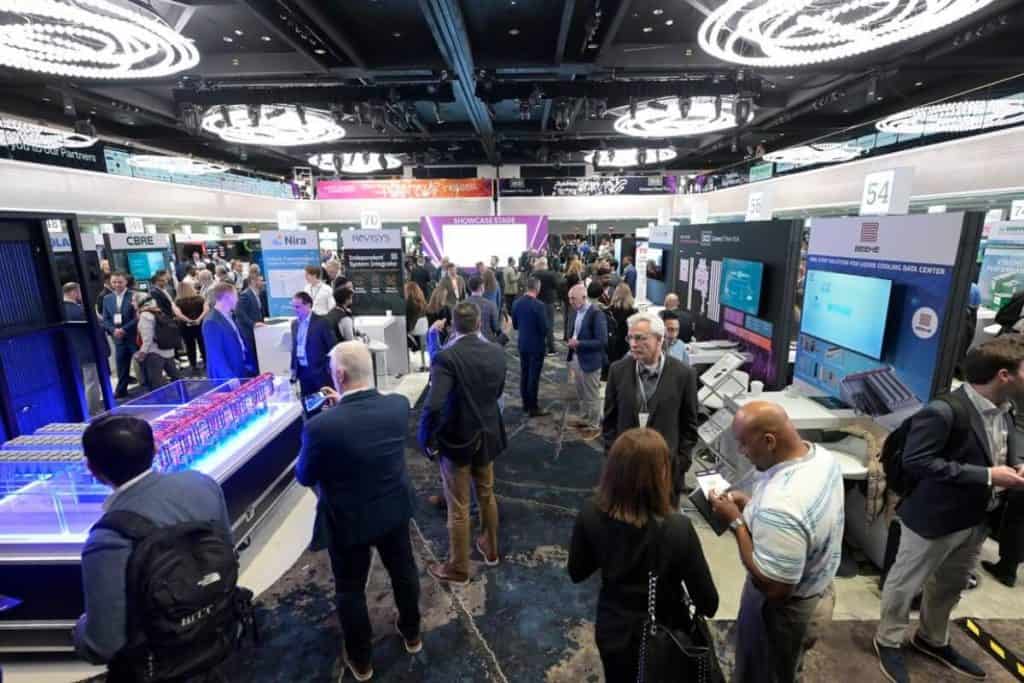
We spent two full days at DCD>Connect New York 2026, sitting through sessions, listening to operators, and paying attention to what wasn’t being said just as much as what was.
Here’s the short version: the industry is moving fast, faster than it’s organizing itself.
AI is driving demand, no question. But underneath that momentum, there’s a growing layer of friction. Decisions are being made quickly, infrastructure is being deployed even faster, and in many cases, the operational side is playing catch-up.
So instead of another surface-level recap, this is a grounded look at what actually stood out: the patterns, the concerns, and where things are likely headed next from DCD 2026 insights we gathered on the ground.
Key Takeaways
By the end of this article, you’ll know:
- Data center growth is outpacing planning, creating long-term operational inefficiencies.
- Cooling and infrastructure limits are becoming real constraints as density increases.
- The next phase is optimization, not expansion, improving what already exists.
“Move Fast” Is Already Creating Problems
Speed is clearly the priority right now. That part isn’t surprising. What is surprising is how often structure is being sacrificed to maintain that speed.
Across conversations and sessions at DCD 2026, a consistent theme kept coming up: data centers are being built and brought online quickly, but not always with the level of planning you would expect at this scale. In some cases, foundational systems like DCIM are being skipped entirely or treated as something to “figure out later.”
That approach works in the short term. Capacity goes live, deadlines are met, and everything looks fine from the outside.
But infrastructure doesn’t forget.
Every rushed decision creates a layer of complexity that sticks around:
- Cable routing that wasn’t thought through becomes harder to fix later
- Airflow inefficiencies quietly increase cooling demands
- Troubleshooting takes longer because nothing is as clear as it should be
It’s not that things are failing immediately; it’s that they’re becoming harder to manage over time. And eventually, that compounds into real operational cost.
Cooling Is Becoming a Real Constraint
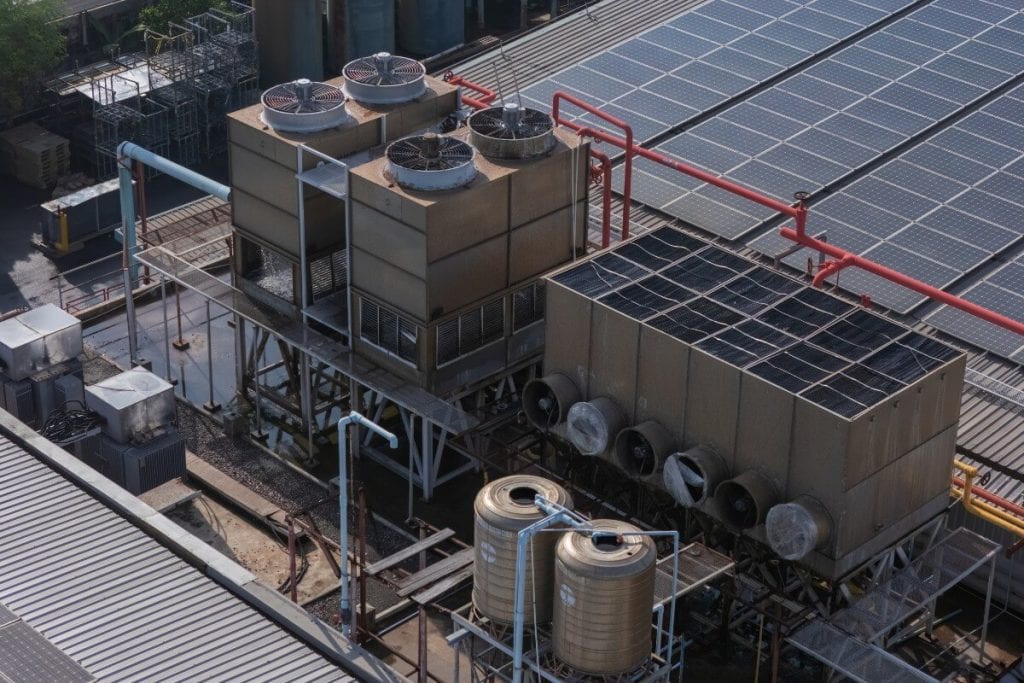
Cooling is no longer just part of the design conversation; it’s starting to define the limits of what’s possible.
What stood out during DCD 2026 takeaways discussions wasn’t just that cooling was discussed heavily, but how specific the conversations have become. The focus has shifted toward fundamental questions like whether it makes more sense to cool the chip directly or continue optimizing room-level cooling strategies. That alone tells you where things are heading.
But more importantly, the risks are becoming tangible.
There were real concerns raised around what happens when cooling falls short at higher compute densities. In extreme cases, heat isn’t just reducing efficiency. Heat is causing physical issues at the chip level, including the formation of bubbles due to thermal stress.
That’s a different level of problem.
At that point, cooling isn’t about optimization or cost savings. It’s about preventing failure and protecting the hardware itself. And as density continues to increase, the margin for error gets smaller, which means even minor inefficiencies inside the rack (anything that disrupts airflow) start to matter a lot more.
The Supply Chain Still Has Gaps
One of the more grounded DCD 2026 insights is that the supply chain is not fully aligned with the pace of innovation.
On paper, things look like they are advancing quickly. Bandwidth is increasing, new standards are being introduced, and performance ceilings are being pushed higher. But when you look closer, not everything is moving at the same speed.
A good example is Ethernet.
Technologies like Direct Attach Copper (DAC) cables have already been in use for years, especially for short-distance, high-speed connections within the same rack. Solutions like 25GBASE-CR, SFP28 to SFP28 Passive Direct Attach Copper, and Twinax cables are reliable, efficient, and widely deployed today. They are not new.
What is changing is the scale and urgency of adoption.
There is now a strong push to move beyond legacy Ethernet standards, with discussions pointing toward 300 to 600 gig becoming the future norm in data center environments. The capability is evolving quickly, and in many cases, the cabling side is already capable of supporting these higher speeds.
But the bottleneck is not where most people expect it to be.
It is not the cables.
It is the interfaces.
That creates a disconnect. You have infrastructure that is ready, or close to ready, for higher performance, but the supporting hardware and interfaces still need time to catch up. Manufacturers are working toward it, but widespread adaptation does not happen overnight.
And when different parts of the ecosystem move at different speeds, friction shows up in deployment.
This is where delays compound:
- Equipment arrives at different times
- Systems cannot be fully utilized
- Workarounds start creeping into deployments
And just like with rushed builds, these workarounds tend to stick around longer than intended.
The AI Hype Is Starting to Settle
There was a noticeable shift in tone across conversations at DCD connect New York 2026. AI is still the primary driver of growth, but the way people are talking about it is changing.
Not long ago, the focus was simple: build as fast as possible and scale ahead of demand.
Now, the conversation is becoming more grounded. There is growing awareness that not everything built during this surge will immediately deliver returns, and that has started to influence both operators and investors.
You can almost map the shift in real time:
| Phase | Timeframe | Industry Behavior | What We’re Seeing Now |
| Initial AI Surge | 2023 – Early 2024 | Aggressive expansion, heavy investment, race to secure capacity | Massive buildouts, speed prioritized over structure |
| Peak Hype | Mid 2024 – Early 2025 | Overcommitment, rapid deployment, reliance on major ecosystems | “Build now, figure it out later” mentality |
| Transition Phase | 2025 – Present | Early signs of skepticism, supply chain strain, uneven performance | Questions around sustainability and ROI |
| Stabilization (Emerging) | Late 2025 – 2026 | Focus shifting to efficiency, utilization, and accountability | Investors want results, not idle infrastructure, “no to dark data centers” |
One comment that stood out summed it up well:
Investors are no longer interested in funding dark data centers. They want to see output. They’re now saying “no” to data centers that offer zero transparency (hence the name, dark data centers).
That shift matters.
It changes how decisions are made. Instead of building purely for future demand, there is increasing pressure to make existing infrastructure perform. Efficiency, utilization, and operational clarity are starting to carry just as much weight as expansion.
At the same time, there is visible movement away from over-reliance on single ecosystems, alongside broader discussions about whether the current pace of AI-driven growth is sustainable long term.
This is typically the point where an industry matures.
Not by slowing down, but by becoming more selective, more measured, and more focused on what actually works.
And when that happens, attention naturally shifts inward. Not just to what gets built next, but to how well what’s already been built is actually functioning and generating profit.

Rethinking the Rack
One of the more interesting DCD 2026 insights is that the rack itself is starting to evolve.
For a long time, the rack has been treated as a fixed constraint. Standard widths, standard depths, standard layouts. You design around it, not rethink it.
That’s changing.
There are now real discussions around:
- Deeper racks to support higher density deployments
- 23-inch widths to accommodate both legacy and modern equipment
- More flexible, modular approaches driven by companies entering the space from outside traditional data center infrastructure
This tells you something important.
The industry is no longer assuming that existing physical standards are sufficient for what’s coming next. Compute density is increasing, power requirements are shifting, and the physical environment has to adapt.
But here’s the gap.
While the rack itself is being rethought, what happens inside the rack is still often treated as an afterthought.
Cabling, routing, and organization are not evolving at the same pace as the hardware they support.
And that creates friction:
- Higher density means tighter spaces
- Higher speeds mean less tolerance for disruption
- More complexity means more points of failure
You can upgrade the rack, but if the internal environment is still disorganized, the benefits are limited.
Because at the end of the day, performance is not just about what you install. It is about how well everything inside that rack actually works together.
Making It Work with Zero U Cable Management
As racks evolve to support higher density, cable management becomes one of the simplest ways to unlock immediate gains without changing the core infrastructure.
Zero U Cable Management takes a different approach by mounting cables alongside the rack structure instead of consuming valuable rack units. Instead of placing cable managers above or below active equipment, cables are routed outside the usable U-space, freeing up room for additional devices within the same rack footprint.
In high-density environments, that reclaimed space adds up quickly. It is not uncommon to recover up to 30% of rack capacity, effectively delaying or even eliminating the need for additional cabinets.

The Real Opportunity: Fixing What Was Built Too Fast
This was one of the clearest signals from DCD 2026 takeaways.
There is growing interest in fixing existing data centers.
Not replacing them.
Not rebuilding from scratch.
Fixing them.
Because the reality is starting to set in.
Data centers that were deployed quickly are now beginning to show signs of strain:
- Disorganization making troubleshooting slower
- Airflow inefficiencies increasing cooling costs
- Space being consumed faster than expected
None of these issues are catastrophic on their own. But together, they create operational drag that compounds over time.
And this is where the shift happens.
Instead of asking, “How do we build more?”
The question becomes, “How do we make what we already have work better?”
That is a different mindset.
It is more practical, more immediate, and often more cost-effective.
It is also where small changes start to have outsized impact:
- Better cable organization improves airflow
- Clear routing reduces troubleshooting time
- Optimized layouts recover usable space inside the rack
This is not about redesigning the entire facility.
It is about removing the friction that was introduced when speed took priority over structure.
Because eventually, every fast build reaches a point where it needs to be refined.
And when that moment comes, the teams that can optimize what already exists will have a clear advantage over those that continue to expand without addressing the fundamentals.
Building Fast Is Best Paired with Optimization
“Move fast and break things” works for a while.
But in data centers, what breaks does not disappear. It stays, it compounds, and it becomes harder to manage over time.
The industry is not slowing down. But it is starting to recognize the cost of moving too fast.
And that is where the next wave of improvement will come from.
Grow your data center by optimizing what you already have. Partner with AnD Cable Products for all your Cable Management Needs today!
FAQ
1. What were the most important DCD 2026 takeaways?
Data centers are being built faster than they are being properly planned and organized. This creates inefficiencies that will need to be addressed over time.
2. Why is cooling becoming such a major concern?
Higher compute density generates more heat, reducing the margin for error. Cooling is now critical to prevent hardware degradation, not just improve efficiency.
3. Are DAC cables ready for future data center speeds?
Yes, DAC cables already support high-speed, short-distance connections within racks. The limitation today is mainly on the interface and hardware side.
4. Is the AI data center boom slowing down?
Not slowing down, but becoming more measured and results-driven. There is growing pressure to justify performance and return on investment.
5. Why focus on optimizing existing data centers?
Many facilities were deployed quickly and now show inefficiencies in space and airflow. Optimization is often faster and more cost-effective than expansion.
6. How does cable management impact performance?
Proper cable management improves airflow and reduces troubleshooting time. It also helps recover usable rack space in high-density environments.
About the Author
 Louis Chompff – Founder & Managing Director, AnD Cable Products
Louis established AnD Cable Products – Intelligently Designed Cable Management in 1989. Prior to this he enjoyed a 20+ year career with a leading global telecommunications company in a variety of senior data management positions. Louis is an enthusiastic inventor who designed, patented and brought to market his innovative Zero U cable management racks and Unitag cable labels, both of which have become industry-leading network cable management products. AnD Cable Products only offer products that are intelligently designed, increase efficiency, are durable and reliable, re-usable, easy to use or reduce equipment costs. He is the principal author of the Cable Management Blog, where you can find network cable management ideas, server rack cabling techniques and rack space saving tips, data center trends, latest innovations and more.
Visit https://andcable.com or shop online at https://andcable.com/shop/