Over the past few years the data‑center industry has raced to keep up with the explosive demand created by artificial‑intelligence (AI) workloads and cloud adoption. Hyperscalers, colocation providers, and enterprise operators all had the same marching orders: build capacity quickly, get it online, and sort out the details later. That frenetic pace delivered the gigawatts of compute that generative AI demanded but at the expense of data center efficiency.
Today, those hastily built sites continue to run workloads, yet day‑to‑day operations tell a different story. From hidden energy costs to creeping maintenance complexity, friction is emerging even when nothing has technically “failed.”
This article outlines why the next phase of data‑center growth is about optimization rather than expansion. It explains how decisions made in the rush to build now manifest as operational inefficiencies, explores where those problems surface first, and discusses how data‑center managers can recover capacity, improve performance, and lower costs. It also incorporates recent industry data showing how AI-driven demand and higher rack densities are stretching existing facilities.
By the end you’ll see why speed built the data center, but optimization will make it sustainable.
Key Takeaways
- Rapid data center expansion creates hidden inefficiencies that compound over time, even when nothing appears broken.
- High-density racks amplify small issues, especially in cable management and airflow, making operations harder.
- The next phase of growth is not expansion, but improving data center efficiency through optimization.

Why the Rush? AI and Rapid Construction
The AI boom caught many operators off guard. In 2025 70% of new data‑center capacity growth was driven by AI needs. Generative models require extraordinary compute, and hyperscale cloud providers scrambled to deploy clusters of GPUs and accelerators. Traditional construction methods – piecemeal rack deployment, on‑site builds, sequential permit approvals – could not keep pace.
According to industry surveys, 94% of data‑center operators reported shortages of experienced construction teams and 80% noted that key equipment lead times had increased, with one‑third of those delays stretching longer than twelve weeks. Shortages of skilled labor, supply‑chain constraints, and a race to secure grid capacity pushed teams toward rapid build‑outs.
Hastily built facilities did succeed in bringing compute online. Systems turned on, workloads ran, and customers saw the capacity they needed. But the unintended consequences of speed are now surfacing in the form of data center inefficiency and complexity.
Infrastructure has memory; decisions made during rushed construction persist for years. Improvised cable routing, oversized cooling equipment, and minimal documentation may not cause immediate outages, yet they slowly erode performance and margin. Recognizing these hidden costs is the first step toward the next phase of data‑center management: data center optimization.
The Hidden Cost of Speed
From the outside, a fast‑built data center looks fine. Servers hum, network packets flow and workloads complete. Internally, however, small inefficiencies compound:
- Troubleshooting takes longer. Without clear cable organization, technicians spend more time identifying circuits and tracing connections. A poorly designed or unmanaged cabling system increases latency, raises the risk of downtime, and makes troubleshooting complex.
- Routine changes slow down. Moves, adds and changes that could be simple require coordination because patch panels are full or documentation is missing.
- Cooling costs rise. High‑density racks built without adequate airflow planning force cooling equipment to work harder. Industry estimates show that cooling systems account for roughly 30% – 40% of total data‑center energy consumption. In legacy facilities, cooling often contributes 40% or more of total facility energy use.
- Energy efficiency suffers. The average power‑usage effectiveness (PUE) across data centers globally is more than 1.57, yet high‑efficiency sites target 1.2 – 1.3. Without intentional airflow management, much of the energy pumped into cooling never reaches the IT load.
At the core of these issues is cabling and airflow. According to ANSI/TIA-606-B Standard, a cabling and cable labeling guide, experts noted that a poorly designed cabling system leads to increased latency, higher risks of downtime, troubleshooting complexity and limited scalability. Conversely, businesses that invest in structured and professionally managed cabling improve operational efficiency, reduce costs and support future technologies. These hidden costs of speed reveal themselves gradually; there is no dramatic failure, only a steady reduction in efficiency.
What “Breaking” Actually Looks Like
Data‑center infrastructure rarely fails catastrophically. Instead, it degrades. Messy cable paths restrict access and mask labeling. Airflow becomes uneven as cables block vents and impede exhaust. Operators lose visibility of which connections feed which devices. That degradation manifests in several ways and severely affects data center efficiency:
- Airflow mismatch. Studies show that 61% of airflow in legacy sites is not properly utilized. Bypass air and lack of containment create hot spots, requiring cooling equipment to run harder while still failing to prevent thermal issues.
- Wasted energy. Oversized or inflexible cooling equipment wastes power because systems are sized for peak loads rather than actual operating conditions. Without real‑time controls, fans and pumps run at full speed even when load drops.
- Compounded inefficiency at high density. Rack power density has risen from 2–5 kW per rack a decade ago to 30–50 kW per rack in high‑performance clusters, and near‑future deployments exceed 100 kW per rack. In these environments, even small inefficiencies quickly scale into big problems. An obstructed cable bundle that disrupts airflow can cause a 50 kW rack to throttle or overheat.
These issues do not create immediate downtime but they make everyday operations harder. Technicians spend more time navigating cable mazes, risk accidental disconnections, and face unpredictable thermal profiles. As one operations lead put it, “nothing fails overnight—it just gets harder every day.”

Where Problems Show Up First
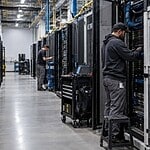
The first signs of friction appear inside the rack. High‑density compute nodes pack dozens of servers, accelerators, and storage devices into a single cabinet. With AI workloads pushing densities beyond 30 kW per rack, cable counts increase dramatically. Each server needs multiple power feeds, network uplinks and management connections. Without clear structure, complexity escalates:
- Disrupted airflow: Cable bundles block the front of servers and create “air dams,” preventing cold air from reaching critical components. Using cable managers ensures clean installations with adequate gaps for airflow, but hurried installations often disregard cable management altogether.
- Restricted access: Tangled cables restrict technicians’ ability to remove or service equipment. Unstructured cabling leads to messy bundles that complicate troubleshooting and increase the risk of accidental disconnections.
- Reduced visibility: Without consistent labeling, it becomes difficult to trace circuits. Color‑coding cables and labeling both ends simplifies maintenance and troubleshooting.
- Amplified inefficiency: In a low‑density rack, an obstructed cable might cause a minor temperature rise. In a rack drawing 40 kW, that same obstruction can cause equipment to throttle or even shut down. Density without management and optimization amplifies data center inefficiency.
This rack‑level complexity is often invisible to management dashboards. Thermal sensors may show high PUE or unusual temperature variance, but the root cause (messy cabling) is not captured by traditional monitoring tools. Recognizing that these issues start inside the rack is essential to addressing the hidden costs of speed.
The Tipping Point
Eventually every fast‑built facility reaches a tipping point. As AI workloads scale, operators realize that adding more racks or more power no longer yields proportional performance and may even result in reduced profits. Scaling further becomes harder than expected, costs rise, and performance becomes inconsistent. Meanwhile, sustainability targets loom: global data‑center energy consumption is expected to double by 2030, driven by AI workloads, edge computing and cloud infrastructure. High‑density facilities strain energy and water supplies and heighten corporate carbon footprints.
At this point, the conversation shifts from “how fast can we build?” to “how do we make this work better?” Operators who ignore the friction may face rising operating expenses, regulatory scrutiny and limited ability to deploy new workloads. Those who recognize the need to optimize can recover capacity, reduce energy costs and position themselves for sustainable growth. This tipping point marks the beginning of the next phase of data‑center management.

What Teams Will Need Next to Achieve Improved Data Center Efficiency
Transitioning from rapid build‑out to sustainable operation requires a shift in mindset. Instead of focusing solely on new capacity, teams must prioritize optimizing existing data center infrastructure. Key elements include cabling, airflow, monitoring and strategic cooling investments.
1. Structured Cabling and Cable Management
A structured cabling system uses patch panels, consistent labeling, and standardized subsystems. While it requires more planning and upfront investment, it yields multiple long‑term benefits:
- Faster troubleshooting and reduced downtime. Technicians can quickly identify connections without tracing cables manually.
- Simplified moves, adds and changes. New devices can be added or replaced without disrupting adjacent circuits.
- Improved airflow and cooling efficiency. Neatly routed cables clear front‑of‑rack airflow and reduce hot spots.
- Better compliance with industry standards such as ANSI/TIA‑942, which helps meet regulatory and customer requirements.
- Scalability for future technologies. Structured cabling accommodates new network speeds (e.g., 400 Gbps, 800 Gbps) and emerging optical interconnects without wholesale rewiring.
By contrast, unstructured cabling (point‑to‑point, ad hoc connections) may be cheaper initially but becomes expensive over time. Messy cables complicate troubleshooting, increase risk of accidental disconnections, limit scalability and drive higher maintenance costs. For organizations that prioritize growth, performance and efficiency, structured cabling is the foundation.
Best practices for cable management include:
- Color‑coding cables for quick identification (e.g., power, network, storage).
- Labeling both ends of every cable.
- Following bend‑radius guidelines to prevent signal loss or physical damage.
- Separating data and power cables to minimize electromagnetic interference.
- Conducting regular cable audits to identify and remove unused or faulty connections.
These practices not only improve data center efficiency but also contribute to data center infrastructure efficiency by reducing wasted space and energy.
2. Recovering Rack Space with Zero U Cable Management
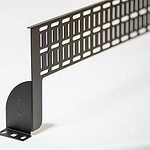
One of the most effective ways to improve density without adding more cabinets is to recover rack space. Traditional horizontal cable managers occupy 1U or more of vertical space in each rack. Zero U Cable Managers, offered by AnD Cable Products, mount outside the rack’s usable U‑space.
By moving cable management to the side or rear of the cabinet, they recover up to 30% of rack real estate – the equivalent of adding a free rack for every three optimized racks. This recovered space can be used for additional servers, storage, or networking gear without expanding the facility footprint.
Recovered rack space translates directly into lower capital expenditures (fewer cabinets, fewer PDUs), reduced cooling load (because there is less equipment generating heat in a given footprint), and better airflow (since the front of the rack remains unobstructed).
With Zero U Cable Managers, technicians also gain improved access for maintenance and can implement best practices such as color‑coded cables and labeling. In high‑density AI environments, recovering 30% of rack space can offset delays in procurement and reduce the need for additional data hall expansions.

3. Airflow Management and Cooling Optimization
Thermal management is inseparable from cable organization. Dense racks produce more heat, and poor cable routing blocks airflow. Operators should adopt hot‑aisle/cold‑aisle containment strategies: alternating the orientation of racks and installing barriers to separate hot exhaust air from incoming cold air.
According to ASHRAE, containment can reduce cooling energy by 15 – 20%. Proper containment also allows higher supply‑air temperatures, reducing the temperature difference across cooling coils and improving chiller efficiency.
Beyond containment, modern cooling systems emphasize flexibility and real‑time control. Variable frequency drives (VFDs) and electronically commutated (EC) fans adjust speed based on load, yielding energy savings of 20 – 35%. Sensors that integrate with building‑management systems can modulate airflow dynamically and reduce fan energy by 25 – 35%[9].
Liquid‑cooling technologies, including rear‑door heat exchangers and direct‑to‑chip cooling, are 1,000 times more efficient than air at transferring heat. While liquid cooling requires careful design, it is crucial for racks exceeding 50 kW or 100 kW. Many operators deploy hybrid systems that combine air cooling, liquid cooling and free‑air economization to balance legacy infrastructure with emerging demands.
4. Monitoring and Real‑Time Visibility
Optimization does not stop at physical layout. Deploy data‑center infrastructure management (DCIM) tools that provide real‑time visibility into power, temperature, humidity and asset location. Modern DCIM platforms integrate with sensors and automatically map cables, power feeds and network connections. Coupled with structured cabling, this visibility allows operators to identify hot spots, stranded capacity and unused circuits quickly.
AI‑driven cable management tools are emerging as well. These systems detect, map and diagnose cable issues automatically. They can generate digital twins of cabling infrastructure and use machine learning to predict potential problems before they cause downtime. Integrating such tools into operations helps maintain data center energy efficiency and simplifies troubleshooting.
Looking Ahead: Optimization as Strategy
The next phase of data centers will not be defined by the speed of construction, but by how effectively operators optimize what they already have. Several trends make this shift inevitable:
- Energy and sustainability pressure. Cooling accounts for 30 – 40% of energy use, and global data‑center energy consumption is projected to double by 2030. Reducing PUE through airflow management and efficient cabling directly lowers energy bills and carbon emissions.
- Limited space and power. Grid capacity, real estate and skilled labor are constrained. Recovering 30% of rack space with Zero‑U Management often makes the difference between meeting AI demand or delaying deployment.
- Regulatory and customer scrutiny. Enterprises and hyperscalers face growing regulatory requirements to report energy efficiency and carbon intensity. Optimization measures like structured cabling and containment provide verifiable improvements.
- Cost control in uncertain markets. Macro‑economic factors and supply‑chain disruptions make capital spending unpredictable. Optimizing existing infrastructure yields immediate return on investment without multi‑million‑dollar expansions.
Operators who act now will stay ahead. They will treat cable management not as a cost centre but as a strategic tool for recovering capacity and enhancing data center optimization strategies.
Speed Built the Infrastructure; Optimization Makes It Sustainable
The data‑center boom of the early 2020s was defined by speed. AI demand surged, capacity was scarce and everyone raced to build. That race delivered the compute that powers generative models and digital economies today. However, the hidden cost of speed is now evident in cable snarls, airflow bottlenecks and rising energy bills. Nothing has failed, yet operations are getting harder every day.
The next phase of data centers is therefore about fixing what was built too fast. It is about embracing structured cabling, recovering rack space, optimizing airflow and adopting intelligent cooling. It is about shifting the conversation from expansion to data‑center efficiency and data‑center energy efficiency.
Operators who act early will recover capacity, lower costs and extend the life of their infrastructure. Those who delay will eventually reach the same conclusion, but with more pressure and less room to maneuver.
This is where the right infrastructure decisions start to matter. Working with partners like AnD Cable Products, teams can simplify cable management, recover valuable rack space, and improve airflow without expanding their footprint. Small changes in how cables are organized and managed can translate into measurable gains across performance, cooling, and operational clarity.
About the Author
 Louis Chompff – Founder & Managing Director, AnD Cable Products
Louis established AnD Cable Products – Intelligently Designed Cable Management in 1989. Prior to this he enjoyed a 20+ year career with a leading global telecommunications company in a variety of senior data management positions. Louis is an enthusiastic inventor who designed, patented and brought to market his innovative Zero U cable management racks and Unitag cable labels, both of which have become industry-leading network cable management products. AnD Cable Products only offer products that are intelligently designed, increase efficiency, are durable and reliable, re-usable, easy to use or reduce equipment costs. He is the principal author of the Cable Management Blog, where you can find network cable management ideas, server rack cabling techniques and rack space saving tips, data center trends, latest innovations and more.
Visit https://andcable.com or shop online at https://andcable.com/shop/
FAQ
What is data center efficiency?
Data center efficiency refers to how effectively a facility uses power, space, and infrastructure to support IT workloads. It is commonly measured using metrics like Power Usage Effectiveness (PUE), but also includes airflow management, cable organization, and operational simplicity.
Why do fast-built data centers become inefficient?
When data centers are built quickly, decisions are made for speed rather than long-term performance. This often results in poor cable routing, limited airflow planning, and lack of structure, which create inefficiencies that compound over time.
How does cable management affect data center efficiency?
Cable management directly impacts airflow, accessibility, and troubleshooting speed. Poor cable organization can block airflow, increase cooling costs, and make maintenance more difficult, while structured cable management improves performance and operational clarity.
What are the first signs of inefficiency in a data center?
Common early signs include slower troubleshooting, inconsistent airflow, rising cooling costs, and increased difficulty in performing routine maintenance or changes within the rack.
How can data centers improve efficiency without expanding?
Efficiency can be improved by optimizing existing infrastructure. This includes better cable routing, reclaiming rack space, improving airflow, and implementing structured systems that make the environment easier to manage.
What role does rack density play in efficiency?
Higher rack density increases performance capacity but also amplifies inefficiencies. Without proper cable management and airflow planning, high-density environments become harder to cool, maintain, and scale.