
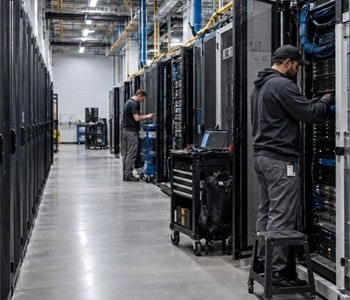
Purpose-built AI data centers tend to get the attention. They are newer, larger, and designed around GPU clusters, high-density racks, liquid cooling, and enormous power requirements from the beginning.
But the relationship between data centers and AI is becoming more complicated. Much of the industry’s AI transition will happen inside facilities that already exist, including sites designed years before today’s GPU densities and cooling requirements were imaginable.
As AI and data center infrastructure converge, operators are increasingly being asked to retrofit existing facilities rather than wait for entirely new campuses.
Enterprise and colocation data centers built years before the current AI boom are increasingly being asked to accommodate infrastructure they were never designed to support. Recent industry analysis points to the same challenge. Existing facilities often have valuable advantages such as established grid connections, operating infrastructure, fiber connectivity, and available floor space, but their original power and cooling profiles may not match the density required by modern AI workloads.
That makes the next stage of AI infrastructure as much a retrofit problem as a construction problem.
Key Takeaways
- Many existing data centers were designed around significantly lower rack densities than modern AI infrastructure requires.
- An AI data center retrofit must consider power, cooling, structural capacity, connectivity, cabling, and serviceability together.
- Existing facilities can still be valuable AI deployment sites because they already have infrastructure, power connections, and network access in place.
- Optimizing rack space and cable management can support higher density, but only when power and thermal limits are addressed first.
Why Existing Facilities Can Become AI Data Centers
Building a new AI data center allows almost every major infrastructure system to be designed around the workload.
Power distribution can be sized appropriately. Liquid cooling can be integrated from the start. Structural requirements can account for heavier racks. Fiber pathways, containment, and white-space layouts can be planned around dense clusters before the first server arrives.
Existing data centers do not have that luxury.
However, they have something equally valuable: they already exist.
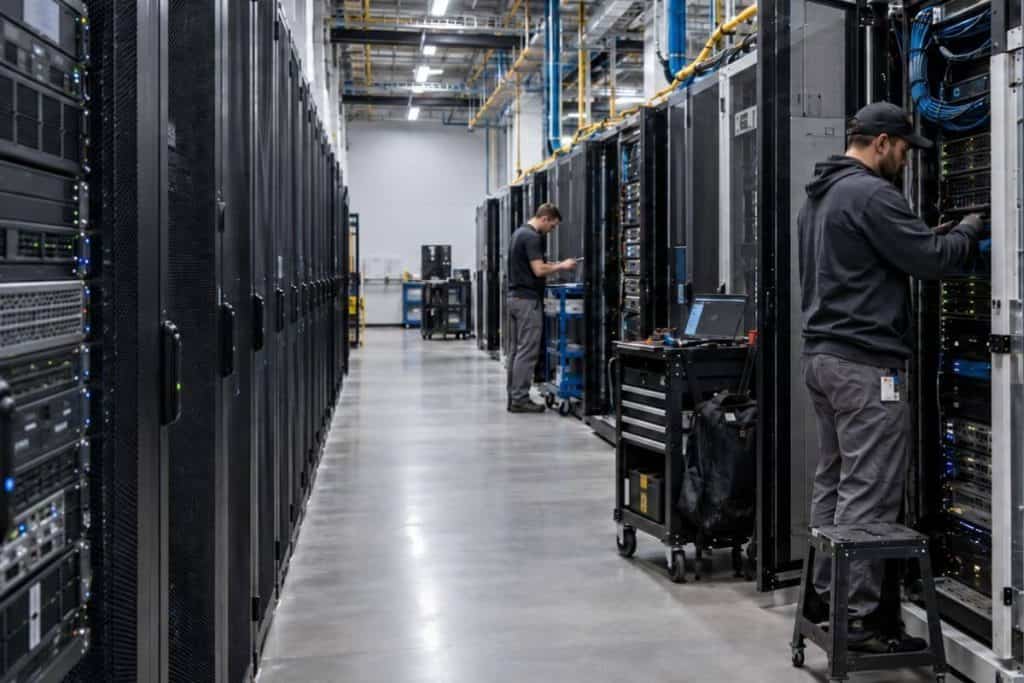
The facility may already have a utility connection, generators, UPS systems, cooling infrastructure, network connectivity, security, staff, and customers. At a time when new grid connections, permitting, construction schedules, and equipment lead times can delay new capacity, extracting more performance from an existing site can be significantly more practical than starting from an empty parcel.
This is why brownfield modernization is receiving more attention. Operators are evaluating whether existing facilities can be upgraded incrementally rather than waiting for completely new AI-ready campuses.
The challenge is determining exactly what the existing facility can support.
The First Constraint Is Usually Power
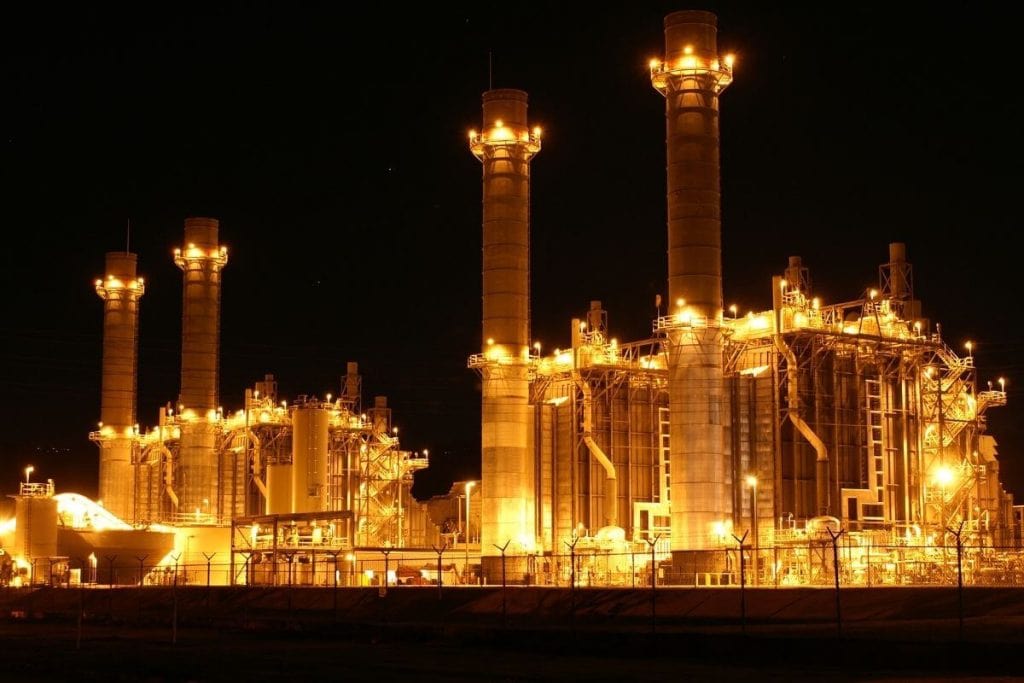
Traditional data centers were built around relatively predictable IT loads. AI changes that equation because GPUs can concentrate far more computing power into fewer racks.
Industry discussions in 2026 increasingly reference AI racks moving from conventional tens-of-kilowatts loads toward much higher densities, with some future architectures targeting hundreds of kilowatts per rack.
An existing facility may have enough empty rack space to support an AI data center deployment but still lack the electrical capacity required to use it.
Operators need to evaluate the entire power chain, including:
- Utility and facility capacity
- UPS systems
- Busways and distribution equipment
- Rack PDUs
- Circuit availability
- Redundancy requirements
- The ability to accommodate changing AI load profiles
Simply finding room for another GPU server does not mean the infrastructure can support it.
This distinction matters because AI capacity is not measured only in available rack units. A physically empty rack can still be functionally full if the surrounding power infrastructure has reached its limit.
Cooling Becomes a Rack-Level Problem
The same concentration of compute that stresses power distribution also changes how heat must be removed.
Legacy facilities commonly rely on room-level air cooling. That remains practical for many workloads, but higher-density AI clusters can produce thermal loads that are difficult to manage through conventional airflow alone.
This does not mean every existing data center needs to be converted immediately to a completely liquid-cooled environment.
Operators are taking several approaches, including improved containment, rear-door heat exchangers, direct-to-chip liquid cooling, cooling distribution units, and hybrid configurations where air-cooled and liquid-cooled systems operate within the same facility. Recent retrofit guidance increasingly treats this as a transition rather than an overnight replacement of the existing cooling architecture.
That is likely to become a defining feature of AI retrofits.
The existing data center does not suddenly become a new facility. Instead, new infrastructure is layered into the old one, rack by rack and system by system.
Network Infrastructure Can Become the Quiet Constraint
Power and cooling are usually the first concerns when retrofitting an existing facility for AI, but network infrastructure can become another limiting factor.
AI clusters depend on extremely high-bandwidth connections between accelerators, switches, storage, and the broader network. As those connections become faster and more numerous, existing fiber pathways, patching systems, and rack layouts may have to support far more connectivity than they were originally designed to handle.
An existing AI data center retrofit should therefore evaluate more than available ports. Teams should consider cable pathway capacity, switch density, fiber bend radius, patching accessibility, labeling, and whether technicians can service connections without disturbing neighboring equipment.
This becomes especially important as more infrastructure is concentrated inside each rack. A network can have enough theoretical bandwidth while still becoming physically difficult to maintain.
For operators, the lesson is simple: the AI network upgrade should be planned alongside the power and cooling upgrade, not after it.
The Rack Itself Has to Change
Power and cooling receive most of the attention, but the physical rack environment changes as well.
Higher-density equipment can mean heavier hardware, more network interfaces, more power connections, additional cooling components, and substantially more cabling concentrated into the same area.
Existing rack configurations may not have been designed around that level of complexity.
Operators therefore need to consider:
- Rack depth and weight capacity
- Front and rear accessibility
- Power and network cable pathways
- Fiber bend radius
- Service loops
- Airflow clearance
- Equipment replacement access
- Labeling and identification
- Available vertical mounting space
Small rack-level design choices become more consequential as density rises. Space once considered expendable can become valuable in an AI deployment.
Cable Management Becomes Part of AI Readiness
AI infrastructure is often described in terms of GPUs, power, cooling, and networking speed. Physical cable management receives far less attention.
As data centers and AI infrastructure become more closely intertwined, physical rack design becomes increasingly important to overall deployment readiness.
Yet denser racks inevitably create denser connectivity.
More switches, accelerators, power connections, and optical links must all be routed through a relatively small physical environment. Poor cable routing can make equipment harder to reach, restrict airflow, complicate tracing, and turn routine maintenance into a much slower process.
The objective is not simply to make a rack look clean. It is to preserve serviceability as density increases.
This means keeping cable pathways structured, maintaining appropriate bend radius, clearly identifying connections, and avoiding unnecessary use of rack space.

During an AI retrofit, cable management hardware should be evaluated alongside servers, power, and cooling. A retrofit cable manager should preserve accessibility and organization without unnecessarily consuming rack space that could support active equipment.
For facilities trying to accommodate AI infrastructure inside existing cabinets, Zero U cable management can become particularly useful. Instead of allocating additional rack units to traditional horizontal cable managers, a Zero U cable manager can preserve that mounting space for active equipment while still providing structured routing.
It does not solve the power or cooling challenge.
It solves a different part of the retrofit problem: making better use of the physical rack capacity that is already available.
Density Is Useful Only When the Rack Remains Serviceable
There is a temptation to treat higher density as an optimization goal by itself.
It is not.
A rack that holds more equipment but becomes difficult to maintain is not necessarily better optimized. Neither is a configuration that creates cable congestion, blocks airflow, makes connectors inaccessible, or leaves technicians unable to replace equipment without disturbing unrelated systems.
Every recovered rack unit helps, but only if the resulting configuration remains safe, coolable, powered, and maintainable.
Retrofitting Should Be a Migration Strategy
AI modernization is better treated as a migration than a single retrofit project.
For years, the same facility may need to support conventional enterprise racks, high-density GPU clusters, liquid-cooled equipment, and legacy infrastructure side by side.
Operators therefore need to decide which constraints must be addressed immediately and which can be upgraded gradually.
A practical sequence might involve:
- Assessing available power, cooling, structural capacity, and network connectivity.
- Identifying racks or zones capable of supporting higher-density equipment.
- Improving power delivery and thermal management where required.
- Reworking rack layouts, cable pathways, and supporting hardware to recover usable capacity.
- Introducing AI equipment incrementally rather than redesigning the entire facility at once.
The objective is to determine how much AI capacity the existing infrastructure can support responsibly.
When Retrofitting Stops Making Sense
Not every existing facility should be converted into an AI data center.
At some point, the cost and complexity of upgrading power distribution, cooling, structural capacity, networking, and rack infrastructure may outweigh the advantages of keeping the existing site.
A retrofit becomes harder to justify when several major constraints appear at the same time. If the facility requires extensive electrical upgrades, major cooling changes, structural reinforcement, and completely new network pathways, a purpose-built deployment may offer a cleaner long-term solution.
This is why the initial assessment matters so much.
The goal should not be to force AI infrastructure into every available data center. It should be to identify facilities where modernization can deliver useful new capacity without creating an operational compromise.
The Next AI Data Center May Already Be Running
New AI campuses will continue to be built. Some workloads simply require infrastructure that existing sites cannot economically support.
But that will not be the whole story.
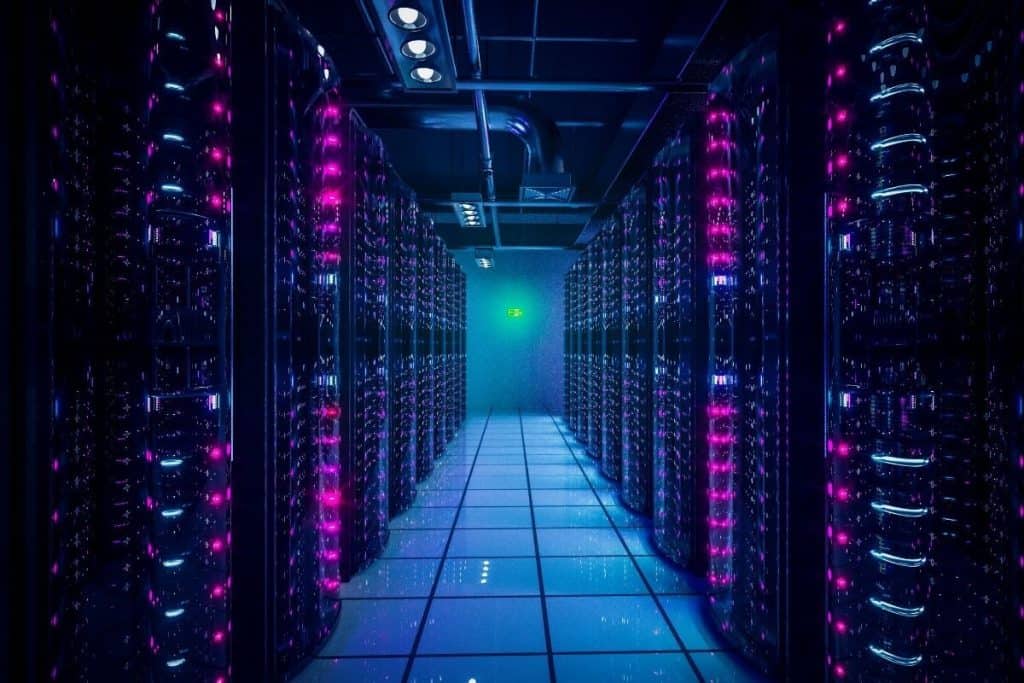
A significant share of AI growth will come from facilities built for a very different generation of IT. Whether they can support modern AI workloads depends on how much of their power, cooling, structural, and rack infrastructure can realistically be upgraded.
For some, the limits will be too significant and new construction will make more sense. Others may have enough power, cooling potential, structural capacity, and connectivity to support substantial upgrades.
In suitable facilities, rack-level improvements such as better cable routing, recovered U-space, and clearer identification can help operators make denser deployments easier to maintain.
AnD Cable Products supports that part of the transition through Zero U Cable Managers, cable labeling systems, network and power cabling, and other rack-level solutions designed to keep increasingly dense infrastructure organized and usable.
AI may be forcing data centers to change faster than expected.
But adapting an existing facility does not always mean replacing everything inside it.
Sometimes the smarter approach is to determine what still works, upgrade what does not, and optimize everything in between.
Frequently Asked Questions
What is the purpose of an AI data center?
The purpose of an AI data center is to provide the computing, networking, power, and cooling infrastructure required to train, operate, and serve artificial intelligence workloads. Compared with conventional facilities, AI environments often require higher rack densities, faster interconnects, and substantially greater power and cooling capacity.
Can an existing data center support AI workloads?
Yes, depending on the facility. Operators need to assess power availability, cooling capacity, floor loading, network connectivity, rack configuration, and redundancy before deploying high-density AI equipment.
What is an AI data center retrofit?
An AI data center retrofit upgrades an existing facility so it can support higher-density AI infrastructure. Improvements may involve power distribution, cooling, racks, cabling, networking, monitoring, or structural systems.
Why are AI racks harder to retrofit into existing data centers?
AI racks can require substantially more power and cooling than traditional IT racks. They may also introduce greater weight, more cabling, denser networking, and different maintenance requirements.
Does every AI retrofit require liquid cooling?
No. The appropriate cooling strategy depends on rack density, server design, existing infrastructure, and future requirements. Some operators can extend air cooling or use rear-door heat exchangers, while others may require direct-to-chip liquid cooling or hybrid systems.
How does cable management help an AI data center retrofit?
Effective cable management preserves airflow, improves equipment access, simplifies maintenance, and can help recover valuable rack space. Zero U cable management can be particularly useful when operators need to increase equipment density without dedicating additional rack units to horizontal cable management.
About the Author – John Lester

John Lester, General Manager at AnD Cable Products, brings a rich tapestry of IT and project management experience to the forefront of cable management solutions for data centers. His career, spanning over three decades, includes significant roles in IT project management and consultation with renowned companies. John served in the Marine Corps during Desert Storm. John’s journey in the tech world is further distinguished by his proficiency in advanced programming and systems expertise.
His leadership at AnD Cable Products encapsulates a blend of innovation, strategic planning, and a relentless commitment to delivering excellence in the field of data center infrastructure. John was with AnD Cable Products when Louis was designing his innovative Zero U cable management racks and Unitag cable labels, both of which have become industry-leading network cable management products. AnD Cable Products only offer products that are intelligently designed, increase efficiency, are durable and reliable, re-usable, easy to use or reduce equipment costs. He is the co-author of the Cable Management Blog, where you can find network cable management ideas, server rack cabling techniques and rack space saving tips, data center trends, latest innovations and more. Visit https://andcable.com or shop online at https://andcable.com/shop/


