

A data center problem does not always start with a failed switch, a bad port, or a damaged cable. Sometimes it starts with a simple question:
Which cable is this?
That question seems small until the team is working inside a crowded rack, the maintenance window is closing, and five cables look almost identical. One cable leads to a production system. Another connects to backup infrastructure. Another was supposed to be removed months ago but never was. The documentation is close, but not fully updated. The labels are faded, missing, or too vague to be useful.
Now the technician has to choose between tracing everything manually or trusting incomplete information.
Neither option is ideal.
In modern data centers, cable identification is not just a housekeeping issue. It affects troubleshooting speed, uptime, maintenance confidence, and operational efficiency. When nobody knows which cable is which, even simple work becomes slower, riskier, and more expensive.
That is why cable labels deserve more attention than they usually get.

Key Takeaways
- Poor cable identification increases troubleshooting time, maintenance risk, and operational confusion.
- Different environments need different cable label solutions, from quick write-on tags to standardized printed systems.
- The best cable labeling system is the one that makes the right cable easy to identify, trace, and service when it matters most.
The Real Cost of Poor Cable Identification
Most teams do not notice labeling problems when everything is running smoothly. The issue appears during change, maintenance, troubleshooting, or emergency response. That is when the rack has to tell the truth.
If the cable environment is clear, the team can move quickly. If it is not, the team loses time.
Poor cable identification can lead to:
- Longer troubleshooting windows
- Accidental disconnections
- Slower moves, adds, and changes
- More dependence on senior technicians
- Higher risk during maintenance
- Confusion between production, backup, management, and test connections
- Documentation that no longer matches the physical rack
The problem is rarely the cable itself. The problem is knowing which cable is the cable.
This becomes more important as network environments grow denser. High-speed network cables, DAC network cable deployments, fiber connections, power cable labels, and management connections can all occupy the same rack space. Without clear identification, technicians are forced to slow down and verify manually.
That may sound careful, and sometimes it is. But in a live data center environment, every extra minute matters.
Cable Labeling Is Really About Confidence
Good cable labeling gives technicians confidence.
It tells them what they are looking at before they touch anything. It reduces the need to guess. It makes work easier for the next person who opens the rack, not just the person who installed the cable.
That matters because data center work is rarely done under perfect conditions.
Maintenance windows are short. Systems are critical. Teams may be working at night or under pressure. Multiple technicians may touch the same environment over time. Hardware may change, but the cable path remains.
When cable labels are clear, consistent, and easy to follow, routine work stays routine.
When labels are missing or inconsistent, routine work becomes investigative work.
That is where operational friction begins.
Not All Cable Labels Solve the Same Problem
The phrase “cable labels” sounds simple, but not every label is built for the same use case.
Some environments need fast write-on identification because cables change frequently. Others need reusable snap-on labels for consistent organization across many racks. Some need printed labels for standardized documentation and compliance. In larger projects, teams may need a complete labeling system that supports both accuracy and speed.
So the better question is not:
What is the best cable label?
The better question is:
What type of cable label works best for this environment?
That distinction matters.
A lab rack, a high-density production rack, a new data center build, and a structured enterprise deployment may all need cable identification. But they do not always need the same labeling approach.
QuickPinch Cable Labels: Best for Fast Identification and Frequent Changes
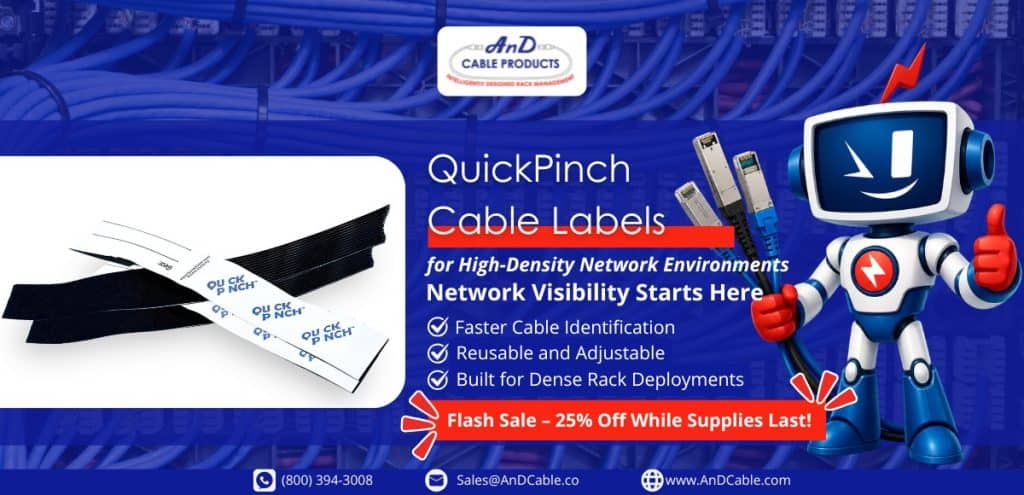
QuickPinch Cable Labels are a strong fit for environments where speed, flexibility, and reuse matter.
These reusable, write-on Velcro tags allow technicians to write identification details directly onto the label, then secure it around the cable or cable group. There is no need for adhesive, special tools, or complicated wrapping steps.
That makes QuickPinch especially useful in environments where the cable layout changes often.
QuickPinch works best for:
- Temporary network connections
- Lab and staging environments
- Frequent moves, adds, and changes
- Fast troubleshooting situations
- High-density racks that need quick visibility
- Teams that need simple reusable cable labels
- Cable groups that need to be identified without permanent labeling
In these environments, the goal is not always to create a polished permanent label. The goal is to make the cable easy to identify now.
That is a valuable difference.
A technician may need to mark a temporary connection during testing. A team may need to identify a cable group during a migration. A rack may be changing faster than printed labels can keep up. In those situations, QuickPinch gives teams a practical way to reduce confusion without slowing the work.
QuickPinch is especially useful when the environment is dynamic, but the need for clarity is immediate.
UniTag Cable Labels: Best for Structured, Reusable Identification
UniTag Cable Labels are better suited for teams that want a more consistent and structured cable identification system.
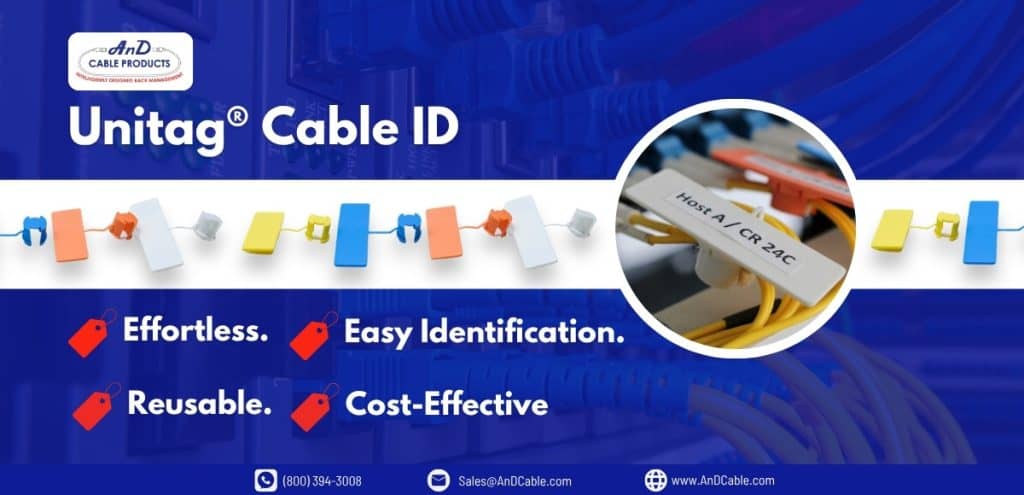
The snap-on, snap-off design makes UniTag useful for identifying virtually any cable size or cable group. It also helps reduce the need for traditional flag ties, which can snag, clutter the rack, or become difficult to follow in dense environments.
UniTag is a strong option when visibility and long-term organization matter.
UniTag works best for:
- Long-term cable identification
- Color-coded cable runs
- Large data center deployments
- Cable groups that need visual separation
- Teams reducing clutter from traditional flag ties
- Environments that need reusable labels without adhesive residue
- Network cable label systems that need to remain readable over time
Because UniTag is available in color-coded options, it can also support teams that use visual organization to separate different cable types, infrastructure zones, or operational categories.
For example, a team may use different colors for network, storage, management, or power-related identification. This can make the rack easier to understand at a glance, especially when combined with a clear internal labeling standard.
If QuickPinch is about fast field flexibility, UniTag is about repeatable structure.
It gives teams a cleaner way to identify cables while keeping the rack easier to read and maintain.
LW-PX700 Starter Bundle: Best for Printed, Standardized Labeling
Some environments need more than handwritten identification.
For new builds, large projects, and documentation-heavy environments, printed labels can provide a level of consistency that handwritten labels cannot always match.
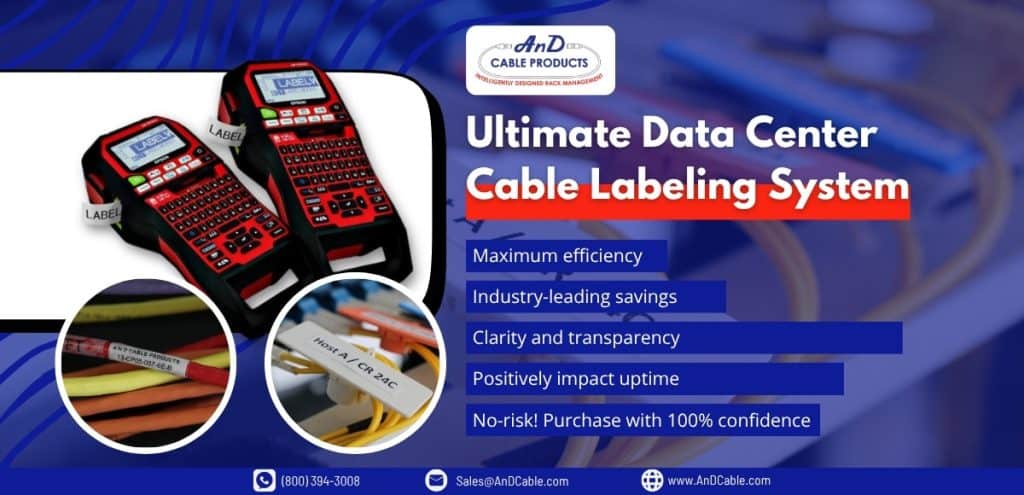
The LW-PX700 Starter Bundle combines Epson LabelWorks PX printing with UniTag reusable cable labels. This gives teams a complete cable labeling system that supports clear, consistent, and professional identification.
This type of system is useful when multiple technicians are working across the same infrastructure and labeling needs to remain consistent from rack to rack.
The LW-PX700 Starter Bundle works best for:
- New data center builds
- Large labeling projects
- Standardized documentation
- Compliance-driven infrastructure
- Multi-technician environments
- Facilities following a data center cable labeling standard
- Teams looking for top cable labeling printers for data center server racks
Printed labels reduce ambiguity. They help ensure that cable information is readable, consistent, and aligned with documentation practices.
That matters when infrastructure needs to be maintained over years, not days.
In a larger data center, it is not enough for the installer to understand the label. The next technician, the next shift, and the next project team need to understand it too.
That is where printed labeling systems provide real value.
Power Cable Labels Deserve Attention Too
Network cables usually get most of the attention because they are directly tied to connectivity and performance.
But power cable labels matter just as much.
In high-density racks, power paths can become difficult to follow. Redundant power feeds, A and B circuits, PDUs, and equipment-level connections all need clear identification. If a technician cannot quickly identify the correct power cable, the risk of service interruption increases.
The same rule applies:
If the cable matters, the label matters.
Power cable labels should be clear, durable, and easy to trace. They should help teams distinguish between sources, equipment, circuits, and redundancy paths. In some environments, color-coded labeling can provide an additional layer of visibility.
A well-labeled power environment supports safer maintenance and better operational control.
Matching the Label to the Job
The best cable label is not always the most advanced one.
It is the one that fits the work.
Here is a simple way to think about it:
| Requirement | Best Fit |
| Fast, reusable, write-on identification | QuickPinch Cable Labels |
| Frequent cable changes | QuickPinch Cable Labels |
| Temporary or staged connections | QuickPinch Cable Labels |
| Reusable snap-on labels for structured identification | UniTag Cable Labels |
| Color-coded cable runs | UniTag Cable Labels |
| Large-scale cable organization | UniTag Cable Labels |
| Printed labels for standardized documentation | LW-PX700 Starter Bundle |
| New builds or major relabeling projects | LW-PX700 Starter Bundle |
| Multi-technician environments | LW-PX700 Starter Bundle |
| Documentation-heavy infrastructure | LW-PX700 Starter Bundle |
The goal is not labeling for the sake of labeling.
The goal is making the environment easier to understand when it matters most.
When a technician opens a rack during a maintenance window, there should be no guessing. The right cable should be easy to identify, easy to trace, and easy to service.
That is where a practical cable labeling system pays off.
What Happens When Labels Are Missing?
When labels are missing, vague, or inconsistent, the rack stops being self-explanatory.
A technician may have to trace cable paths manually. They may need to check documentation, then verify it physically. They may need to involve another team member who remembers the original installation. If the environment has changed over time, even that memory may no longer be reliable.
This is how small inefficiencies become operational delays.
One unclear cable may not seem like a major issue. But multiply that by dozens of racks, hundreds of cables, and multiple technicians over several years, and the cost becomes obvious.
Poor labeling creates a hidden tax on every maintenance task.
It takes time.
It adds risk.
It slows down decision-making.
It makes the environment harder to trust.
That is why cable labeling should be treated as part of data center cable management, not as an afterthought.
The Right Labeling System Supports the Whole Team
A good cable labeling system does not just help the installer. It helps everyone who touches the environment later.
It helps the technician troubleshooting a connection at 2 AM. It helps the project team upgrading network equipment. It helps the manager trying to reduce maintenance risk. It helps the next contractor who needs to understand the rack without starting from zero.
Good labeling creates continuity.
That is especially important in data centers where infrastructure evolves constantly. Equipment changes. Workloads shift. Network cable management practices mature. Documentation gets updated. Teams rotate.
The label is one of the few things that stays with the cable.
That makes it valuable.
Where AnD Cable Products Fits In
AnD Cable Products provides cable labeling solutions designed for real data center work.
QuickPinch Cable Labels support fast, reusable, write-on identification for environments that change frequently. UniTag Cable Labels provide reusable snap-on identification for structured, long-term organization. The LW-PX700 Starter Bundle combines printed labeling with UniTag labels for teams that need standardization, accuracy, and documentation control.
Each product serves a different need, but the purpose is the same:
Make cable identification easier.
Because when teams can identify cables quickly, they can troubleshoot faster, reduce mistakes, improve visibility, and keep infrastructure easier to maintain.
That is the real value of cable labels.
They do not make the network faster.
They make the network easier to manage.
And in a data center, that can make all the difference.
Frequently Asked Questions
What is the best cable label for data centers?
The best cable label depends on the environment. QuickPinch Cable Labels work well for fast-moving or temporary environments. UniTag Cable Labels are better for reusable, structured identification. The LW-PX700 Starter Bundle is best for printed, standardized labeling across larger deployments.
Why are cable labels important in data centers?
Cable labels help teams identify, trace, and service cables quickly. In data centers, good labeling reduces troubleshooting time, lowers the risk of wrong-cable mistakes, and supports better network cable management.
What is a network cable label?
A network cable label identifies a network cable, cable group, connection, or endpoint. It helps technicians understand where the cable goes, what it connects to, and how it should be handled during maintenance or troubleshooting.
Are reusable cable labels better than adhesive labels?
Reusable cable labels are better for environments where cables are frequently changed, moved, or reassigned. Adhesive or printed labels may be better for permanent infrastructure where consistency and documentation are the priority.
What cable labeling system works best for large data center projects?
For large data center projects, a printed and standardized labeling system is often best. The LW-PX700 Starter Bundle is a strong fit because it combines printed labels with reusable UniTag Cable Labels for clear, consistent identification.
About the Author
 Louis Chompff – Founder & Managing Director, AnD Cable Products
Louis established AnD Cable Products – Intelligently Designed Cable Management in 1989. Prior to this he enjoyed a 20+ year career with a leading global telecommunications company in a variety of senior data management positions. Louis is an enthusiastic inventor who designed, patented and brought to market his innovative Zero U cable management racks and Unitag cable labels, both of which have become industry-leading network cable management products. AnD Cable Products only offer products that are intelligently designed, increase efficiency, are durable and reliable, re-usable, easy to use or reduce equipment costs. He is the principal author of the Cable Management Blog, where you can find network cable management ideas, server rack cabling techniques and rack space saving tips, data center trends, latest innovations and more.
Visit https://andcable.com or shop online at https://andcable.com/shop/


