Posted on

Data Center Planning Post COVID – 4 Drivers of Change

Feature Data Center Planning Post COVID - 4 Drivers of Change - Cable Management Blog

COVID and the other events of 2020 have had a huge impact on data centers. Traffic has shifted to residential areas with the work from anywhere trend, and overloaded centers are in need of expansion. But that expansion has been slowed by the pandemic, and social distancing and other restrictions.

So what’s next for the post COVID world of 2021? How do data centers plan for the coming vaccine, the impact on their operations and expansion plans? Here are 4 drivers of change you should keep in mind when making your plans.

Key Takeaways

By the end of this article, you’ll know:

  • How remote work has effected data centers.
  • How faster connectivity has effected data center planning.
  • How remote monitoring and artificial intelligence have effected data center management.

Jump to Section:

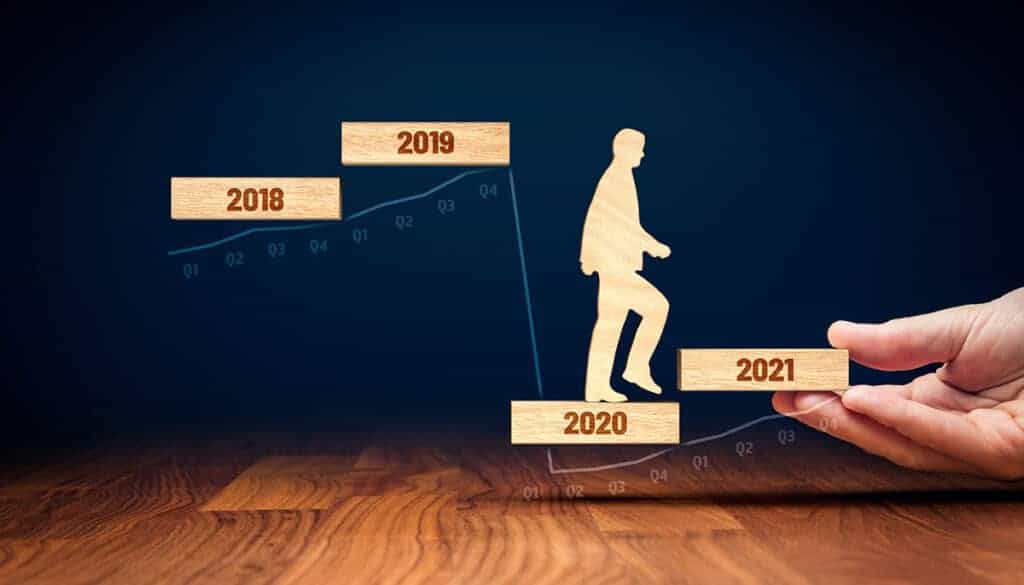
Wooden Business Man Progresses Post COVID Into 2021- Cable Management Blog
The post COVID era presents some unique challenges for data centers

Work From Anywhere is Here to Stay

Both businesses and employees have learned that working from anywhere, specifically from home, does not mean a less productive workforce. On the contrary, many people are more productive from home, value not having to commute to an office every day and have adjusted to the new normal.

Companies have discovered thousands in savings from a smaller physical footprint, and those savings are enhanced by benefits to the environment as well. Companies like Twitter and other tech giants have promised employees the option to work from anywhere indefinitely.

While some people remain anxious to return to the office (and will do so as soon as they’ve been vaccinated) many more are more than happy to continue working remotely. Whatever the post COVID workplace looks like, it seems work as we know it has already changed forever.

Faster Internet, More Data and 5G

Regardless of where people work from, the need for faster internet, more data transmission, and the continuing expansion of 5G mean data centers will experience more demand and require more moves and changes than ever before. This is about more than just technology and changing devices. It is also about the physical arrangement of data centers – an area likely to pick up once the vaccine becomes available.

The physical layer of data centers will change post COVID, as devices grow into the Internet of Things (IoT), high performance cables come into common use, and the demand for greener operations is prioritized. Perhaps the most important factor is that data center managers stay in touch with emerging trends and remain nimble, able to adapt when needed.

Remote Monitoring

Monitoring equipment, maintenance, and up time will become even more important – despite the vaccine. Customers have come to expect reliability, and it is no longer optional. However, the additional demand on human technicians to perform moves and changes means that monitoring should be automated whenever possible.

Remote monitoring systems can help do just that, allowing personnel to focus on more pressing tasks. A sensor network can send messages when human attention is needed, and can also monitor physical spaces for unauthorized access, providing an additional layer of physical security.

These monitoring systems continue to advance, and many can even react intelligently to many issues, readjusting HVAC and humidity systems and shifting loads away from problematic devices as needed. Automation creates a number of labor saving opportunities and can even alert human managers to issues before failures can cause service interruptions and additional issues.

Artificial Intelligence Adoption

Even as hardware evolves, cables become more sophisticated, and the physical spaces in data centers changes, software also continues to improve. From simple tasks like monitoring remote sensors and sending alerts, artificial intelligence can do much more.

Think of AI as the brain of the data center. It can monitor hardware, shift server loads as needed and intelligently, learn efficiency and streamline operations, prevent downtime, and even alert human managers as needed when software changes will not solve problems.

Artificial Intelligence can also be used to project future needs, generate expansion plans and ideas, and even develop plans for the physical layer of the data center. From optimal server rack placement to cabling choices to ventilation and HVAC needs, modeling can tell you what will and won’t work ahead of time, and AI can be a big part of that.

Post COVID, artificial intelligence will impact nearly every business going forward, and the increase in the number of enhanced data centers using this technology continues to rise.

What Will Next Year Bring to Data Centers?
“It is difficult to make predictions, especially about the future,” said the Danish Politician Karl Kristain Steincke in 1948. Nothing much has changed since then. The future is still hard to predict. But there are some things we do know:

Like 2020, next year will be one where many changes will happen. What changes are you making in your data center? What things do you think will be trending into the new year?

Introducing the Ultimate Data Center Cable Labeling System

Cable Management Just Got More Economical, Efficient and Robust

Ultimate Cable Labeling System - Epson Labelworks PX Printers and AnD Cable Products UniTag Cabel Labels
Ultimate Cable Labeling System – Epson Labelworks PX Printers and AnD Cable Products UniTag Cabel Labels

AnD Cable Products and Epson Labelworks have teamed up to develop the Ultimate Data Center Cable Labeling System with a selection of bundled cable labeling products that, when used together will revolutionize your cable management, efficiency and costs.

UniTag® Reusable Cable Labels – A plastic snap-on cable labeling system that provides a quick and easy way to mark and identify cables

Epson Labelworks PX Printers – A portable label and wire marker solution with exclusive time and costsaving features for creating custom labels

Epson’s PX Label Tapes Fit Onto AnD Cable’s UniTag® Cable Labels PERFECTLY!


FAQs

How has the “Work From Anywhere” trend affected data center planning?

The widespread shift to remote work has changed network traffic patterns, with more data moving to residential areas. This has increased the demand on data centers and requires them to expand to handle the new traffic distribution.

What role do high-performance cables and IoT play in post-COVID data centers?

With increased data demands from technologies like 5G, data centers need to adopt high-performance cables to handle the traffic. IoT devices are also being used to enable more efficient remote monitoring, allowing for better control over physical infrastructure.

Why is remote monitoring so critical for data centers today?

Remote monitoring has become a necessity for ensuring reliability, especially with fewer on-site staff. Automated monitoring systems with sensor networks allow technicians to oversee operations and respond to issues like HVAC and humidity problems from a distance.

How is Artificial Intelligence (AI) being used to manage data centers?

AI is functioning as the “brain” of the data center, helping to monitor hardware, shift server loads, and prevent downtime. It can also analyze data to predict future needs and generate expansion plans for the physical infrastructure.

What are the key certainties for data centers in the post-COVID era?

The article identifies several certainties, including the continuation of a hybrid work approach, the creation of more data, rising customer expectations for speed, and a larger role for AI in data center management.

About the Author

Louis Chompff - Founder, AnD Cable Products, Rack and Cable ManagementLouis Chompff, Founder & Managing Director, AnD Cable Products
Louis established AnD Cable Products – Intelligently Designed Cable Management in 1989. Prior to this he enjoyed a 20+ year career with a leading global telecommunications company in a variety of senior data management positions. Louis is an enthusiastic inventor who designed, patented and brought to market his innovative Zero U cable management racks and Unitag cabel labels, both of which have become industry-leading network cable management products. AnD Cable Products only offer products that are intelligently designed, increase efficiency, are durable and reliable, re-usable, easy to use or reduce equipment costs. He is the principal author of the Cable Management Blog, where you can find network cable management ideas, server rack cabling techniques and space saving tips, data center trends, latest innovations and more.
Visit https://andcable.com or shop online https://andcable.com/shop/

Posted on

Artificial Intelligence in Data Centers: The New Reality

Artificial Intelligence in Data Centers - AnD Cable Management Blog

For years, artificial intelligence, or AI has been the topic of science fiction, from Skynet in the Terminator movies to more benevolent systems. But AI has now become a reality, and that reality has put artificial intelligence in data centers, and the trend is growing. Data centers employing this technology are often referred to as enhanced data centers.


Key Takeaways

By the end of this article, you’ll know:

  • How AI can increase efficiency and emissions control.
  • How AI improves server and human resource management.
  • How AI enhances uptime and security.

Jump to Section:

Artificial Intelligence in Data Centers - AnD Cable Management Blog
Use of artificial intelligence in data centers continues to grow

But this idea of an enhanced data center will likely become the norm, as customer expectations rise. Unprecedented demand means and centers rapidly reaching capacity mean a need for one of two solutions: increased capacity and increased efficiency. Artificial intelligence can help with both. Here’s how.

Artificial Intelligence and Data Center Emissions Control

Data centers use a lot of power, and that power often converts to carbon emissions. While technology advances and the use of solar can help, there are other solutions as well. It’s all about the efficient use of power, HVAC efficiency and flow rates, and more.

How does it work? Well, sensors, relatively small ones, can be placed throughout the data center to measure airflow rates, temperature, humidity, and power consumption in detail, down to individual racks and components. The artificial intelligence algorithm will learn from data it gathers, and can do one of two things with that data:

  • The AI can take control – cycling HVAC systems as they are needed, redirect fans and other smart devices, increasing or decreasing speed to enhance flow rates, and more. This technique is being deployed in both new and existing data centers when possible.
  • AI can report – What the AI can’t control, such as physical placement of racks, wiring, and more can be reported on and recommendations made to human operators who can make those changes.

For instance, let’s say that you have a human maintenance crew who performs certain tasks at the data center such as cleaning, moves, additions, and transfers. This involves those bodies impacting airflow, opening and closing doors adding to HVAC loads, and more. The AI can recommend the best time when there is the lowest demand on these systems, to perform these tasks.

This reduces energy loads and therefore carbon emissions, but it can do even more.

It’s All About That Balance

Server balance is a critical function of data centers and has been overseen by human managers up until now. But smart data centers are using AI and predictive algorithms to assist these managers, freeing up their time to perform other important tasks.

Much like the advantages gained with sensors and algorithms that learn HVAC needs, the predictive management software will learn as it goes, and distribute loads to servers that will handle them best. This analysis and learning not only saves time but helps decrease wear and tear on overloaded equipment and removes the human error factor that can lead to critical mistakes and downtime.

AI has also made human resources management simpler. Through automating some processes, it frees up data center personnel, and makes scheduling simpler, helping to prevent short- staffing. Then, through video conferencing and using similar technology, companies can get even more done remotely.

Keeping it Up, Locking it Down

The concern of downtime is a real one, and one that can keep data center managers up at night. Keeping up with and preventing downtime manually can seem like an impossible task. AI can help, anticipating downtime based on server loads, traffic, and other factors. Not only can it predict downtime, but AI offers other advantages as well.

Because of the other things it has “learned” AI can devise solutions, and advise human managers on workarounds and prevention, keeping downtime to an absolute minimum. While it’s not yet possible to eliminate downtime completely, stellar numbers can be achieved using AI.

But what about data center security? Threats from malware, hackers, and other digital threats are an ever present danger. AI can analyze traffic at a granular level, and often stop such threats before they get a chance at a foothold.

Like downtime, security breaches are inevitable as new threats arrive all the time. But AI can help minimize risk, isolate threats, and remove them to minimize any damage and data loss.

Designing the Physical Layer of Data Centers

There’s more to the picture than just security, uptime, and human resources. There’s also the matter of the design of data centers themselves. What is the ideal placement for servers and server racks? What is the most efficient method to achieve maximum airflow in the data center? What impact will moves and changes have on HVAC and other systems?

There will always be a physical layer to every data center, and security related to that physical layer is nearly as vital as digital security. An AI algorithm, in combination with AR software, can help you design your data center physical layer the right way from the start, and even guide you as you make those inevitable moves and changes.

The same sensors that feed the AI data about efficiency and power savings can also detect pressure changes, unauthorized data center access, and other data points that help you keep the physical layer of your data center functioning properly and secure at the same time.

More to Come

This is by far simply the tip of the iceberg when it comes to physical layer security, the use of AI in data center enhancement, efficiency, and more. Artificial intelligence is set to impact every single business in one way or another, and the data center is no exception.

Want to learn more about the security of the physical layer of your data center? Need materials to make your enhanced data center design a reality? Contact AnD Cable Products today. We’d love to start a conversation about your needs and can provide you with the right solutions for your data center today and into the next innovations in data center management.

Introducing the Ultimate Data Center Cable Labeling System

Cable Management Just Got More Economical, Efficient and Robust

AnD Cable Products and Epson Labelworks have teamed up to develop the Ultimate Data Center Cable Labeling System with a selection of bundled cable labeling products that, when used together will revolutionize your cable mangaement, efficiency and costs.

UniTag® Reusable Cable Labels – A plastic snap-on cable labeling system that provides a quick and easy way to mark and identify cables

Epson Labelworks PX Printers – A portable label and wire marker solution with exclusive time and costsaving features for creating custom labels

Epson’s PX Label Tapes Fit Onto AnD Cable’s UniTag® Cable Labels PERFECTLY!


FAQs

What is the difference between an AI data center and a traditional data center?

AI data centers are specifically designed to support the immense computational demands of AI and machine learning. Unlike traditional data centers that primarily use CPUs for general computing tasks, AI data centers rely heavily on powerful GPUs (Graphics Processing Units) and other specialized AI accelerators.

How does AI improve data center efficiency and operations?

AI is used to optimize data center operations in several key ways. It can be used for predictive maintenance to anticipate hardware failures before they happen, for automating tasks like workload distribution to prevent resource shortages, and for optimizing energy consumption by adjusting cooling systems in real-time based on temperature and workload.

What are some of the main challenges of using AI in data centers?

The biggest challenges include managing the massive power and cooling demands of AI hardware, dealing with network bottlenecks caused by rapid data transfer between processors, and the overall high cost of specialized AI equipment and infrastructure.

Why are cooling and power consumption such big issues for AI data centers?

AI computations, especially training deep learning models, generate significantly more heat than traditional computing tasks. This requires advanced cooling solutions, such as liquid cooling, to prevent overheating. As a result, AI data centers consume a much larger amount of energy, which puts a significant strain on power grids and operational costs.

How do AI data centers handle the massive amounts of data required for AI?

AI workloads require high-speed networking and low-latency interconnects to move large volumes of data quickly between processors. They also need high-performance storage solutions, such as NVMe SSDs and parallel file systems, to handle the vast amounts of both structured and unstructured data, including images, videos, and sensor data.

About the Author

Louis Chompff - Founder, AnD Cable Products, Rack and Cable ManagementLouis Chompff, Founder & Managing Director, AnD Cable Products
Louis established AnD Cable Products – Intelligently Designed Cable Management in 1989. Prior to this he enjoyed a 20+ year career with a leading global telecommunications company in a variety of senior data management positions. Louis is an enthusiastic inventor who designed, patented and brought to market his innovative Zero U cable management racks and Unitag cabel labels, both of which have become industry-leading network cable management products. AnD Cable Products only offer products that are intelligently designed, increase efficiency, are durable and reliable, re-usable, easy to use or reduce equipment costs. He is the principal author of the Cable Management Blog, where you can find network cable management ideas, server rack cabling techniques and space saving tips, data center trends, latest innovations and more.
Visit https://andcable.com or shop online https://andcable.com/shop/

Posted on

4 Cable Improvements That Increase Data Center Efficiency and Build Scalability

4 Cable Improvements That Increase Data Center Efficiency and Build Scalability

The data center of the future is needed now. Added to rising growth in a world lived increasingly online, augmented reality (AR), virtual reality (VR) and 5G are driving greater demand for data speed and volume. How can you ensure your data center is operating at peak performance now – and has the capacity to sustain performance as demand grows? Building for scalability is the key. Fortunately, those elements that create data center efficiency now lay the groundwork for your ability to respond well in the future.

Jump to section:

4 Cable Improvements That Increase Data Center Efficiency and Build Scalability

Building Data Center Efficiency

When we talk about scalability in data centers, we are actually talking about two different things. The first is the physical layer, which includes new data servers, switches, storage devices and cable managers. By optimizing server rack space and ensuring effective network cable management, efficiency and uptime can be improved, reducing the footprint required for server hardware and lowering equipment costs.

The second, and more complex, is the infrastructure that supports increasing data rates and volumes. With AR, VR, 5G and the IoT demanding data rates and speeds never seen before, data centers need to respond strategically to remain competitive. Given the escalating growth rate, it’s safe to say that decisions made today will have a dramatic impact on capacity to deliver unprecedented volumes of data, both in and out. For peak data center efficiency, you need to be dense (physical), fast (the right cabling), and cost effective. This includes transitioning from 40G to 100G and eventually the emerging 400G ethernet capability. It not only means more fiber cable, but an increased number of connections. The following factors will affect data center efficiency and scalability directly.

Bandwidth

The demand for speed and higher bandwidth has instigated a migration from OM3 and OM4 multimode cabling to the faster and more efficient OM5. OM5 has some serious advantages over OM3/4, including:

  • Color – OM5 is ‘lime green’ in color, while the OM3/4 is usually aqua colored
  • Compatibility – Jacket size remains at the industry recognized standard (2mm), so it can be retrofitted with OM3/4 without a major change in infrastructure
  • Scalability – OM5 has the capacity to support current data needs and the 400G needs of the future
  • More efficient – OM5 is more efficient at longer distances

It’s worth noting that OM5 is more expensive currently, as cables have to be custom made, whereas OM3/OM4 are production cables, pre-made by the thousands and in all stock lengths.

Because of this, perhaps the best feature of OM5 is its compatibility with OM3/4. There is no need to change the entire network at once, so changes can be made incrementally as the needs of the data center change.

The main thing to remember is that scalability demands the ability to increase bandwidth at need. Hence the time to plan for what’s next is now.

Insertion Loss

The simplified version of insertion loss is this: the more connectors you have, the greater potential there is for loss of speed. A lower insertion loss means a stronger signal. Data centers should understand their insertion loss margin.

This margin is the actual insertion loss experienced vs. the standard insertion loss, and it can be affected by a number of things. So how do you reduce insertion loss?

  • Rack optimization – The right rack and cabling solutions will reduce the distance data has to travel, decreasing loss
  • Air flow – Temperature controls, or factoring in realistic temperatures, help manage insertion loss expectations
  • Connectors fit for purpose – The right connection components will also reduce loss, and the expected loss of these components should be factored in when being calculated

Efficient data center that are set up to be denser and reduce the distance data has to travel, have lower potential for insertion loss. Note the word “potential.” Since many factors, from the quality of cabling and connections, to the efficiency of rack and cabling solutions can have an impact, its necessary to look at this factor from several angles.

Skew

Skew is the difference between the time it takes light to travel on different fibers. Too much skew can result in data loss or errors.

The standards for skew are tight in parallel optical cabling solutions, as low as .075 n-s (nanoseconds). The simple reason for this, is that skew can affect the longevity of optical cables and how scalable they are when it comes to higher data rates and volumes – two of the primary factors in scalability.

This is another factor that can get complicated at times, and is influenced by the length of cables, the type of cable used and more. The key is to know what to look for in parallel optical circuits: low skew components with tight tolerances over the distance you need to run them.

Physical Layer Optimization

We’ve mentioned that for peak data center efficiency, you need to be dense, fast and cost effective, enabling you to be scalable and respond rapidly to future data volume and speed needs. While cabling and connectors are important, the fourth factor is making the best use of your physical layer.

Fundamental to this is the optimization of server racks and cable management systems. This means optimizing your server configuration. One of the smartest ways to do so, is to replace your 1RU and 2RU horizontal managers with intelligently designed Zero U cable managers, which use no additional rack space. The patented system design by AnD Cable Products can take you from using four racks to three through smart rack optimization.

Multiply that by the number of server racks in your system, and you’re looking at real space savings. Add better cable management and more efficient cables, and you can reduce your physical footprint, and equipment costs, significantly.

Cable management systems need to help regulate air flow, ensure devices are easily accessible and allow for cable identification and tracking.

The choices you make now around how you optimize your rack and cable management, bandwidth, insertion loss and skew can set you apart and ensure your readiness to meet the needs of tomorrow.

How are you preparing to meet the future, today? Have questions about your current rack systems, cables, and even system security? AnD Cable Products can help – Contact us today.

Understanding Stranded and Solid Conductor Wiring in Modern Networks

Understanding Stranded and Solid Conductor Wiring in Modern Networks - AnD Cable Products Whitepaper

An overview of the differences between stranded and solid conductor wiring, the properties of each and the best cable type to use in a variety of typical settings.

  • Types of Stranded and Solid Conductor Wiring
  • Comparison of Electrical Properties
  • Factors Impacting Attenuation / Insertion Loss
  • Choosing the Right Cable

Shop Our Network Cables Range Now

About the Author

Louis Chompff - Founder, AnD Cable Products, Rack and Cable ManagementLouis Chompff – Founder & Managing Director, AnD Cable Products
Louis established AnD Cable Products – Intelligently Designed Cable Management in 1989. Prior to this he enjoyed a 20+ year career with a leading global telecommunications company in a variety of senior data management positions. Louis is an enthusiastic inventor who designed, patented and brought to market his innovative Zero U cable management racks and Unitag cable labels, both of which have become industry-leading network cable management products. AnD Cable Products only offer products that are intelligently designed, increase efficiency, are durable and reliable, re-usable, easy to use or reduce equipment costs. He is the principal author of the Cable Management Blog, where you can find network cable management ideas, server rack cabling techniques and rack space saving tips, data center trends, latest innovations and more.
Visit https://andcable.com or shop online at https://andcable.com/shop/